
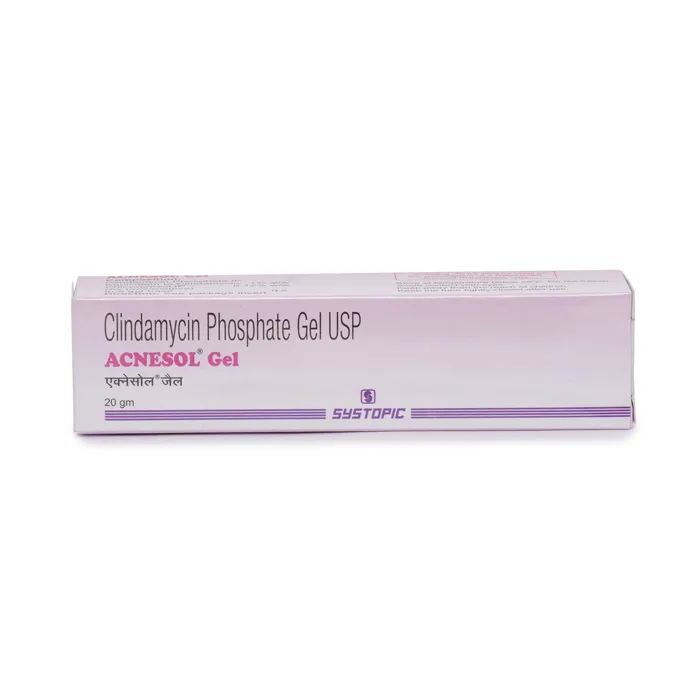
Acnesol Gel 1% (20 g)
Acnesol Gel 1% (20 g) is a topical acne medicine that contains 1% clindamycin in each 20 g tube. Clindamycin is an antibiotic used on the skin to help treat acne by reducing acne-causing bacteria and calming inflamed pimples.
Prescription required — you can upload it at checkout or later
| Pack Size | Qty | Price | Add to cart | Unit Price |
|---|---|---|---|---|
| 1 tube | $9.99 | $9.99 | ||
| 3 tube/s | $25.99 | $8.66 | ||
| 6 tube/s | $48.99 | $8.17 |
Save more with our biggest pack
- Manufacturer
- Systopic Laboratories, India
- Ingredient
- Clindamycin
- Strength
- 1%
- Form
- Gel
- Prescription
- Required
- Availability
- In stock
- SKU
- CMU636
Free shipping on orders of $199 or more
What is Acnesol Gel 1% (20 g)?
Acnesol Gel 1% (20 g) is a topical acne medicine that contains 1% clindamycin in each 20 g tube. Clindamycin is an antibiotic used on the skin to help treat acne by reducing acne-causing bacteria and calming inflamed pimples. Acnesol Gel 1% (20 g) is applied directly to affected skin, so it works where acne appears rather than throughout the body. It is commonly used for mild to moderate acne when a doctor wants a prescription-strength topical treatment.
How it works: Clindamycin in Acnesol Gel 1% (20 g) helps stop the growth of acne-causing bacteria on the skin. The gel form lets the medicine spread over the affected area and target inflamed breakouts directly.
Why choose Acnesol Gel 1% (20 g)?
Acnesol Gel 1% (20 g) is the standard 1% clindamycin gel strength, so it fits typical prescription acne treatment and is not a higher-dose version. A doctor may choose this gel when they want a skin-friendly, easy-to-spread option that can feel lighter than creams or ointments. Because it is a gel, it may be preferred for oily or acne-prone skin.
Uses of Acnesol Gel 1% (20 g)
- Treatment of mild to moderate acne
- Inflammatory pimples
- Facial acne
- Acne on the chest or back when prescribed
- Topical antibiotic acne therapy
How to take Acnesol Gel 1% (20 g)
- Wash and gently dry the affected skin before applying Acnesol Gel 1% (20 g).
- Apply a thin layer only to the acne-affected areas, unless your doctor tells you otherwise.
- Use clean hands, and avoid getting the gel in your eyes, mouth, nose, and inside the lips.
- Do not apply to broken, sunburned, or irritated skin unless your prescriber says it is okay.
- Follow the schedule your doctor gives you; do not use more often or in a thicker layer to speed results.
- Wash your hands after applying unless the treated area is on your hands.
Acnesol Gel 1% (20 g) dosage
Acnesol Gel 1% (20 g) provides clindamycin 1% in each tube, and the exact amount used depends on the size of the area being treated. It is usually applied once or twice daily, but the doctor decides the dosing plan and duration for this specific acne treatment. Do not apply more than prescribed, because using extra does not make it work faster and can increase irritation.
Do not change your dose or stop the medicine without speaking to your doctor.
Acnesol Gel 1% (20 g) side effects
Common side effects of Clindamycin may include:
- Skin dryness
- Mild burning or stinging after application
- Redness at the application site
- Itching
- Peeling or flaking skin
- Oily or tight feeling on the skin
Get medical help right away if you notice:
- Severe diarrhea
- Bloody or watery diarrhea
- Severe skin irritation or rash
- Signs of an allergic reaction such as swelling, hives, or trouble breathing
Precautions and warnings
- For external use only; do not ingest Acnesol Gel 1% (20 g).
- Avoid using it in the eyes, mouth, nose, and other mucous membranes.
- Tell your doctor if you have a history of colitis, especially antibiotic-associated diarrhea.
- Do not use other acne products that may irritate the skin unless your clinician approves them.
- Be careful with sun exposure if your skin becomes irritated or more sensitive.
- Stop and seek medical advice if severe diarrhea develops during or after treatment.
- Use only the amount prescribed, since overuse can increase dryness and irritation.
Drug interactions
- Other topical acne medicines that can irritate the skin, such as benzoyl peroxide, retinoids, or harsh exfoliants
- Topical products containing alcohol or astringents
- Other antibiotic treatments unless your doctor says to combine them
- Products that cause significant dryness or peeling
- Any medicine history that includes antibiotic-associated colitis, which should be discussed before use
Storage
Store Acnesol Gel 1% (20 g) at room temperature, keep the tube tightly closed, and protect it from excessive heat and moisture.
Frequently asked questions about Acnesol Gel 1% (20 g)
What is Acnesol Gel 1% used for?
Acnesol Gel 1% is a prescription clindamycin gel used to treat acne, especially inflamed pimples and mild to moderate breakouts. It is applied directly to the skin so the medicine acts where acne is forming.
How often do I use Acnesol Gel 1%?
Many patients use Acnesol Gel 1% once or twice daily, but your doctor decides the exact schedule based on your skin and acne severity. Using more than directed can increase dryness, redness, and peeling without improving results.
How long does Acnesol Gel 1% take to work?
Acnesol Gel 1% does not clear acne overnight, and improvement is usually gradual with regular use. A doctor may reassess your response after several weeks of treatment.
Can I use Acnesol Gel 1% with other acne products?
Sometimes it is combined with other acne treatments, but some products can cause extra irritation when used together. Ask your doctor or pharmacist before pairing Acnesol Gel 1% with benzoyl peroxide, retinoids, or exfoliating products.
Customer reviews of Acnesol Gel 1% (20 g)
No written reviews yet.