
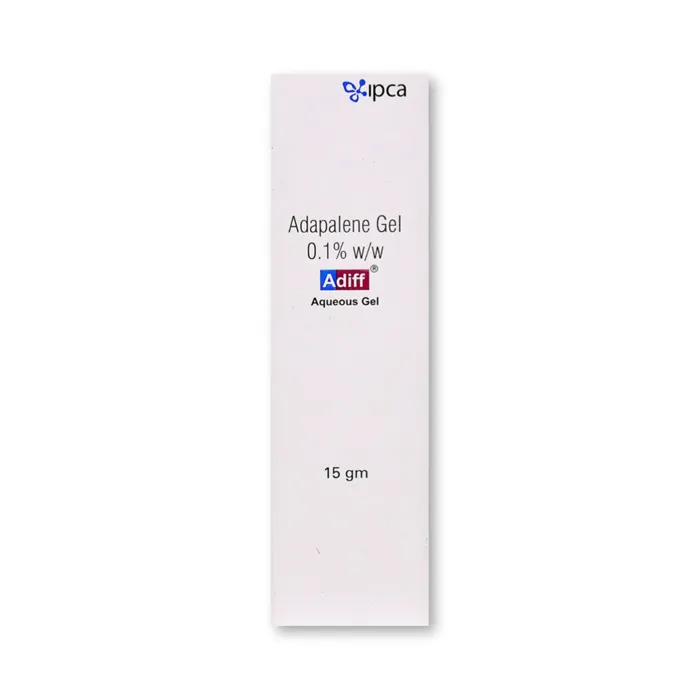
Adiff Gel
Adiff Gel is a topical acne medicine that contains adapalene, a retinoid used on the skin. Each tube of Adiff Gel contains adapalene as labeled, and the gel is applied directly to acne-prone areas.
Prescription required — you can upload it at checkout or later
| Pack Size | Qty | Price | Add to cart | Unit Price |
|---|---|---|---|---|
| 3 tube/s | $41.99 | $14.00 | ||
| 6 tube/s | $79.99 | $13.33 | ||
| 9 tube/s | $112.99 | $12.55 |
Save more with our biggest pack
- Manufacturer
- Ipca Laboratories, India
- Ingredient
- Adapalene
- Form
- Gel
- Prescription
- Required
- Availability
- In stock
- SKU
- CMU7763
Free shipping on orders of $199 or more
What is Adiff Gel?
Adiff Gel is a topical acne medicine that contains adapalene, a retinoid used on the skin. Each tube of Adiff Gel contains adapalene as labeled, and the gel is applied directly to acne-prone areas. It helps treat acne vulgaris by reducing clogged pores, blackheads, whiteheads, and inflammatory pimples. Ipca Laboratories, India manufactures Adiff Gel in a pack of 10 tubes.
How it works: Adapalene works by helping skin cells shed more normally so pores are less likely to plug up. In gel form, Adiff Gel spreads over the skin in a thin layer and targets acne at the surface and inside the pores.
Why choose Adiff Gel?
Because Adiff Gel is supplied as a topical gel and there are no other Adiff brand strengths or forms listed, it is used as the exact product your clinician selected rather than as a step-up or step-down option within the brand. The gel base may feel lighter and less greasy than creams or ointments, which some people prefer on oily or acne-prone skin. A doctor may choose Adiff Gel when a once-daily retinoid treatment is appropriate and skin tolerance is being monitored.
Uses of Adiff Gel
- Acne vulgaris
- Blackheads
- Whiteheads
- Inflamed pimples
- Acne-prone skin maintenance
How to take Adiff Gel
- Wash the affected skin gently and pat it completely dry before applying Adiff Gel.
- Apply a thin layer of Adiff Gel to the entire acne-prone area, not just individual spots, unless your clinician told you otherwise.
- Use it once daily, usually at night, unless your doctor gives a different schedule.
- Avoid getting Adiff Gel in your eyes, lips, inside the nose, and other mucous membranes.
- Wash your hands after applying the gel.
- If your skin becomes very irritated, ask your prescriber whether to reduce how often you use Adiff Gel or pause temporarily.
Adiff Gel dosage
Adiff Gel provides adapalene as labeled in each tube, but the exact amount in the tube should be checked on the carton or tube label. For acne, adapalene gel is typically applied once daily in a thin layer; your doctor decides the right frequency based on your skin and how well you tolerate it. Do not apply more often or in larger amounts than prescribed, because more is not faster and can increase irritation.
Do not change your dose or stop the medicine without speaking to your doctor.
Adiff Gel side effects
Common side effects of Adapalene may include:
- Dry skin
- Mild burning or stinging
- Redness
- Peeling or flaking
- Itching
- Skin irritation, which may be more noticeable at the start
Get medical help right away if you notice:
- Severe skin swelling or blistering
- Intense redness or pain that does not improve
- Signs of allergic reaction such as rash, hives, or trouble breathing
- Eye irritation or chemical-like injury if the gel gets into the eyes
Precautions and warnings
- Use only on the skin; do not swallow Adiff Gel.
- Avoid applying to cuts, sunburned skin, eczema, or very irritated areas unless a clinician tells you to.
- Limit sun exposure and use sunscreen, since adapalene can make skin more sensitive to sunlight.
- Do not use other potentially irritating acne products at the same time unless your prescriber approves, because dryness can be worse.
- Pregnant patients should discuss adapalene use with a clinician before starting or continuing Adiff Gel.
- Be careful with waxing, abrasive scrubs, or strong exfoliants on treated skin.
- If you develop marked burning, swelling, or severe peeling, stop and seek medical advice.
Drug interactions
- Other topical retinoids
- Benzoyl peroxide products, which may be used together only if directed but can increase irritation
- Topical products containing alcohol, astringents, or harsh exfoliants
- Other acne treatments that dry or irritate the skin, such as salicylic acid or sulfur products
Storage
Store Adiff Gel at room temperature in the original tube, tightly closed, and keep it away from heat and direct light.
Frequently asked questions about Adiff Gel
What is Adiff Gel used for?
Adiff Gel is a topical adapalene gel used to treat acne vulgaris, including blackheads, whiteheads, and inflammatory pimples. It is applied to the skin, usually once daily, to help keep pores from clogging and to reduce acne over time.
How do you apply Adiff Gel on the face?
Apply a thin layer of Adiff Gel to clean, dry acne-prone skin, usually at night. Avoid the eyes, lips, and nostrils, and wash your hands after use.
How long does Adiff Gel take to work?
Adiff Gel may start to improve acne gradually, but the full benefit usually takes several weeks of regular use. Some people notice dryness or mild irritation early on, which can happen before improvement is seen.
Can Adiff Gel make acne worse at first?
Some people notice a temporary increase in dryness or a brief acne flare when starting Adiff Gel. This does not always mean the medicine is failing, but you should contact your clinician if irritation is severe or persists.
Customer reviews of Adiff Gel
No written reviews yet.