
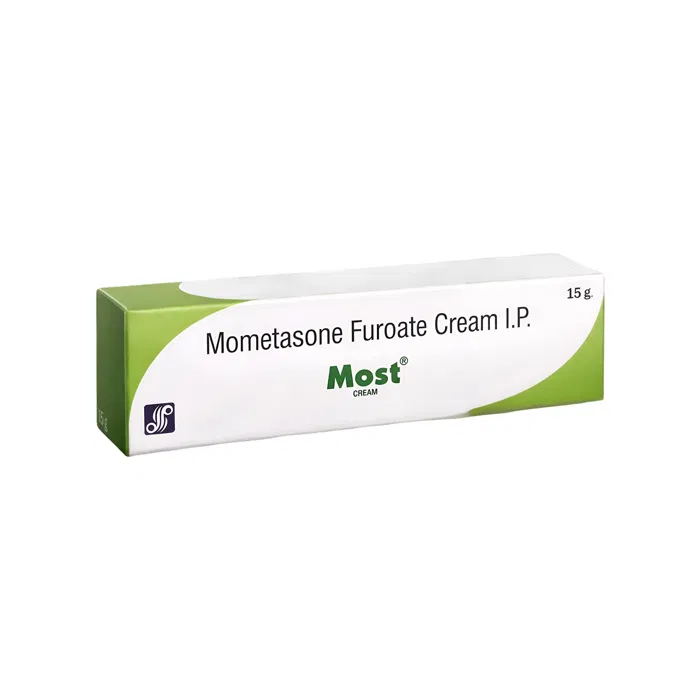
Most Ointment
Most Ointment is a topical prescription ointment from Daksh Pharma that contains mometasone, a corticosteroid medicine used on the skin. Each tube contains the strength of mometasone as labelled on the pack, and the pack contains 10 tubes.
Prescription required — you can upload it at checkout or later
| Pack Size | Qty | Price | Add to cart | Unit Price |
|---|---|---|---|---|
| 3 tube/s | $8.99 | $3.00 | ||
| 6 tube/s | $14.99 | $2.50 | ||
| 9 tube/s | $19.99 | $2.22 |
Save more with our biggest pack
- Manufacturer
- Daksh Pharma
- Ingredient
- Mometasone
- Form
- Ointment
- Prescription
- Required
- Availability
- In stock
- SKU
- CMU8038
Free shipping on orders of $199 or more
What is Most Ointment?
Most Ointment is a topical prescription ointment from Daksh Pharma that contains mometasone, a corticosteroid medicine used on the skin. Each tube contains the strength of mometasone as labelled on the pack, and the pack contains 10 tubes. Most Ointment is used to help relieve redness, itching, swelling, and irritation from corticosteroid-responsive skin conditions such as eczema, dermatitis, and allergic rashes.
How it works: Mometasone is a corticosteroid that lowers inflammation in the skin by calming the immune response that causes redness, swelling, and itching. As an ointment, Most Ointment also helps seal moisture into the skin, which can make it more useful on dry, cracked, or thickened patches.
Why choose Most Ointment?
Most Ointment is an ointment, so it is usually thicker and greasier than a cream and can be a better choice for dry, scaly, or very inflamed skin. Because this product is supplied as labelled rather than a lower-strength sibling form, a doctor may choose it when a more occlusive ointment base is preferred for targeted skin treatment.
Uses of Most Ointment
- Eczema
- Dermatitis
- Allergic skin rash
- Itchy inflamed skin
- Psoriasis on limited areas if prescribed
How to take Most Ointment
- Use Most Ointment only on the skin, exactly as your doctor prescribed.
- Wash and dry the affected area before applying a thin layer of Most Ointment.
- Gently rub the ointment in unless your prescriber told you to leave it on as a film.
- Apply only to the affected area; do not use it on large areas unless directed.
- Wash your hands after applying Most Ointment, unless your hands are the treated area.
- Do not cover with a bandage or tight dressing unless your doctor tells you to.
Most Ointment dosage
Most Ointment provides mometasone in the exact strength listed on the tube, and the right amount depends on the size and location of the rash. It is usually applied once daily unless your doctor gives a different schedule, and there is no set maximum number of applications per day beyond the prescribed plan. Your clinician decides the dose, duration, and whether this specific strength is appropriate for your skin condition.
Do not change your dose or stop the medicine without speaking to your doctor.
Most Ointment side effects
Common side effects of Mometasone may include:
- Burning or stinging where applied
- Itching
- Dry skin
- Skin irritation
- Redness at the application site
- Thinning of skin with longer use, which may be more likely with stronger or prolonged use
Get medical help right away if you notice:
- Signs of skin infection such as pus, worsening redness, or fever
- Severe allergic reaction with swelling, hives, or trouble breathing
- Marked skin thinning, stretch marks, or easy bruising
- Vision changes if the ointment is used near the eyes for too long
Precautions and warnings
- Use only on skin, not in the eyes, mouth, or vagina.
- Do not use Most Ointment on infected skin unless a doctor has told you to.
- Avoid using it under airtight dressings or on large body areas unless instructed, because more medicine can be absorbed.
- Tell your doctor if you have diabetes, because corticosteroids can sometimes affect blood sugar when used extensively.
- Use extra caution in children, who can absorb more medicine through the skin.
- Do not use it for longer than prescribed, since prolonged use raises the risk of skin thinning and other steroid effects.
- If your rash gets worse or does not improve, contact your prescriber rather than increasing use on your own.
Drug interactions
- Other topical steroids applied to the same area
- Other medicines that suppress the immune system, when used extensively with topical steroids
- Strong skin products that irritate the area, such as harsh exfoliants or alcohol-based products
- Large-area use with drugs that can affect blood sugar, in people with diabetes or prediabetes
Storage
Store Most Ointment at room temperature, keep the tube tightly closed, and protect it from excessive heat and moisture.
Frequently asked questions about Most Ointment
How do I use Most Ointment correctly?
Apply a thin layer to the affected skin exactly as prescribed, usually once daily unless your doctor tells you otherwise. Wash your hands after use and avoid covering the area unless your clinician recommends it.
What is Most Ointment used for?
Most Ointment is used to treat inflammatory skin conditions that respond to corticosteroids, such as eczema, dermatitis, and allergic rashes. It helps reduce itching, redness, and swelling when used on the skin as directed.
Is Most Ointment stronger than a cream?
Most Ointment is not automatically stronger than a cream, but the ointment base is thicker and more occlusive, which can make it feel greasier and work well on dry or scaly skin. Your doctor may choose Most Ointment because the ointment form helps the medicine stay on the skin longer.
Can I use Most Ointment on my face?
Only use Most Ointment on the face if your doctor specifically tells you to, because facial skin is more sensitive to steroid side effects. Using corticosteroid ointments too long on the face can increase the risk of thinning, irritation, and visible skin changes.
Customer reviews of Most Ointment
No written reviews yet.