

Pramipexole
Pramipex 1 mg Tablet★★★★★5.0 (2)
Starting at
$48.99

Mirator 1 mg Tablet is a prescription tablet that contains pramipexole 1 mg in each tablet. It belongs to the anti-Parkinsonian medicine class and is used to treat symptoms of Parkinson’s disease.
Prescription required — you can upload it at checkout or later
| Pack Size | Qty | Price | Add to cart | Unit Price |
|---|---|---|---|---|
| 90 tablet/s | $41.99 | $0.47 | ||
| 180 tablet/s | $77.99 | $0.43 | ||
| 270 tablet/s | $105.99 | $0.39 |
Save more with our biggest pack
Free shipping on orders of $199 or more
Mirator 1 mg Tablet is a prescription tablet that contains pramipexole 1 mg in each tablet. It belongs to the anti-Parkinsonian medicine class and is used to treat symptoms of Parkinson’s disease. In some patients, pramipexole may also be used for restless legs syndrome, depending on the prescriber’s plan. Mirator 1 mg Tablet is the tablet strength of this medicine intended for patients whose dose has already been carefully adjusted by a doctor.
How it works: Pramipexole works by stimulating dopamine receptors in the brain, helping replace some of the dopamine signal that is reduced in Parkinson’s disease. As a tablet, Mirator 1 mg Tablet is swallowed and absorbed into the body to help improve movement-related symptoms over time.
Mirator 1 mg Tablet is a higher-strength pramipexole tablet, so it is generally not the starting strength for most people. Doctors may choose Mirator 1 mg Tablet when a lower dose has already been tolerated and more symptom control is needed, or when a patient’s treatment has been titrated upward. Because this is a 1 mg tablet, it should be used exactly as prescribed and not treated like a first-step dose.
Each Mirator 1 mg Tablet provides 1 mg of pramipexole per tablet. The number of tablets and how often they are taken depends on the condition being treated, how you respond, and whether you are starting, increasing, or maintaining therapy. The doctor decides the dose and the maximum amount per day, and this 1 mg strength is typically used only after careful dose adjustment.
Do not change your dose or stop the medicine without speaking to your doctor.
Common side effects of Pramipexole may include:
Get medical help right away if you notice:
Store Mirator 1 mg Tablet in its original strip or box at room temperature, away from moisture, heat, and direct light.
Mirator 1 mg Tablet contains pramipexole 1 mg and is used mainly for Parkinson’s disease symptoms such as tremor, stiffness, and slowed movement. In some cases, a doctor may also prescribe it for restless legs syndrome.
Take Mirator 1 mg Tablet by mouth with water exactly as prescribed by your doctor. It can be taken with or without food, but food may help if it upsets your stomach.
Mirator 1 mg Tablet is a higher-strength pramipexole tablet and is usually not the first dose for most patients. Doctors often use lower strengths first and may move to this 1 mg tablet only after checking tolerance and response.
Common side effects of Mirator 1 mg Tablet include nausea, dizziness, sleepiness, and constipation. Get urgent medical help for hallucinations, fainting, sudden sleep attacks, or unusual behavior changes.
No written reviews yet.
Same as Pramipexole
Pramipexole
Pramipex 1 mg TabletStarting at
$48.99

Pramipexole
Mirator 0.5 TabletStarting at
$68.99

Pramipexole
Pramipex 0.125 mg TabletStarting at
$27.99
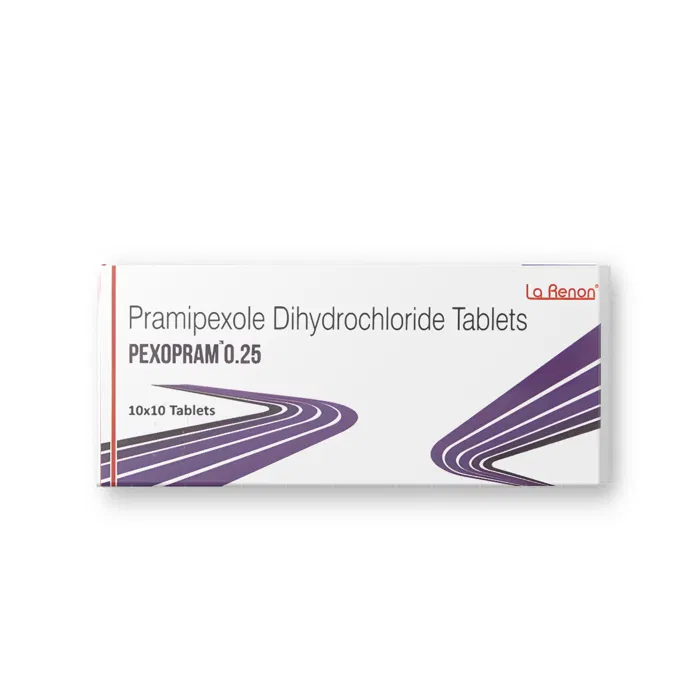
Pramipexole
Pexopram 0.25 mg TabletStarting at
$68.99

Pramipexole
Pexopram 0.5 mg TabletStarting at
$57.99

Pramipexole
Parpex 1 mg TabletStarting at
$47.99
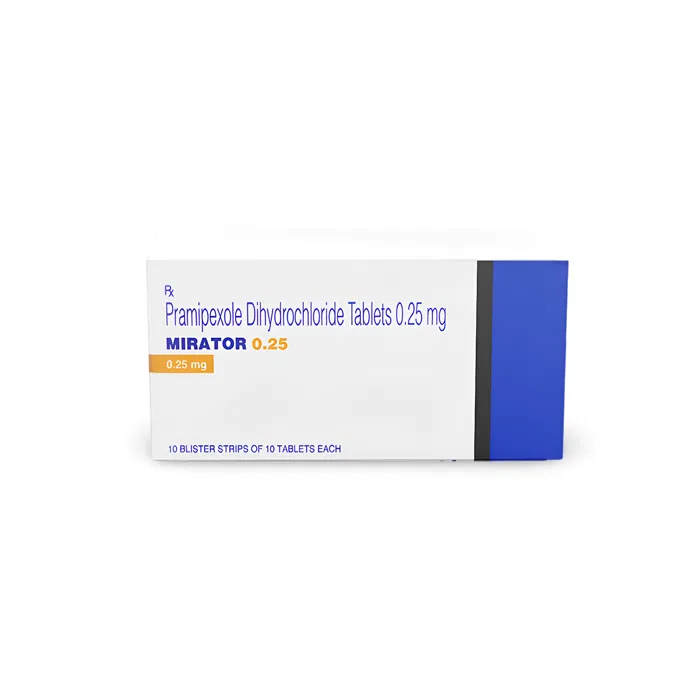
Pramipexole
Mirator 0.25 TabletStarting at
$88.99
Pramipexole
Movexol 1 mg TabletStarting at
$35.99