
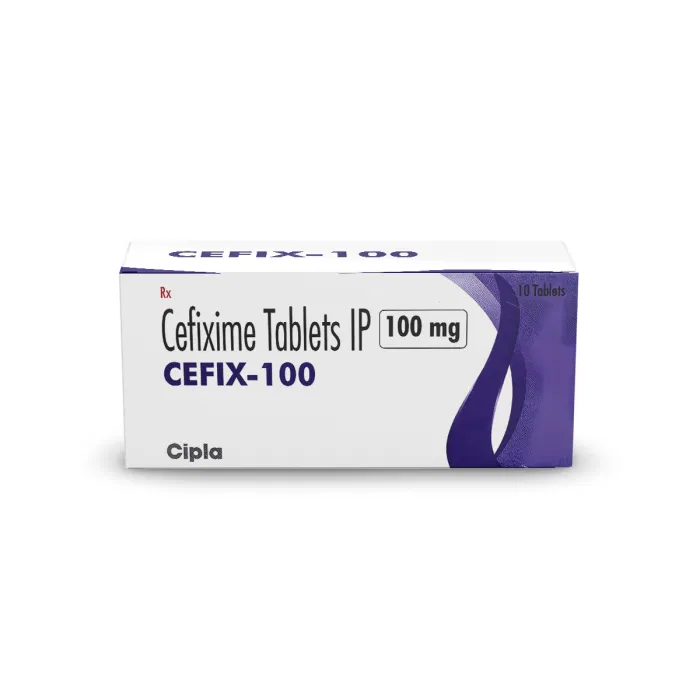
Cefix 100 mg Tablet
Cefix 100 mg Tablet is a prescription antibiotic tablet that contains 100 mg of cefixime in each tablet. Cefixime is a third-generation cephalosporin antibiotic used to treat certain bacterial infections, not viral illnesses like colds or flu.
Prescription required — you can upload it at checkout or later
| Pack Size | Qty | Price | Add to cart | Unit Price |
|---|---|---|---|---|
| 30 tablet/s | $26.99 | $0.90 | ||
| 60 tablet/s | $50.99 | $0.85 | ||
| 90 tablet/s | $73.99 | $0.82 |
Save more with our biggest pack
- Manufacturer
- Cipla, India
- Ingredient
- Cefixime
- Strength
- 100 mg
- Form
- Tablet
- Tablets per strip
- 10
- Prescription
- Required
- Availability
- In stock
- SKU
- CMU5878
Free shipping on orders of $199 or more
What is Cefix 100 mg Tablet?
Cefix 100 mg Tablet is a prescription antibiotic tablet that contains 100 mg of cefixime in each tablet. Cefixime is a third-generation cephalosporin antibiotic used to treat certain bacterial infections, not viral illnesses like colds or flu. It may be prescribed for infections such as ear, throat, sinus, urinary tract, and some respiratory infections when a doctor decides it is appropriate.
How it works: Cefixime works by stopping bacteria from making the protective cell wall they need to survive. In tablet form, Cefix 100 mg Tablet delivers a measured 100 mg dose that is absorbed after swallowing and starts fighting susceptible bacteria once it reaches the bloodstream.
Why choose Cefix 100 mg Tablet?
Cefix 100 mg Tablet is a lower-dose tablet option, which can be useful when a doctor wants more flexible dosing based on age, weight, infection type, or kidney function. Because there are no other strengths or forms of this brand listed here, this tablet fits into a doctor-directed regimen where 100 mg tablets may be taken one or more times per day to build the prescribed total dose.
Uses of Cefix 100 mg Tablet
- Bacterial ear infections
- Bacterial throat or tonsil infections
- Sinus infections caused by bacteria
- Urinary tract infections
- Certain respiratory tract infections
- Other infections your doctor finds sensitive to cefixime
How to take Cefix 100 mg Tablet
- Swallow Cefix 100 mg Tablet whole with a glass of water unless your doctor or pharmacist tells you otherwise.
- You may take it with or without food; taking it with food can help if it upsets your stomach.
- Take it at evenly spaced times if you are prescribed more than one dose per day.
- Finish the full course even if you start feeling better, because stopping early can let bacteria return.
- Do not skip doses, and do not take extra tablets to make up for a missed dose unless your prescriber instructs you to do so.
- If your doctor has prescribed it based on weight or kidney function, follow that exact schedule rather than changing the timing on your own.
Cefix 100 mg Tablet dosage
Each Cefix 100 mg Tablet provides 100 mg of cefixime. The exact dose and how often you take it depend on the infection being treated, your age, weight, and kidney function; some people take it once daily, while others may take divided doses under a doctor’s direction. Do not exceed the amount your prescriber recommends, because the maximum daily dose is determined individually and should not be set on your own.
Do not change your dose or stop the medicine without speaking to your doctor.
Cefix 100 mg Tablet side effects
Common side effects of Cefixime may include:
- Diarrhea
- Loose stools
- Nausea
- Stomach pain or indigestion
- Gas
- Headache
- Mild rash
Get medical help right away if you notice:
- Severe allergic reaction with swelling, wheezing, or trouble breathing
- Severe or bloody diarrhea that may signal a serious gut infection
- Severe skin reaction with blistering or peeling
- Yellowing of the skin or eyes
- Unusual bruising or bleeding
Precautions and warnings
- Tell your doctor if you have ever had an allergy to cefixime, penicillin, or other cephalosporin antibiotics.
- Use caution if you have kidney disease, since dosage may need adjustment for a 100 mg tablet regimen.
- Contact a doctor if you develop severe diarrhea, especially if it is watery, bloody, or occurs after treatment starts.
- Tell your prescriber about all medicines you take, including blood thinners and seizure medicines.
- If you have diabetes, ask whether the tablet schedule fits your blood sugar monitoring plan.
- Do not use cefixime for viral infections, because Cefix 100 mg Tablet only treats susceptible bacteria.
- If you become dizzy or unwell after taking it, avoid driving until you know how the medicine affects you.
Drug interactions
- Warfarin and other blood thinners
- Carbamazepine
- Certain diuretics such as furosemide
- Live bacterial vaccines, if your doctor advises timing changes
- Other antibiotics your doctor may be using for the same infection
Storage
Store Cefix 100 mg Tablet in its original strip or box at room temperature, away from excess heat, moisture, and light, and keep it out of reach of children.
Frequently asked questions about Cefix 100 mg Tablet
What is Cefix 100 mg used for?
Cefix 100 mg is used for certain bacterial infections, including ear, throat, sinus, urinary tract, and some respiratory infections. It will not treat viral illnesses like the common cold or flu.
How should I take Cefix 100 mg Tablet?
Cefix 100 mg Tablet is usually swallowed whole with water, with or without food. Follow the exact dosing schedule your doctor gives you, because the number of tablets per day depends on the infection and your health.
Can I take Cefix 100 mg with food?
Yes, Cefix 100 mg Tablet can be taken with or without food. Taking it with food may help reduce stomach upset if you feel nauseated.
What are the side effects of Cefix 100 mg?
Common side effects of Cefix 100 mg include diarrhea, nausea, stomach pain, gas, and headache. Get urgent medical help if you have trouble breathing, swelling, severe rash, or severe diarrhea.
Customer reviews of Cefix 100 mg Tablet
No written reviews yet.