
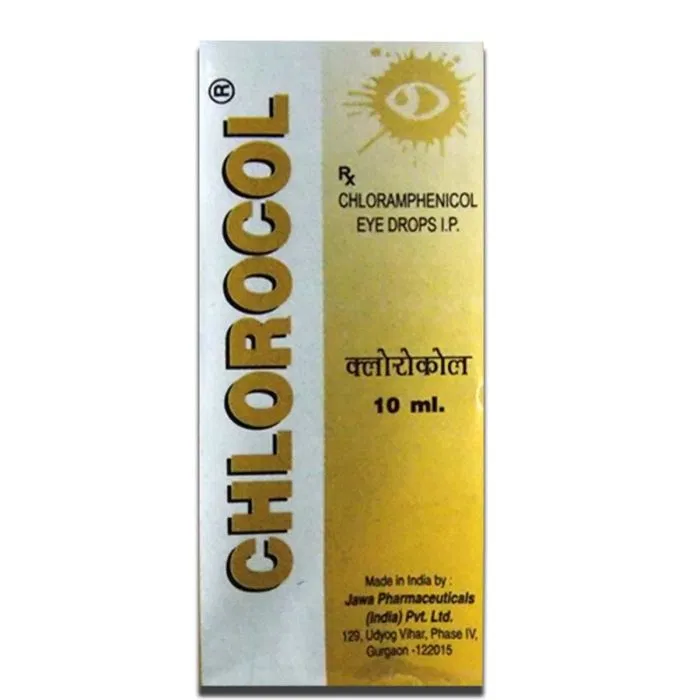
Chlorocol 10 mL Eye Drop
Chlorocol 10 mL Eye Drop is a chloramphenicol ophthalmic antibiotic used to treat certain bacterial eye infections. Each 10 mL bottle of Chlorocol 10 mL Eye Drop contains chloramphenicol in eye-drop form, designed to deliver the medicine directly to the affected eye.
Prescription required — you can upload it at checkout or later
| Pack Size | Qty | Price | Add to cart | Unit Price |
|---|---|---|---|---|
| 4 eye drop/s | $21.99 | $5.50 | ||
| 8 eye drop/s | $42.99 | $5.37 | ||
| 12 eye drop/s | $62.99 | $5.25 |
Save more with our biggest pack
- Manufacturer
- Jawa Pharmaceuticals (India) Pvt. Ltd.
- Ingredient
- Chloramphenicol
- Strength
- 10 mL
- Form
- Eye Drop
- Prescription
- Required
- Availability
- In stock
- SKU
- CMU1898
Free shipping on orders of $199 or more
What is Chlorocol 10 mL Eye Drop?
Chlorocol 10 mL Eye Drop is a chloramphenicol ophthalmic antibiotic used to treat certain bacterial eye infections. Each 10 mL bottle of Chlorocol 10 mL Eye Drop contains chloramphenicol in eye-drop form, designed to deliver the medicine directly to the affected eye. Chloramphenicol is an antibiotic, not a steroid, and it works against bacteria that can cause conjunctivitis and other superficial eye infections. This product should be used only when a clinician thinks a bacterial infection is likely.
How it works: Chloramphenicol stops bacteria from making the proteins they need to grow and multiply. When used as Chlorocol 10 mL Eye Drop, it delivers the antibiotic directly to the eye surface to help clear the infection and relieve redness or discharge caused by susceptible bacteria.
Why choose Chlorocol 10 mL Eye Drop?
Chlorocol 10 mL Eye Drop is the standard bottle size for this eye-drop formulation and is suitable for people who need a topical antibiotic course for an eye infection. Because it is an eye drop rather than a tablet or injection, it acts locally on the eye and usually causes less whole-body exposure, though the eye may briefly sting or blur after use. A doctor may choose Chlorocol 10 mL Eye Drop when they want targeted treatment that can be used several times a day at home.
Uses of Chlorocol 10 mL Eye Drop
- Bacterial conjunctivitis
- Superficial bacterial eye infection
- Red, sticky eye with discharge
- Doctor-directed treatment for susceptible eye bacteria
How to take Chlorocol 10 mL Eye Drop
- Wash your hands before using Chlorocol 10 mL Eye Drop.
- Tilt your head back, pull down the lower eyelid, and place the prescribed number of drops into the eye without touching the dropper tip.
- Close your eye gently for 1 to 2 minutes after instilling the drops; do not rub the eye.
- If you use other eye medicines, wait at least 5 to 10 minutes between products unless your doctor gives different instructions.
- Do not wear contact lenses during an active eye infection unless your clinician says it is safe.
- Use the drops for the full prescribed course, even if the eye starts to feel better sooner.
Chlorocol 10 mL Eye Drop dosage
The bottle size is 10 mL, which provides multiple doses of Chlorocol 10 mL Eye Drop for a full treatment course. The exact dose and how often to use it are set by the doctor based on the infection and severity; common eye-drop schedules for chloramphenicol are several times per day at first, then less often as the eye improves, but the prescribed plan should be followed exactly. There is no universal maximum daily number of drops for this product because dosing is individualized and should not be changed without medical advice.
Do not change your dose or stop the medicine without speaking to your doctor.
Chlorocol 10 mL Eye Drop side effects
Common side effects of Chloramphenicol may include:
- Temporary burning or stinging after putting in the drops
- Mild eye irritation or redness
- Blurred vision for a short time after use
- Tearing or watery eyes
- Unpleasant taste in the mouth after the drop drains through the tear duct
Get medical help right away if you notice:
- Severe allergic reaction such as swelling, rash, hives, or trouble breathing
- Worsening eye pain, vision changes, or marked light sensitivity
- Signs of a severe skin reaction such as blistering or peeling
- New unusual bruising, fever, or sore throat, which need urgent medical review
Precautions and warnings
- Use only for an eye infection that a clinician believes is bacterial; it will not treat viral or allergic eye problems.
- Do not use Chlorocol 10 mL Eye Drop if you have a known allergy to chloramphenicol or any ingredient in the bottle.
- Remove soft contact lenses before use and do not put them back in while the eye is infected unless your doctor says otherwise.
- Do not let the dropper tip touch the eye, fingers, or any surface to avoid contamination.
- Seek medical care if symptoms are not improving within a few days or if they get worse.
- Use extra caution if you have a history of blood disorders or unusual bruising and tell your doctor before starting treatment.
- Because vision may be briefly blurred after dosing, avoid driving or operating machinery until your vision clears.
Drug interactions
- Other eye medicines may interfere with Chlorocol 10 mL Eye Drop if used at the same time; spacing doses apart can help.
- Using multiple topical eye products together can dilute or wash out the chloramphenicol drop if not separated properly.
- Tell your clinician about any medicines that affect blood counts or bone marrow, because chloramphenicol has rare blood-related risks.
- Avoid sharing the bottle with anyone else to prevent cross-contamination and infection spread.
Storage
Store Chlorocol 10 mL Eye Drop tightly closed at room temperature, away from heat, and keep it out of reach of children; discard it if the solution changes color or becomes contaminated.
Frequently asked questions about Chlorocol 10 mL Eye Drop
What is Chlorocol 10 mL used for?
Chlorocol 10 mL Eye Drop is used to treat certain bacterial eye infections, especially infections that cause redness, discharge, and irritation. It should be used only when a doctor thinks bacteria are the cause.
How often do I use Chlorocol 10 mL Eye Drop?
The dosing schedule for Chlorocol 10 mL Eye Drop depends on the infection and your doctor’s instructions. Many chloramphenicol eye-drop regimens start with frequent doses and then taper as the eye improves, but you should follow the exact prescription on your label.
Can Chlorocol 10 mL Eye Drop be used with contact lenses?
It is usually best to avoid contact lenses during an active eye infection while using Chlorocol 10 mL Eye Drop. Ask your eye doctor when it is safe to start wearing them again.
What side effects can Chlorocol 10 mL Eye Drop cause?
Common effects include brief stinging, irritation, tearing, and blurred vision right after the drop is used. Get urgent help if you develop severe allergy symptoms, worsening eye pain, or vision changes.
Customer reviews of Chlorocol 10 mL Eye Drop
No written reviews yet.