
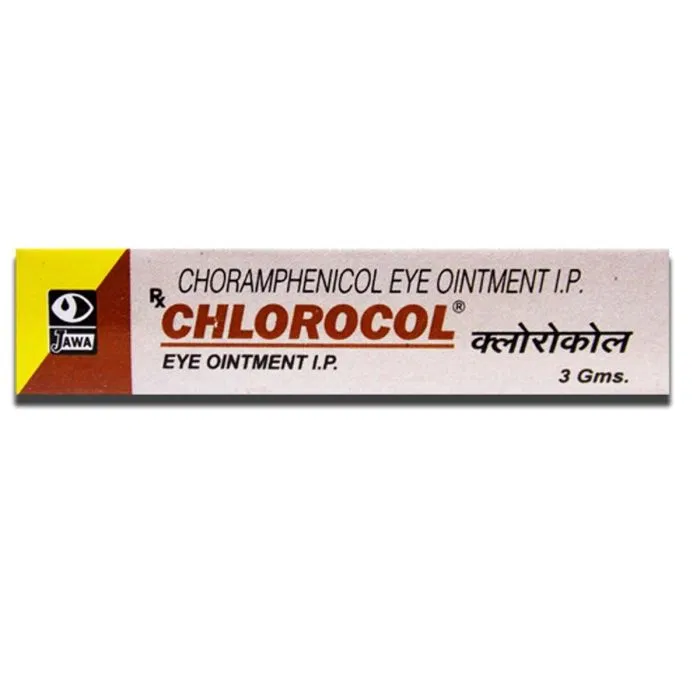
Chlorocol 3 g Ointment
Chlorocol 3 g Ointment is an eye ointment that contains chloramphenicol 3 g per tube, packaged as a strip/box of 10 tubes. Chloramphenicol is a broad-spectrum antibiotic used to treat certain bacterial eye infections, including conjunctivitis and other surface eye infections caused by susceptible bacteria.
Prescription required — you can upload it at checkout or later
| Pack Size | Qty | Price | Add to cart | Unit Price |
|---|---|---|---|---|
| 4 tube/s | $21.99 | $5.50 | ||
| 8 tube/s | $43.99 | $5.50 | ||
| 12 tube/s | $62.99 | $5.25 |
Save more with our biggest pack
- Manufacturer
- Jawa Pharmaceuticals (India) Pvt. Ltd.
- Ingredient
- Chloramphenicol
- Strength
- 3 g
- Form
- Ointment
- Prescription
- Required
- Availability
- In stock
- SKU
- CMU1900
Free shipping on orders of $199 or more
What is Chlorocol 3 g Ointment?
Chlorocol 3 g Ointment is an eye ointment that contains chloramphenicol 3 g per tube, packaged as a strip/box of 10 tubes. Chloramphenicol is a broad-spectrum antibiotic used to treat certain bacterial eye infections, including conjunctivitis and other surface eye infections caused by susceptible bacteria. Because it is an ointment, Chlorocol 3 g Ointment can stay in contact with the eye longer than drops and is often used when nighttime or longer-lasting coverage is helpful. It should be used only for bacterial infections and only when a clinician has confirmed it is appropriate.
How it works: Chloramphenicol works by stopping bacteria from making the proteins they need to grow and multiply. In ointment form, it coats the eye surface so the medicine stays in place and continues acting on the infected area for longer.
Why choose Chlorocol 3 g Ointment?
This 3 g strength refers to the amount of ointment in each tube, not a higher drug concentration, so it is commonly used in the same way as other chloramphenicol eye ointments but with the tube size prescribed by the doctor. Ointment can feel thicker and blur vision briefly after application, which is why some people prefer drops during the day and ointment at bedtime. A doctor may choose Chlorocol 3 g Ointment when longer eye contact is desired or when a lubricating ointment form is more suitable.
Uses of Chlorocol 3 g Ointment
- Bacterial conjunctivitis
- Blepharitis caused by susceptible bacteria
- Surface eye infections
- Doctor-directed treatment of minor bacterial eye infections
How to take Chlorocol 3 g Ointment
- Wash your hands before and after using Chlorocol 3 g Ointment.
- Tilt your head back, gently pull down the lower eyelid, and apply a small ribbon of ointment into the pocket of the eye.
- Avoid touching the tube tip to your eye, eyelid, fingers, or any surface.
- Close the eye gently for 1 to 2 minutes and move the eye around to spread the ointment.
- Wipe away excess ointment from the eyelids with a clean tissue.
- If you use other eye medicines, put in drops first and wait at least 5 to 10 minutes before using the ointment.
Chlorocol 3 g Ointment dosage
Each tube of Chlorocol 3 g Ointment contains 3 g of ointment, and the amount used per dose is usually a small ribbon placed inside the lower eyelid. How often it is used, and the maximum number of applications per day, depends on the infection and the prescriber’s directions; the doctor decides the exact schedule for this strength. Use only as prescribed and do not continue longer than instructed.
Do not change your dose or stop the medicine without speaking to your doctor.
Chlorocol 3 g Ointment side effects
Common side effects of Chloramphenicol may include:
- Temporary blurred vision after application
- Mild burning or stinging
- Eye irritation or redness
- Watery eyes
- Unpleasant taste in the mouth after eye application
- Eyelid stickiness or a greasy feel
Get medical help right away if you notice:
- Allergic reaction such as rash, swelling, or trouble breathing
- Severe eye pain or worsening redness
- Vision changes that do not quickly clear
- Signs of a serious blood problem such as unusual bruising, fever, or extreme tiredness
Precautions and warnings
- For bacterial eye infections only; it will not treat viral or fungal eye problems.
- Do not wear contact lenses during an active eye infection unless your eye doctor says it is safe.
- Do not use if you have had a serious allergy to chloramphenicol or to similar antibiotic eye products.
- The ointment may blur vision, so be careful with driving or tasks needing clear eyesight right after use.
- Use extra caution if you have a history of blood disorders, because chloramphenicol can rarely affect the blood.
- Tell your doctor if you are pregnant, breastfeeding, or treating a newborn or infant.
- Finish the prescribed course even if symptoms improve, unless your doctor tells you to stop.
Drug interactions
- Other eye medicines, including drops and ointments, may need to be spaced apart by several minutes.
- Medicines that can also affect the bone marrow may increase concern for blood-related side effects.
- Systemic chloramphenicol or other antibiotics may affect overall treatment decisions.
- Contact lens solutions or eye products with preservatives may irritate the eye more during treatment.
Storage
Store Chlorocol 3 g Ointment at room temperature, keep the tube tightly closed, and protect it from contamination and excessive heat.
Frequently asked questions about Chlorocol 3 g Ointment
What is Chlorocol 3 g used for?
Chlorocol 3 g Ointment is used for certain bacterial eye infections such as conjunctivitis and other surface infections caused by susceptible bacteria. It should be used only when a healthcare professional confirms that an antibiotic eye ointment is appropriate.
How do I apply Chlorocol 3 g Ointment in the eye?
Pull down the lower eyelid and place a small ribbon of ointment into the pocket, then close the eye gently for a moment. Do not let the tube tip touch your eye or skin, and follow the dosing schedule your doctor gives you.
Does Chlorocol 3 g Ointment blur vision?
Yes, eye ointments commonly cause temporary blurred vision right after application because they coat the eye surface. This usually improves soon after use, so many people apply it at bedtime if their prescriber recommends that schedule.
Can I wear contacts while using Chlorocol 3 g?
It is usually best not to wear contact lenses during an active eye infection unless your eye doctor says otherwise. Contacts can irritate the eye and may interfere with healing, so ask your prescriber when it is safe to restart them.
Customer reviews of Chlorocol 3 g Ointment
No written reviews yet.