
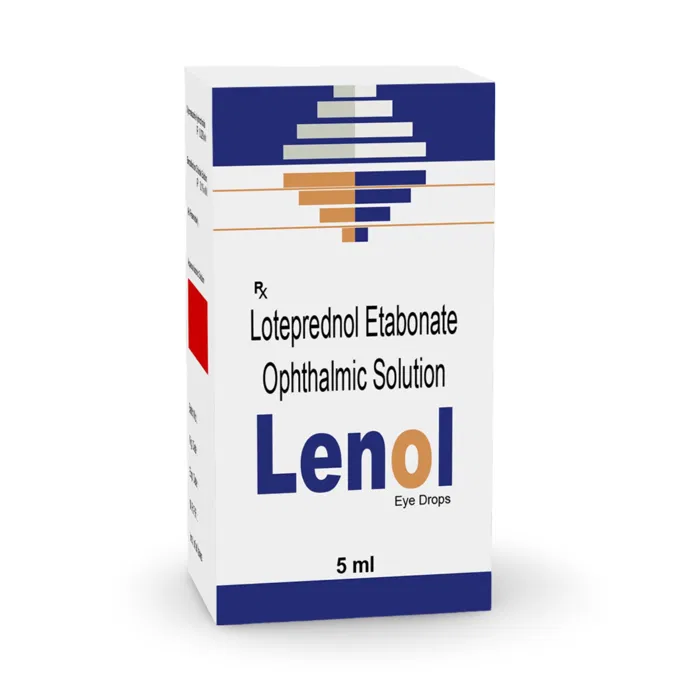
Lenol Eye Drop
Lenol Eye Drop is a prescription eye drop containing loteprednol etabonate as the active ingredient in the strength listed on the package. It belongs to the corticosteroid class, which helps reduce inflammation in the eye.
Prescription required — you can upload it at checkout or later
| Pack Size | Qty | Price | Add to cart | Unit Price |
|---|---|---|---|---|
| 5 eye drop/s | $16.99 | $3.40 | ||
| 10 eye drop/s | $30.99 | $3.10 | ||
| 15 eye drop/s | $42.99 | $2.87 |
Save more with our biggest pack
- Manufacturer
- Vee Remedies
- Ingredient
- Loteprednol Etabonate
- Form
- Eye Drop
- Prescription
- Required
- Availability
- In stock
- SKU
- CMU7203
Free shipping on orders of $199 or more
What is Lenol Eye Drop?
Lenol Eye Drop is a prescription eye drop containing loteprednol etabonate as the active ingredient in the strength listed on the package. It belongs to the corticosteroid class, which helps reduce inflammation in the eye. Doctors prescribe Lenol Eye Drop for inflammatory eye conditions such as allergic or postoperative eye inflammation when steroid treatment is appropriate. Because it is an eye steroid, it should be used exactly as directed and not for routine eye redness unless a clinician has confirmed the cause.
How it works: Loteprednol etabonate works by calming the immune response that causes swelling, redness, and irritation in the eye. As an eye drop, Lenol Eye Drop delivers the medicine directly to the eye surface so it can act where the inflammation is occurring.
Why choose Lenol Eye Drop?
Lenol Eye Drop is a single-strength eye drop product, so there are no other strengths or forms in this brand line to compare it with. This means the labeled strength is intended for patients whose eye inflammation has been assessed by a doctor and who need the anti-inflammatory effect of loteprednol etabonate in drop form. Compared with lower-strength or less frequent steroid regimens used in some patients, the choice of Lenol Eye Drop depends on the severity, location, and timing of the inflammation.
Uses of Lenol Eye Drop
- Eye inflammation
- Allergic eye irritation
- Post-surgical eye swelling
- Steroid-responsive eye conditions
- Redness and discomfort from inflammation
How to take Lenol Eye Drop
- Wash your hands before using Lenol Eye Drop.
- Tilt your head back, pull down the lower eyelid, and place the prescribed number of drops into the eye.
- Do not let the dropper tip touch your eye, fingers, or any surface.
- If you use other eye medicines, wait at least 5 to 10 minutes between products unless your doctor tells you otherwise.
- After instilling the drop, close your eye gently and press the inner corner for about 1 minute to reduce drainage.
- Remove contact lenses before use and only put them back in if your doctor says it is okay.
Lenol Eye Drop dosage
Lenol Eye Drop provides loteprednol etabonate in the strength listed on the label in each drop, and the exact dose is measured by the number of drops your doctor prescribes. It is commonly used several times a day at first, then reduced as the eye improves; the maximum daily frequency should be set by the prescriber for your condition. Do not change how often you use Lenol Eye Drop unless your doctor tells you to.
Do not change your dose or stop the medicine without speaking to your doctor.
Lenol Eye Drop side effects
Common side effects of Loteprednol Etabonate may include:
- Temporary burning or stinging after instillation
- Blurred vision right after use
- Eye irritation or discomfort
- Dry eye feeling
- Watery eyes
- Headache
- Increased sensitivity to light
Get medical help right away if you notice:
- Worsening eye pain or vision changes
- Signs of eye infection such as discharge, swelling, or severe redness
- Sudden decrease in vision
- Symptoms of increased eye pressure, such as halos or eye pain
- Allergic reaction with rash, itching, swelling, or trouble breathing
Precautions and warnings
- Use only in the eye; do not swallow Lenol Eye Drop.
- Tell your doctor if you have glaucoma, cataracts, herpes eye infection, or a history of high eye pressure.
- Do not use this medicine for an untreated red or painful eye without medical evaluation.
- Longer or repeated steroid use in the eye can raise eye pressure and increase cataract risk.
- Do not wear contact lenses during an active eye inflammation unless your clinician approves it.
- Your vision may be blurred briefly after each dose, so be careful driving or using machinery until it clears.
- If symptoms do not improve or get worse, contact your doctor promptly.
Drug interactions
- Other corticosteroid eye drops or eye ointments
- Atropine or similar anticholinergic eye medicines
- Other medicines that can raise eye pressure when used with steroids
- Any prescription or over-the-counter eye product unless your doctor approves the combination
Storage
Store Lenol Eye Drop at room temperature in the original carton, tightly closed, and keep it away from heat, moisture, and freezing unless the label says otherwise.
Frequently asked questions about Lenol Eye Drop
What is Lenol Eye Drop used for?
Lenol Eye Drop is a loteprednol etabonate steroid eye drop used to reduce inflammation in the eye. Doctors may prescribe it for allergic or postoperative eye inflammation and other steroid-responsive eye conditions.
How do I use Lenol Eye Drop correctly?
Use Lenol Eye Drop exactly as prescribed, usually by placing the ordered number of drops into the affected eye. Do not touch the dropper tip to your eye, and wait a few minutes before using any other eye medicine.
Can Lenol Eye Drop raise eye pressure?
Yes, steroid eye drops like Lenol Eye Drop can raise eye pressure in some people, especially with longer use. Your doctor may want to check your eyes if you use it beyond a short course.
Can I wear contacts while using Lenol Eye Drop?
Contact lenses are usually avoided when you have an active eye condition being treated with Lenol Eye Drop. Ask your eye doctor when it is safe to wear them again after treatment.
Customer reviews of Lenol Eye Drop
No written reviews yet.