
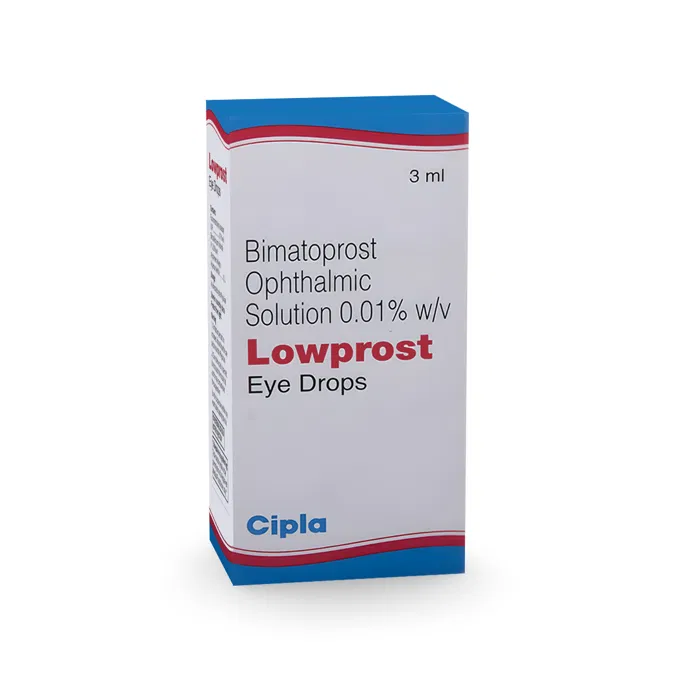
Lowprost Eye Drop
Lowprost Eye Drop is a prescription eye drop containing bimatoprost in the strength shown on the label, supplied by Cipla Ltd. It belongs to the prostaglandin analog class and is used to lower high pressure inside the eye.
Prescription required — you can upload it at checkout or later
| Pack Size | Qty | Price | Add to cart | Unit Price |
|---|---|---|---|---|
| 3 eye drop/s | $22.99 | $7.66 | ||
| 6 eye drop/s | $40.99 | $6.83 | ||
| 9 eye drop/s | $55.99 | $6.22 |
Save more with our biggest pack
- Manufacturer
- Cipla Ltd.
- Ingredient
- Bimatoprost
- Form
- Eye Drop
- Prescription
- Required
- Availability
- In stock
- SKU
- CMU8207
Free shipping on orders of $199 or more
What is Lowprost Eye Drop?
Lowprost Eye Drop is a prescription eye drop containing bimatoprost in the strength shown on the label, supplied by Cipla Ltd. It belongs to the prostaglandin analog class and is used to lower high pressure inside the eye. Doctors prescribe Lowprost Eye Drop mainly for glaucoma and ocular hypertension, where reducing eye pressure can help protect vision.
How it works: Bimatoprost in Lowprost Eye Drop helps fluid drain better from the eye, which lowers pressure inside the eye. As an eye drop, it works locally where it is needed, with little of the medicine reaching the rest of the body.
Why choose Lowprost Eye Drop?
This Lowprost Eye Drop is the labeled strength in eye-drop form, so it is meant for direct use in the eyes rather than for swallowing or any other route. Because there are no other strengths or forms of this brand listed here, your doctor uses this exact product when they want standard bimatoprost eye-drop therapy suited to your eye-pressure needs and tolerance.
Uses of Lowprost Eye Drop
- Glaucoma
- Ocular hypertension
- Lowering elevated eye pressure
- Helping protect the optic nerve from pressure damage
How to take Lowprost Eye Drop
- Wash your hands before using Lowprost Eye Drop.
- Tilt your head back, pull down the lower eyelid, and place the prescribed number of drops into the eye.
- Do not touch the dropper tip to your eye, fingers, or any surface.
- If you use other eye medicines, separate them by at least 5 minutes unless your doctor tells you otherwise.
- Remove soft contact lenses before using the drop and wait at least 15 minutes before putting them back in.
- Use Lowprost Eye Drop exactly at the time your doctor prescribes; do not use extra drops to make it work faster.
Lowprost Eye Drop dosage
Lowprost Eye Drop contains bimatoprost in the labeled strength per drop, and the usual adult dosing for bimatoprost eye drops is one drop in the affected eye(s) once daily, usually in the evening. Using it more often than once daily may reduce its pressure-lowering effect, so the maximum is generally one dose per day unless your doctor specifically instructs otherwise.
Do not change your dose or stop the medicine without speaking to your doctor.
Lowprost Eye Drop side effects
Common side effects of Bimatoprost may include:
- Eye redness, which can be more noticeable with bimatoprost eye drops
- Mild eye irritation or burning after instillation
- Itchy eyes
- Dry eyes or a feeling of something in the eye
- Blurred vision for a short time after dosing
- Darkening of the eyelid skin or the colored part of the eye with continued use
Get medical help right away if you notice:
- Severe eye pain or sudden worsening vision
- Signs of eye infection or inflammation such as marked redness, swelling, or discharge
- Allergic reaction such as rash, facial swelling, or trouble breathing
- New floaters, flashes of light, or curtain-like vision loss
Precautions and warnings
- Use Lowprost Eye Drop only in the eye as prescribed; do not inject or swallow it.
- Tell your doctor if you have a history of eye inflammation, uveitis, macular swelling, or eye surgery.
- This medicine can gradually change eye color or eyelid pigmentation, and that change may be permanent.
- If you wear soft contact lenses, take them out before dosing because the preservative may discolor lenses or irritate the eye.
- Vision may blur briefly after use, so wait until your vision is clear before driving or operating machinery.
- Tell your doctor if you are pregnant, breastfeeding, or planning eye surgery.
- Use caution if you have other eye drops, because the timing between products matters.
Drug interactions
- Other glaucoma eye drops, especially other pressure-lowering drops, may need timed separation.
- Preserved contact lenses may interact with the drop and should be removed before use.
- Other prostaglandin analog eye medicines can increase the chance of side effects if used together.
- Eye ointments or gels may change how well Lowprost Eye Drop is absorbed if used at the same time.
Storage
Store Lowprost Eye Drop at room temperature, tightly closed, and protect it from contamination and excessive heat or direct light.
Frequently asked questions about Lowprost Eye Drop
How do I use Lowprost Eye Drop correctly?
Use Lowprost Eye Drop exactly as your doctor prescribed, usually one drop in the affected eye once daily in the evening. Wash your hands first, avoid touching the dropper tip, and remove contact lenses before dosing.
What is Lowprost Eye Drop used for?
Lowprost Eye Drop is used to lower increased pressure inside the eye. It is commonly prescribed for glaucoma and ocular hypertension to help protect vision.
Can I use Lowprost Eye Drop more than once a day?
Lowprost Eye Drop is usually used once daily, and using it more often may make it work less well. Do not increase the dose unless your doctor tells you to do so.
What side effects can happen with Lowprost Eye Drop?
Common side effects include eye redness, irritation, itching, dry eyes, and temporary blurred vision. Call a doctor right away if you have severe eye pain, sudden vision changes, or signs of an allergic reaction.
Customer reviews of Lowprost Eye Drop
No written reviews yet.