
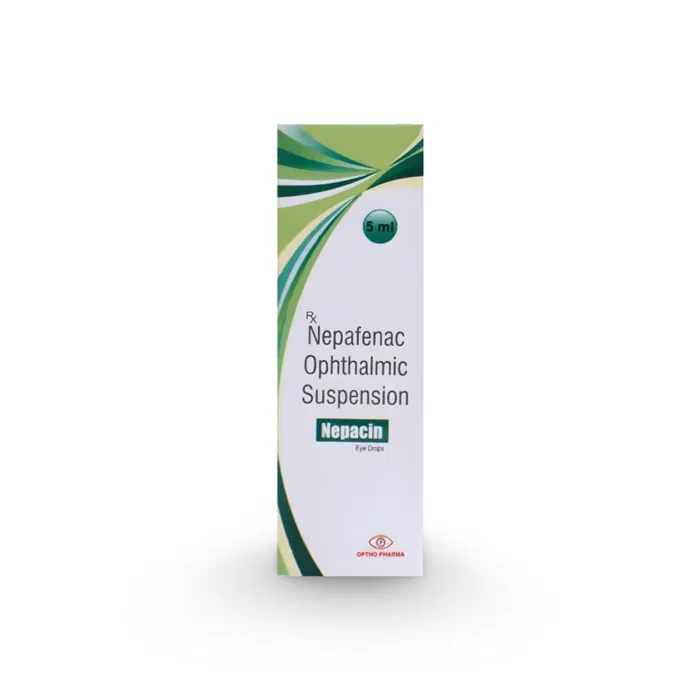
Nepacin Eye Drop
Nepacin Eye Drop is a prescription eye drop that contains nepafenac in the strength listed on the package, supplied as a bottle for ocular use. Nepafenac belongs to the nonsteroidal anti-inflammatory drug (NSAID) class and is used to reduce eye inflammation and pain, especially after eye surgery.
Prescription required — you can upload it at checkout or later
| Pack Size | Qty | Price | Add to cart | Unit Price |
|---|---|---|---|---|
| 1 bottle | $12.99 | $12.99 |
- Manufacturer
- Optho Pharma Pvt Ltd
- Ingredient
- Nepafenac
- Form
- Eye Drop
- Prescription
- Required
- Availability
- In stock
- SKU
- CMU7844
Free shipping on orders of $199 or more
What is Nepacin Eye Drop?
Nepacin Eye Drop is a prescription eye drop that contains nepafenac in the strength listed on the package, supplied as a bottle for ocular use. Nepafenac belongs to the nonsteroidal anti-inflammatory drug (NSAID) class and is used to reduce eye inflammation and pain, especially after eye surgery. Nepacin Eye Drop works directly in the eye to help calm swelling, redness, and discomfort. It is intended for use only in the eye under medical guidance.
How it works: Nepafenac is converted inside the eye to an active anti-inflammatory medicine that blocks substances called prostaglandins. By lowering prostaglandins in the eye, Nepacin Eye Drop helps reduce pain, swelling, and inflammation.
Why choose Nepacin Eye Drop?
Because Nepacin Eye Drop is a single listed strength with no other sibling strengths or forms in this brand line, the dose your doctor chooses is based on your eye condition and surgical plan rather than a lower or higher brand version. This eye drop form is suited for people who need localized anti-inflammatory treatment in the eye, where topical delivery can start working at the surface without taking a tablet by mouth. A doctor may choose Nepacin Eye Drop when they want targeted relief with less whole-body exposure than oral NSAIDs.
Uses of Nepacin Eye Drop
- Reducing eye pain after cataract surgery
- Helping control postoperative eye inflammation
- Lowering swelling in the eye after ocular procedures
- Relieving surgical eye discomfort as prescribed
How to take Nepacin Eye Drop
- Use Nepacin Eye Drop exactly as your eye doctor tells you to.
- Wash your hands before putting the drops in your eye.
- Do not let the dropper tip touch your eye, fingers, or any surface.
- If you use other eye drops, wait at least 5 minutes between products unless your doctor says otherwise.
- After instilling the drop, close your eye gently for 1 to 2 minutes and avoid rubbing it.
- Remove contact lenses before use and ask your doctor when you can put them back in.
Nepacin Eye Drop dosage
Nepacin Eye Drop provides nepafenac in the strength listed on the bottle label, and the exact amount used per dose is determined by the prescriber. It is commonly used as one drop in the affected eye or eyes on a schedule directed by the doctor, often starting before surgery and continuing afterward. There is no universal maximum daily dose for all patients because the doctor decides the frequency and duration based on the procedure and your eye health.
Do not change your dose or stop the medicine without speaking to your doctor.
Nepacin Eye Drop side effects
Common side effects of Nepafenac may include:
- Temporary eye burning or stinging
- Mild eye redness
- Blurred vision right after instilling the drop
- Itchy or watery eyes
- Sensation of something in the eye
- Headache in some users
Get medical help right away if you notice:
- Worsening eye pain or vision changes
- Severe eye redness or swelling
- Signs of allergic reaction such as rash, swelling, or trouble breathing
- Slow healing or unusual eye discharge after use
Precautions and warnings
- Use only in the eye; do not swallow Nepacin Eye Drop.
- Tell your doctor if you have a history of aspirin or NSAID allergy, asthma, or nasal polyps.
- This is a prescription eye NSAID, so follow the exact schedule your surgeon or eye doctor gives you.
- Avoid wearing contact lenses during treatment unless your doctor says it is safe.
- Use caution driving or operating machinery right after the drop if your vision is blurred.
- Tell your doctor about any bleeding problems or if you take medicines that increase bleeding risk.
- Contact your doctor promptly if pain, redness, or vision gets worse instead of better.
Drug interactions
- Other eye drops, especially steroid or NSAID eye drops, may need spacing and doctor supervision.
- Blood thinners such as warfarin may increase bleeding risk when NSAIDs are used.
- Oral NSAIDs like ibuprofen or naproxen may add to side effects or bleeding risk.
- Aspirin can increase the chance of NSAID-related side effects in sensitive patients.
Storage
Store Nepacin Eye Drop at room temperature in the original box, tightly closed, and keep it away from heat, freezing, and contamination.
Frequently asked questions about Nepacin Eye Drop
What is Nepacin Eye Drop used for?
Nepacin Eye Drop is used to treat pain and inflammation in the eye, most often after eye surgery such as cataract surgery. It contains nepafenac, a topical NSAID that works directly in the eye to reduce swelling and discomfort.
How often should I use Nepacin Eye Drop?
The exact schedule for Nepacin Eye Drop depends on your surgeon’s or eye doctor’s instructions. Do not change the frequency yourself, because the right timing can vary based on the procedure and your healing progress.
Does Nepacin Eye Drop sting or blur vision?
It can cause brief stinging, burning, or temporary blurred vision right after you put it in. These effects are usually short-lived, but contact your doctor if they are severe or do not go away.
Can I wear contacts while using Nepacin Eye Drop?
Contact lenses should usually be removed before using Nepacin Eye Drop, and you should ask your doctor when it is safe to wear them again. This helps avoid irritation and keeps the medicine working properly.
Customer reviews of Nepacin Eye Drop
No written reviews yet.