
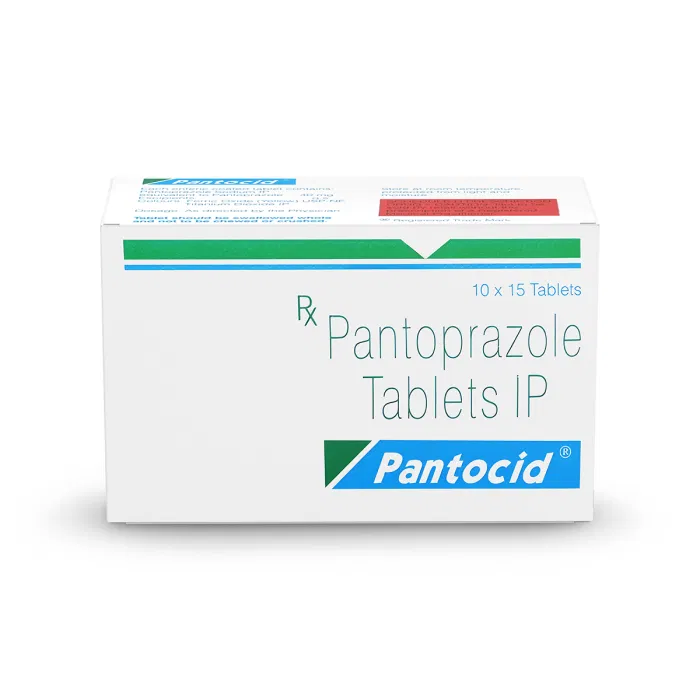
Pantocid Tablet
Pantocid Tablet is a pantoprazole tablet made by Sun Pharmaceutical Industries Ltd. Each tablet contains pantoprazole as labelled and belongs to the proton pump inhibitor (PPI) class.
Prescription required — you can upload it at checkout or later
| Pack Size | Qty | Price | Add to cart | Unit Price |
|---|---|---|---|---|
| 90 tablet/s | $79.99 | $0.89 | ||
| 180 tablet/s | $152.99 | $0.85 | ||
| 270 tablet/s | $215.99 | $0.80 |
Save more with our biggest pack
- Manufacturer
- Sun Pharmaceutical Industries Ltd.
- Ingredient
- Pantoprazole
- Form
- Tablet
- Tablets per strip
- 10
- Prescription
- Required
- Availability
- In stock
- SKU
- CMU6931
Free shipping on orders of $199 or more
What is Pantocid Tablet?
Pantocid Tablet is a pantoprazole tablet made by Sun Pharmaceutical Industries Ltd. Each tablet contains pantoprazole as labelled and belongs to the proton pump inhibitor (PPI) class. It is used to reduce extra stomach acid and help treat conditions such as acid reflux, GERD, erosive esophagitis, and stomach or duodenal ulcers. Doctors may also use pantoprazole when acid control is needed as part of H. pylori treatment.
How it works: Pantoprazole in Pantocid Tablet blocks the acid pumps in the stomach lining, which lowers the amount of acid your stomach makes. Because it is a tablet, you swallow it whole and it begins working after absorption, helping reduce acid production over time rather than giving immediate relief.
Why choose Pantocid Tablet?
Pantocid Tablet is a tablet formulation of pantoprazole, so it is swallowed rather than used as a liquid or injection. If your prescribed tablet strength is higher than a typical starting dose, it is usually chosen only after a doctor has assessed your symptoms and needs more acid suppression than a lower strength would provide. The tablet form is practical for regular daily use and may be selected when a doctor wants steady, long-lasting acid control.
Uses of Pantocid Tablet
- GERD and frequent heartburn
- Erosive esophagitis
- Stomach and duodenal ulcers
- Acid-related irritation of the stomach
- Part of H. pylori eradication therapy
How to take Pantocid Tablet
- Swallow Pantocid Tablet whole with water; do not crush, chew, or split it unless your prescriber specifically says it is safe to do so.
- Take it before meals, usually before breakfast, because pantoprazole works best when taken on an empty stomach.
- Try to take it at the same time each day for consistent acid control.
- If you also use medicines for H. pylori, take Pantocid Tablet exactly as directed with the other prescribed drugs.
- If you miss a dose, take it when you remember unless it is almost time for the next dose; do not double up without medical advice.
Pantocid Tablet dosage
Pantocid Tablet provides pantoprazole as labelled in each tablet, and the exact tablet strength should be followed as prescribed. Depending on the condition being treated, it may be taken once daily, and some patients may need a different schedule only if their doctor specifically instructs it. The maximum daily amount depends on the reason for treatment and the prescribed strength, so your doctor should set the dose and duration.
Do not change your dose or stop the medicine without speaking to your doctor.
Pantocid Tablet side effects
Common side effects of Pantoprazole may include:
- Headache
- Diarrhea
- Nausea
- Stomach pain
- Gas or bloating
- Dizziness
- Constipation
Get medical help right away if you notice:
- Severe allergic reaction such as rash, swelling, or trouble breathing
- Severe or persistent diarrhea, which may signal a serious intestinal infection
- Kidney problems, including reduced urination or swelling
- Low magnesium symptoms such as muscle cramps, tremor, or irregular heartbeat
- Unusual bruising or bleeding
Precautions and warnings
- Pantocid Tablet is a higher-strength prescription acid-reducer for some patients, so do not use more often or for longer than prescribed.
- Tell your doctor if you have liver disease, kidney disease, low magnesium, or a history of osteoporosis-related fractures.
- Long-term pantoprazole use may raise the risk of vitamin B12 deficiency, low magnesium, and bone thinning in some people.
- Seek medical advice before using it during pregnancy or while breastfeeding.
- Pantocid Tablet can mask symptoms of more serious stomach disease, so persistent vomiting, weight loss, or black stools need evaluation.
- Avoid starting or stopping over-the-counter acid medicines without checking for duplicate therapy.
- If dizziness occurs, use caution when driving or operating machinery.
Drug interactions
- Warfarin and other blood thinners
- Methotrexate, especially high-dose therapy
- Drugs that depend on stomach acidity for absorption, such as ketoconazole or itraconazole
- Atazanavir and some HIV medicines
- Iron supplements may be absorbed differently in some patients
Storage
Store Pantocid Tablet in its original strip or box at room temperature, away from moisture, heat, and direct light.
Frequently asked questions about Pantocid Tablet
What is Pantocid Tablet used for?
Pantocid Tablet is used to reduce stomach acid and treat acid-related conditions such as GERD, heartburn, and ulcers. Your doctor may also prescribe it with other medicines for H. pylori infection.
How do I take Pantocid Tablet?
Take Pantocid Tablet by mouth with water, usually before a meal, and swallow it whole unless your prescriber gives different instructions. Taking it regularly at the same time each day helps it work best.
How long does Pantocid Tablet take to work?
Pantocid Tablet does not work like an instant antacid, so symptom relief may build gradually over several days. Your doctor may adjust treatment based on how well your acid symptoms improve.
Can I take Pantocid Tablet every day?
Many patients take Pantocid Tablet once daily, but the exact schedule depends on the condition being treated and the tablet strength prescribed. Do not change the dose or stop suddenly without asking your doctor, especially if you have been taking it for a while.
Customer reviews of Pantocid Tablet
No written reviews yet.