
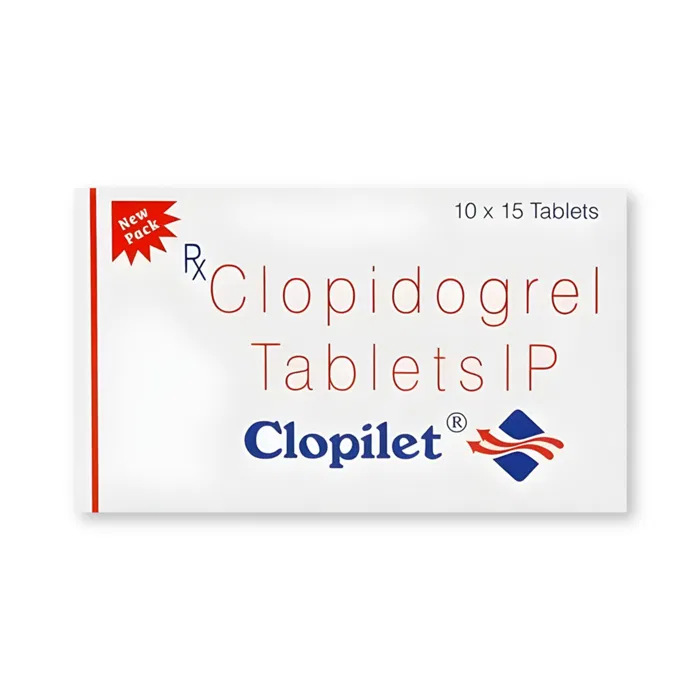
Clopilet Tablet
Clopilet Tablet is a tablet containing clopidogrel, an antiplatelet medicine used to help prevent harmful blood clots. Each Clopilet Tablet provides the labeled strength of clopidogrel in one oral tablet, and it belongs to the P2Y12 inhibitor class.
Prescription required — you can upload it at checkout or later
| Pack Size | Qty | Price | Add to cart | Unit Price |
|---|---|---|---|---|
| 90 tablet/s | $43.99 | $0.49 | ||
| 180 tablet/s | $82.99 | $0.46 | ||
| 270 tablet/s | $117.99 | $0.44 |
Save more with our biggest pack
- Manufacturer
- Sun Pharmaceutical Industries Ltd.
- Ingredient
- Clopidogrel
- Form
- Tablet
- Tablets per strip
- 10
- Prescription
- Required
- Availability
- In stock
- SKU
- CMU7385
Free shipping on orders of $199 or more
What is Clopilet Tablet?
Clopilet Tablet is a tablet containing clopidogrel, an antiplatelet medicine used to help prevent harmful blood clots. Each Clopilet Tablet provides the labeled strength of clopidogrel in one oral tablet, and it belongs to the P2Y12 inhibitor class. Doctors prescribe Clopilet Tablet to lower the risk of heart attack, stroke, and other clot-related problems in people with certain heart and blood vessel conditions. It is often used after a heart attack, in peripheral artery disease, or after some heart procedures.
How it works: Clopidogrel in Clopilet Tablet blocks platelets from sticking together as easily, which helps keep blood clots from forming inside arteries. Because it is a tablet taken by mouth, it is absorbed through the digestive tract and then works in the bloodstream to help make platelets less “sticky.”
Why choose Clopilet Tablet?
Because Clopilet Tablet is a standard oral tablet and the only form we sell for this brand, it fits routine once-daily clopidogrel treatment for patients whose doctor has chosen this specific product and labeled strength. It is not a rapid-acting pain medicine; instead, it works over time to reduce clot formation, so the benefit is felt through prevention rather than a noticeable immediate effect. Your doctor selects this strength based on your condition, bleeding risk, and whether you need clopidogrel maintenance therapy.
Uses of Clopilet Tablet
- Prevent heart attack
- Prevent stroke
- Reduce clot risk after acute coronary syndrome
- Help after coronary stent placement
- Treat peripheral artery disease
How to take Clopilet Tablet
- Swallow the Clopilet Tablet whole with water.
- Take it exactly as prescribed, usually once daily.
- You can take it with or without food.
- Take it at the same time each day to help you remember.
- Do not crush or chew the tablet unless your doctor or pharmacist specifically tells you to.
- If you also take aspirin, use only the dose your doctor recommends.
Clopilet Tablet dosage
Each Clopilet Tablet provides the labeled clopidogrel strength in one tablet, and this exact dose should not be assumed to be a starting dose for everyone. Depending on your condition, a doctor may prescribe it once daily for maintenance, and the maximum daily amount should only be set by the prescriber based on your treatment plan.
Do not change your dose or stop the medicine without speaking to your doctor.
Clopilet Tablet side effects
Common side effects of Clopidogrel may include:
- Easy bruising
- Nosebleeds
- Bleeding that takes longer to stop
- Diarrhea
- Stomach upset
- Rash
- Headache
Get medical help right away if you notice:
- Black, tarry stools or vomiting blood
- Sudden severe headache, weakness, or trouble speaking
- Signs of an allergic reaction such as swelling, hives, or trouble breathing
- Unusual bleeding that is heavy or does not stop
Precautions and warnings
- Tell your doctor if you have a history of stomach ulcers, bleeding problems, or recent surgery.
- This medicine can increase bleeding risk, so be careful with cuts, shaving, and contact sports.
- Use extra caution if you take aspirin, NSAIDs, or blood thinners, because bleeding risk can rise.
- Tell all healthcare professionals, including dentists, that you take clopidogrel before any procedure.
- Do not stop Clopilet Tablet suddenly unless your doctor tells you to, especially after a stent or heart event.
- If you have liver disease or have had unusual bleeding before, your doctor may monitor you more closely.
- Alcohol can further raise bleeding risk, so ask your clinician how much is safe for you.
Drug interactions
- Aspirin and other NSAIDs such as ibuprofen or naproxen
- Warfarin and other anticoagulants
- PPIs such as omeprazole or esomeprazole, which may reduce clopidogrel effect
- SSRIs or SNRIs, which may increase bleeding risk
- Certain antifungal or HIV medicines that can affect clopidogrel activation
Storage
Store Clopilet Tablet in its original strip/box at room temperature, away from excess moisture, heat, and light.
Frequently asked questions about Clopilet Tablet
What is Clopilet Tablet used for?
Clopilet Tablet is used to help prevent blood clots that can cause heart attack or stroke. Doctors commonly prescribe it for people with coronary artery disease, after a heart attack, or after certain heart procedures.
How do I take Clopilet Tablet?
Swallow Clopilet Tablet whole with water, usually once a day, exactly as prescribed by your doctor. It can be taken with or without food.
Does Clopilet Tablet work right away?
Clopilet Tablet starts working after you begin taking it, but its main benefit is preventing future clots rather than giving a noticeable immediate effect. Some patients need it for long-term protection, so do not stop it on your own.
What side effects should I watch for with Clopilet Tablet?
The most common issue is bleeding, including easy bruising, nosebleeds, or longer bleeding from cuts. Get urgent help if you have black stools, vomit that looks like blood, severe headache, weakness, or trouble speaking.
Customer reviews of Clopilet Tablet
No written reviews yet.