
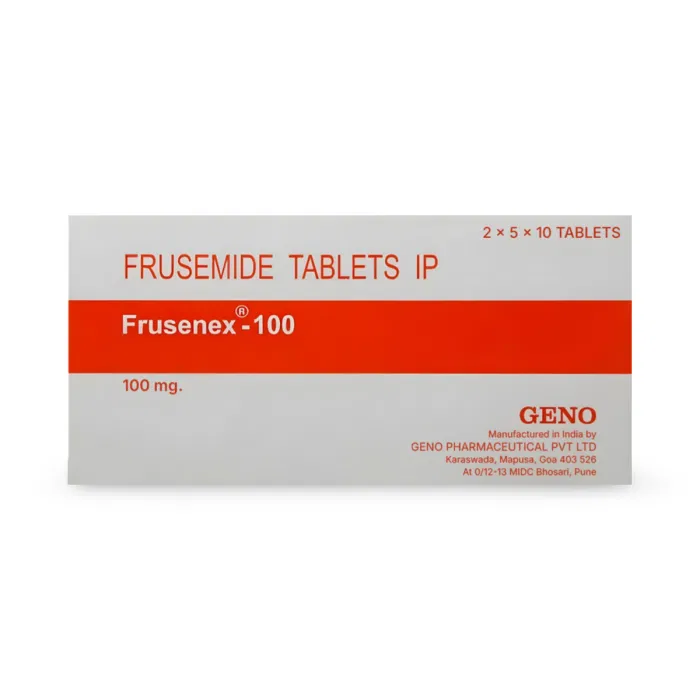
Frusenex 100 mg Tablet
Frusenex 100 mg Tablet is a prescription water pill that contains 100 mg of furosemide in each tablet. Furosemide is a loop diuretic used to help the body remove extra salt and water.
Prescription required — you can upload it at checkout or later
| Pack Size | Qty | Price | Add to cart | Unit Price |
|---|---|---|---|---|
| 100 tablet/s | $29.99 | $0.30 | ||
| 200 tablet/s | $56.99 | $0.28 | ||
| 300 tablet/s | $75.99 | $0.25 |
Save more with our biggest pack
- Manufacturer
- Geno Pharmaceuticals Limited
- Ingredient
- Furosemide
- Strength
- 100 mg
- Form
- Tablet
- Tablets per strip
- 10
- Prescription
- Required
- Availability
- In stock
- SKU
- CMU6062
Free shipping on orders of $199 or more
What is Frusenex 100 mg Tablet?
Frusenex 100 mg Tablet is a prescription water pill that contains 100 mg of furosemide in each tablet. Furosemide is a loop diuretic used to help the body remove extra salt and water. Frusenex 100 mg Tablet is commonly used for swelling from heart, liver, or kidney problems and may also be used to help control high blood pressure. Because it is a higher-strength tablet, it is meant for people whose doctor has determined they need this dose.
How it works: Furosemide in Frusenex 100 mg Tablet blocks the kidney’s ability to reabsorb salt, so more salt and water leave the body in the urine. Because it is a tablet, the medicine is swallowed and absorbed through the digestive tract before it starts helping reduce fluid overload.
Why choose Frusenex 100 mg Tablet?
Frusenex 100 mg Tablet is a high-strength version of furosemide, so it is not the kind of dose most people start with on their own. A doctor may choose Frusenex 100 mg Tablet when a lower dose has not been enough or when a stronger diuretic effect is needed to control fluid buildup. It may cause more noticeable urination and a greater risk of dehydration or electrolyte loss than lower-strength furosemide tablets.
Uses of Frusenex 100 mg Tablet
- Edema from heart failure
- Swelling due to kidney disease
- Fluid buildup from liver disease
- High blood pressure
- Fluid retention that needs stronger diuresis
How to take Frusenex 100 mg Tablet
- Swallow Frusenex 100 mg Tablet with water as directed by your doctor.
- Take it earlier in the day when possible to avoid frequent nighttime urination.
- You may take it with or without food, but food can help reduce stomach upset.
- Do not crush or chew unless your pharmacist or doctor tells you it is safe to do so.
- Stand up slowly after taking it, especially if you feel dizzy or lightheaded.
- Keep taking it exactly as prescribed even if swelling improves, unless your doctor tells you to stop.
Frusenex 100 mg Tablet dosage
Each Frusenex 100 mg Tablet provides 100 mg of furosemide. The number of tablets you take and how often you take them depend on your condition, kidney function, and response to treatment; some people may take it once daily, while others may need divided doses. Your doctor decides the schedule and the maximum daily amount, and 100 mg tablets are often used when a lower dose is not enough.
Do not change your dose or stop the medicine without speaking to your doctor.
Frusenex 100 mg Tablet side effects
Common side effects of Furosemide may include:
- More urination than usual, which may be more noticeable with Frusenex 100 mg Tablet
- Dizziness or feeling faint
- Headache
- Nausea
- Muscle cramps
- Low blood pressure
- Dehydration or thirst
Get medical help right away if you notice:
- Severe dehydration or confusion
- Hearing changes or ringing in the ears
- Very low potassium or sodium symptoms such as weakness, irregular heartbeat, or severe cramps
- Allergic reaction such as rash, swelling, or trouble breathing
Precautions and warnings
- Frusenex 100 mg Tablet can cause strong fluid loss, so dehydration and low blood pressure are important risks at this strength.
- Use caution if you have kidney disease, liver disease, gout, diabetes, or a history of electrolyte problems.
- Drink alcohol carefully or avoid it, because it can worsen dizziness and low blood pressure.
- Be careful when driving or using machinery until you know how Frusenex 100 mg Tablet affects you.
- Tell your doctor if you take digoxin, blood pressure medicines, or other diuretics, since the combination can increase side effects.
- This medicine may affect potassium and sodium levels, so lab monitoring may be needed.
- Seek advice before use if you are pregnant or breastfeeding.
Drug interactions
- Lithium
- Digoxin
- Other blood pressure medicines, including ACE inhibitors and ARBs
- NSAIDs such as ibuprofen or naproxen
- Other diuretics or potassium-lowering medicines
Storage
Store Frusenex 100 mg Tablet in its original strip or box at room temperature, away from moisture and excess heat.
Frequently asked questions about Frusenex 100 mg Tablet
What is Frusenex 100 mg used for?
Frusenex 100 mg Tablet is used to remove extra fluid from the body and to help lower blood pressure in some patients. It is often prescribed for swelling related to heart, kidney, or liver conditions.
How fast does Frusenex 100 mg work?
Frusenex 100 mg Tablet usually starts working relatively quickly after it is taken, and many people notice more urination within about an hour. The exact timing can vary depending on whether you took it with food and how your body responds.
Can I take Frusenex 100 mg every day?
Some patients are prescribed Frusenex 100 mg Tablet daily, while others need it only on certain days or in divided doses. Your doctor will decide the safest schedule based on your fluid status, blood pressure, and lab results.
What are the side effects of Frusenex 100 mg?
Common side effects of Frusenex 100 mg Tablet include dizziness, more urination, headache, and dehydration. More serious problems like low electrolytes, hearing changes, or an allergic reaction need prompt medical attention.
Customer reviews of Frusenex 100 mg Tablet
No written reviews yet.