
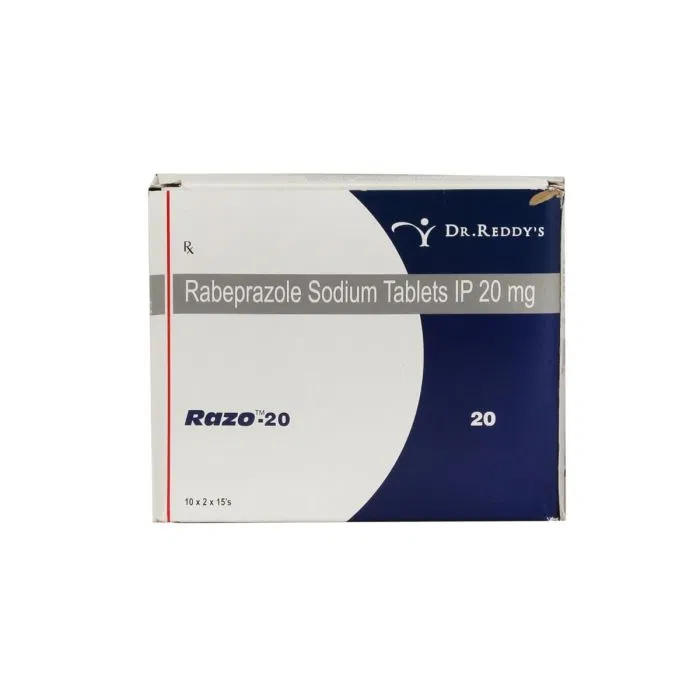
Razo 20 mg Tablet
Razo 20 mg Tablet contains 20 mg of rabeprazole in each tablet. It belongs to the acid reducers known as proton pump inhibitors (PPIs), which lower the amount of acid your stomach makes.
Prescription required — you can upload it at checkout or later
Choose strength (2 available)
| Pack Size | Qty | Price | Add to cart | Unit Price |
|---|---|---|---|---|
| 30 tablet/s | $35.99 | $1.20 | ||
| 60 tablet/s | $69.99 | $1.17 | ||
| 90 tablet/s | $97.99 | $1.09 |
Save more with our biggest pack
- Manufacturer
- Dr Reddy's, India
- Ingredient
- Rabeprazole
- Strength
- 20 mg
- Form
- Tablet
- Tablets per strip
- 10
- Prescription
- Required
- Availability
- In stock
- SKU
- CMU1137
Free shipping on orders of $199 or more
What is Razo 20 mg Tablet?
Razo 20 mg Tablet contains 20 mg of rabeprazole in each tablet. It belongs to the acid reducers known as proton pump inhibitors (PPIs), which lower the amount of acid your stomach makes. Razo 20 mg Tablet is used to treat acid-related conditions such as gastroesophageal reflux disease (GERD), erosive esophagitis, and stomach or duodenal ulcers. A doctor may also prescribe Razo 20 mg Tablet to help prevent ulcers in certain people at higher risk.
How it works: Rabeprazole in Razo 20 mg Tablet blocks the acid-making pump in the stomach lining, which reduces stomach acid production. With less acid, the tablet helps relieve heartburn, allows irritated tissue to heal, and lowers the chance of acid-related damage.
Why choose Razo 20 mg Tablet?
Razo 20 mg Tablet is the higher-strength tablet compared with Razo 10 mg Tablet, so it may be chosen when a doctor wants stronger acid control or when symptoms need a full therapeutic dose. Because each Razo 20 mg Tablet delivers 20 mg of rabeprazole, it is not the same as a lower-dose starter option and should be used only as directed by a clinician who has assessed your condition.
Uses of Razo 20 mg Tablet
- GERD and frequent heartburn
- Healing erosive esophagitis
- Duodenal ulcers
- Stomach ulcers
- Prevention of NSAID-related ulcers in selected patients
How to take Razo 20 mg Tablet
- Swallow Razo 20 mg Tablet whole with water; do not crush, chew, or split it unless your prescriber tells you otherwise.
- Take it before meals, usually before breakfast, unless your doctor gives different instructions.
- Take it at the same time each day to keep acid control steady.
- If you miss a dose, take it when you remember unless it is almost time for the next dose; do not double up.
- Follow the exact length of treatment prescribed, even if symptoms improve sooner.
Razo 20 mg Tablet dosage
Each Razo 20 mg Tablet provides 20 mg of rabeprazole per tablet. Depending on the condition being treated, it may be taken once daily, and in some cases a doctor may prescribe it more than once a day; the maximum daily amount should be set by the prescriber based on your diagnosis and response.
Do not change your dose or stop the medicine without speaking to your doctor.
Razo 20 mg Tablet side effects
Common side effects of Rabeprazole may include:
- headache
- diarrhea
- nausea
- abdominal pain
- gas or bloating
- constipation
- dizziness
Get medical help right away if you notice:
- severe allergic reaction such as swelling, rash, or trouble breathing
- signs of low magnesium such as muscle cramps, irregular heartbeat, or seizures
- severe diarrhea that is watery or bloody
- kidney problems such as reduced urine or flank pain
- severe skin reactions with blistering or peeling
Precautions and warnings
- Razo 20 mg Tablet is a higher-strength PPI, so use it only when a clinician has determined that 20 mg is appropriate for you.
- Tell your doctor if you have liver disease, osteoporosis, low magnesium, or a history of vitamin B12 deficiency.
- Long-term use can increase the risk of bone fractures, low magnesium, and certain vitamin deficiencies.
- Report persistent diarrhea, especially if it is severe or bloody, because it may signal a serious infection.
- Let your prescriber know if you take clopidogrel, methotrexate, warfarin, or digoxin.
- Alcohol can worsen reflux symptoms and may reduce the benefit of treatment in some people.
- Use caution if you feel dizzy or unwell after taking the tablet and need to drive or operate machinery.
Drug interactions
- clopidogrel
- methotrexate
- warfarin
- digoxin
- ketoconazole or other medicines that need stomach acid for absorption
Storage
Store Razo 20 mg Tablet in its original strip or box at room temperature, away from moisture, heat, and direct light.
Frequently asked questions about Razo 20 mg Tablet
What is Razo 20 mg used for?
Razo 20 mg Tablet is used to reduce stomach acid and treat conditions such as GERD, heartburn, erosive esophagitis, and peptic ulcers. Your doctor may also use it for other acid-related problems when 20 mg is the right strength.
How do I take Razo 20 mg Tablet before food?
Razo 20 mg Tablet is usually taken before a meal, commonly before breakfast, so it can start working before acid production rises with eating. Swallow the tablet whole with water and follow the timing your doctor prescribed.
Is Razo 20 mg the same as Razo 10 mg?
No, Razo 20 mg Tablet contains twice the rabeprazole per tablet compared with Razo 10 mg Tablet. The 20 mg strength is a higher-dose option that may be chosen when a doctor wants stronger acid suppression.
How long does Razo 20 mg take to work?
Some people notice symptom relief within a few days, but full benefit may take longer as the esophagus or stomach lining heals. Keep taking Razo 20 mg Tablet exactly as directed, even if you feel better early.
Customer reviews of Razo 20 mg Tablet
No written reviews yet.