
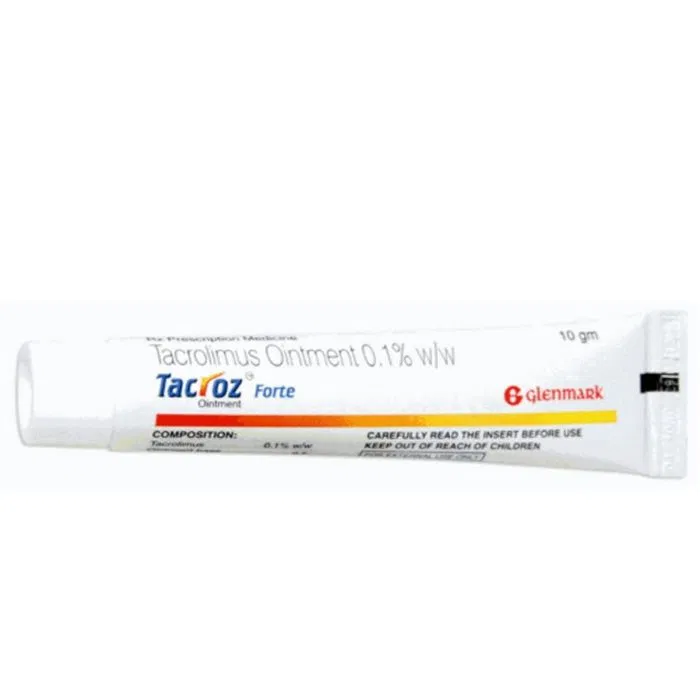
Tacroz 0.1% (10 g) Ointment
Tacroz 0.1% (10 g) Ointment is a prescription tacrolimus skin ointment used to help control eczema, also called atopic dermatitis.
Prescription required — you can upload it at checkout or later
Choose strength (2 available)
| Pack Size | Qty | Price | Add to cart | Unit Price |
|---|---|---|---|---|
| 1 tube | $16.99 | $16.99 | ||
| 3 tube/s | $45.99 | $15.33 | ||
| 6 tube/s | $89.99 | $15.00 |
Save more with our biggest pack
- Manufacturer
- Glenmark Pharmaceuticals, India
- Ingredient
- Tacrolimus
- Strength
- 0.1%
- Form
- Ointment
- Prescription
- Required
- Availability
- In stock
- SKU
- CMU1528
Free shipping on orders of $199 or more
What is Tacroz 0.1% (10 g) Ointment?
Tacroz 0.1% (10 g) Ointment is a prescription tacrolimus skin ointment used to help control eczema, also called atopic dermatitis. Each 10 g tube contains tacrolimus 0.1% w/w, a calcineurin inhibitor that is applied directly to inflamed skin. Tacroz 0.1% (10 g) Ointment is used to reduce itching, redness, and flare-ups when a doctor decides this treatment is appropriate. It is for external use only and is not a steroid cream.
How it works: Tacrolimus works by calming overactive immune signals in the skin that drive eczema inflammation. In ointment form, Tacroz 0.1% 10 g delivers the medicine directly to affected areas to help ease redness, itching, and swelling.
Why choose Tacroz 0.1% (10 g) Ointment?
Tacroz 0.1% (10 g) Ointment is the higher-strength version compared with Tacroz 0.03% (10 g) Ointment, so it is usually chosen for older adolescents and adults or for people whose eczema needs a stronger option. Because it is a 0.1% ointment, it may be more effective for some patients but can also sting or burn a bit more at first, especially on sensitive skin. A doctor may choose Tacroz 0.1% when a lower strength is not enough or when short-term control of more stubborn flares is needed.
Uses of Tacroz 0.1% (10 g) Ointment
- Atopic dermatitis (eczema)
- Itchy, inflamed skin patches
- Eczema flares on sensitive areas
- Steroid-sparing treatment for eczema
- Maintenance treatment when prescribed by a doctor
How to take Tacroz 0.1% (10 g) Ointment
- Use Tacroz 0.1% (10 g) Ointment only on the skin, not in the eyes, mouth, nose, or vagina.
- Apply a thin layer to clean, dry affected skin as directed by your doctor.
- Wash your hands before and after applying, unless the hands are the treated area.
- Do not cover the area with bandages or wraps unless your doctor tells you to.
- Avoid bathing, swimming, or heavy sweating right after applying so the ointment can stay on the skin.
- Use sunscreen and limit sun exposure on treated areas, since tacrolimus can make skin more sensitive to sunlight.
Tacroz 0.1% (10 g) Ointment dosage
Tacroz 0.1% (10 g) Ointment provides tacrolimus 0.1% in each tube, and the amount used depends on the size of the skin area being treated. It is typically applied twice daily for eczema when prescribed, but the exact frequency and duration are decided by the doctor. There is no fixed maximum daily amount on the package; use only the amount your clinician prescribes and stop or adjust only under medical advice.
Do not change your dose or stop the medicine without speaking to your doctor.
Tacroz 0.1% (10 g) Ointment side effects
Common side effects of Tacrolimus may include:
- Burning or stinging at the application site, which can be more noticeable with the 0.1% strength
- Itching
- Redness
- Warmth or irritation of the skin
- Headache
- Flu-like symptoms or cold-like symptoms
Get medical help right away if you notice:
- Signs of a serious skin infection such as pus, spreading redness, or worsening pain
- Severe allergic reaction such as swelling, hives, or trouble breathing
- Unusual skin changes or a lump that does not heal
- Swollen lymph nodes or persistent fever
Precautions and warnings
- Tacroz 0.1% (10 g) Ointment is a higher-strength tacrolimus ointment, so it should be used only when a clinician has assessed that this strength is appropriate.
- Do not use on infected skin unless your doctor tells you to, because tacrolimus can make some infections worse.
- Avoid long-term sun or tanning bed exposure on treated skin; use protective clothing and sunscreen if advised.
- Do not use on mucous membranes or inside the eyes.
- Tell your doctor if you have a weakened immune system, history of skin cancer, or unexplained swollen lymph nodes.
- Use caution if you are pregnant or breastfeeding and follow your prescriber’s guidance.
- Do not use this ointment as a quick fix for sudden severe eczema flare-ups without medical advice.
Drug interactions
- Other topical eczema treatments, especially strong corticosteroids, unless your doctor schedules them together
- Products that irritate the skin, such as harsh exfoliants, alcohol-based lotions, or fragranced products
- Medications that affect the immune system, including some transplant or cancer medicines
- Metronidazole or other medicines that may increase skin sensitivity in some patients
Storage
Store Tacroz 0.1% (10 g) Ointment at room temperature, tightly closed, away from heat, moisture, and direct light, and keep it out of reach of children.
Frequently asked questions about Tacroz 0.1% (10 g) Ointment
What is Tacroz 0.1% (10 g) Ointment used for?
Tacroz 0.1% (10 g) Ointment is used to treat eczema, also called atopic dermatitis. It helps reduce itching, redness, and inflammation when prescribed by a doctor.
How often do I use Tacroz 0.1% (10 g) Ointment?
Tacroz 0.1% (10 g) Ointment is commonly applied twice a day, but your doctor may give a different schedule based on your skin condition and response. Use only the amount and duration you were told to use.
Is Tacroz 0.1% (10 g) Ointment stronger than Tacroz 0.03% (10 g) Ointment?
Yes, Tacroz 0.1% (10 g) Ointment is the higher-strength option compared with Tacroz 0.03% (10 g) Ointment. Doctors may choose the 0.1% ointment for adults or for eczema that needs a stronger treatment, while the lower strength may be used for milder cases or younger patients.
Does Tacroz 0.1% (10 g) Ointment cause burning when applied?
It can cause burning or stinging when first applied, and that may be more noticeable with the 0.1% strength. If the burning is severe, long-lasting, or gets worse, contact your doctor.
Customer reviews of Tacroz 0.1% (10 g) Ointment
No written reviews yet.