
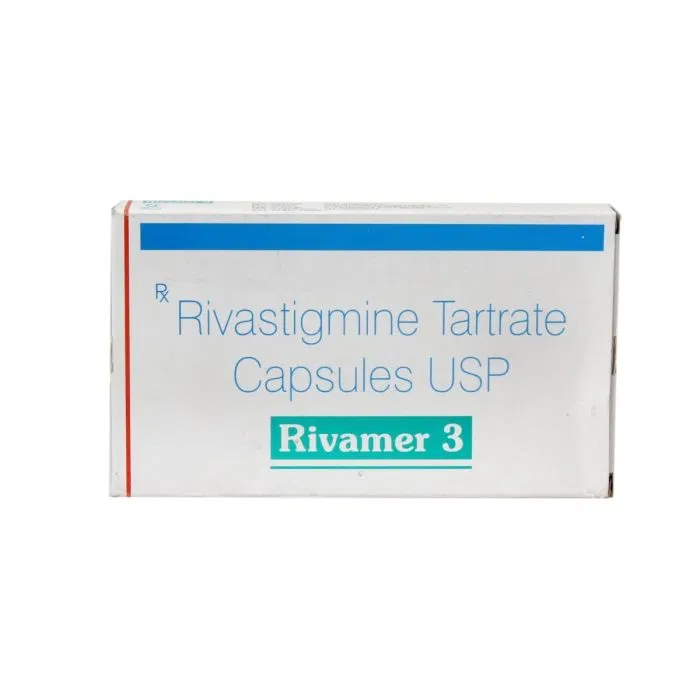
Rivamer 3 mg Capsule
Rivamer 3 mg Capsule contains 3 mg of rivastigmine in each capsule. It is a cholinesterase inhibitor used to treat mild to moderate dementia related to Alzheimer’s disease, and it may help improve or stabilize thinking and memory symptoms in some patients.
Prescription required — you can upload it at checkout or later
Choose strength (2 available)
| Pack Size | Qty | Price | Add to cart | Unit Price |
|---|---|---|---|---|
| 20 capsule/s | $34.99 | $1.75 | ||
| 40 capsule/s | $66.99 | $1.67 | ||
| 60 capsule/s | $93.99 | $1.57 |
Save more with our biggest pack
- Manufacturer
- Sun Pharmaceutical Industries Ltd.
- Ingredient
- Rivastigmine
- Strength
- 3 mg
- Form
- Capsule
- Capsules per strip
- 10
- Prescription
- Required
- Availability
- In stock
- SKU
- CMU1140
Free shipping on orders of $199 or more
What is Rivamer 3 mg Capsule?
Rivamer 3 mg Capsule contains 3 mg of rivastigmine in each capsule. It is a cholinesterase inhibitor used to treat mild to moderate dementia related to Alzheimer’s disease, and it may help improve or stabilize thinking and memory symptoms in some patients. Rivamer 3 mg Capsule is a prescription medicine from Sun Pharmaceutical Industries Ltd. and comes in a strip/box of 10 capsules.
How it works: Rivastigmine helps block the breakdown of acetylcholine, a brain chemical involved in memory, attention, and learning. In capsule form, Rivamer 3 mg Capsule is taken by mouth and works throughout the body to help support cholinergic activity in the brain.
Why choose Rivamer 3 mg Capsule?
Rivamer 3 mg Capsule is a higher capsule strength than Rivamer 1.5 mg Capsule, so it is typically used after a doctor has assessed tolerance to the lower strength or decided that a higher maintenance dose is appropriate. It is not usually the first dose for everyone; doctors may choose Rivamer 3 mg Capsule when a patient needs more symptom control and can better tolerate rivastigmine-related stomach side effects.
Uses of Rivamer 3 mg Capsule
- Alzheimer’s disease
- Mild to moderate dementia symptoms
- Memory and thinking support
- Help with daily functioning in selected patients
How to take Rivamer 3 mg Capsule
- Swallow Rivamer 3 mg Capsule whole with water; do not crush, chew, or open it.
- Take it with food to help reduce nausea and stomach upset.
- Take it at the same time each day if your prescriber has set a regular schedule.
- If you miss a dose, follow your doctor’s directions or the package instructions; do not double up unless told to do so.
- If you have not taken rivastigmine for several days, ask your prescriber before restarting, because the dose may need to be reassessed.
Rivamer 3 mg Capsule dosage
Each Rivamer 3 mg Capsule provides 3 mg of rivastigmine per capsule. The number of capsules taken per day depends on your doctor’s plan; rivastigmine is commonly taken twice daily with food, and the dose is increased only as tolerated. The maximum daily amount is determined by the prescriber for each patient, so use Rivamer 3 mg Capsule exactly as directed rather than adjusting it on your own.
Do not change your dose or stop the medicine without speaking to your doctor.
Rivamer 3 mg Capsule side effects
Common side effects of Rivastigmine may include:
- Nausea, which may be more noticeable at this 3 mg strength
- Vomiting
- Loss of appetite
- Diarrhea
- Stomach pain or indigestion
- Dizziness
- Weakness or fatigue
Get medical help right away if you notice:
- Severe vomiting or diarrhea leading to dehydration
- Fainting, slow heartbeat, or chest pain
- Black stools or vomiting blood
- Severe allergic reaction such as rash, swelling, or trouble breathing
Precautions and warnings
- Use caution if you have a history of slow heart rate, fainting, arrhythmia, or heart disease.
- Tell your doctor if you have stomach ulcers, GI bleeding, or frequent vomiting.
- This capsule may cause dizziness or weakness, so be careful when driving or using machinery until you know how it affects you.
- Use caution with asthma, COPD, or other breathing problems.
- Tell your prescriber about liver problems or kidney problems before using Rivamer 3 mg Capsule.
- Alcohol can worsen dizziness, nausea, or dehydration in some patients.
- Do not start, stop, or restart rivastigmine without medical guidance, especially after missed doses.
Drug interactions
- Other cholinesterase inhibitors or similar Alzheimer’s medicines
- Anticholinergic medicines such as oxybutynin or some antihistamines
- Beta-blockers or other medicines that can slow the heart rate
- Succinylcholine or similar anesthesia medicines
- Alcohol, which may worsen dizziness or stomach upset
Storage
Store Rivamer 3 mg Capsule at room temperature in its original strip/box, away from excess heat, moisture, and light, and keep it out of reach of children.
Frequently asked questions about Rivamer 3 mg Capsule
What is Rivamer 3 mg Capsule used for?
Rivamer 3 mg Capsule is used for symptoms of mild to moderate Alzheimer’s disease. It contains rivastigmine, which may help with memory, thinking, and daily function in some patients.
How do I take Rivamer 3 mg Capsule 3 mg?
Rivamer 3 mg Capsule should usually be swallowed whole with water and taken with food to reduce nausea. Follow your doctor’s dosing schedule exactly, because the number of daily doses and any dose increases depend on how you tolerate rivastigmine.
Is Rivamer 3 mg Capsule a starting dose?
Rivamer 3 mg Capsule is a higher capsule strength than Rivamer 1.5 mg Capsule, so it is not always the first dose. Many patients are started lower and then increased if they tolerate treatment well and need a stronger dose.
What side effects are common with Rivamer 3 mg Capsule?
The most common side effects are nausea, vomiting, diarrhea, loss of appetite, stomach upset, dizziness, and weakness. These may be more noticeable when the dose is being increased or if the 3 mg capsule is started too quickly.
Customer reviews of Rivamer 3 mg Capsule
No written reviews yet.