
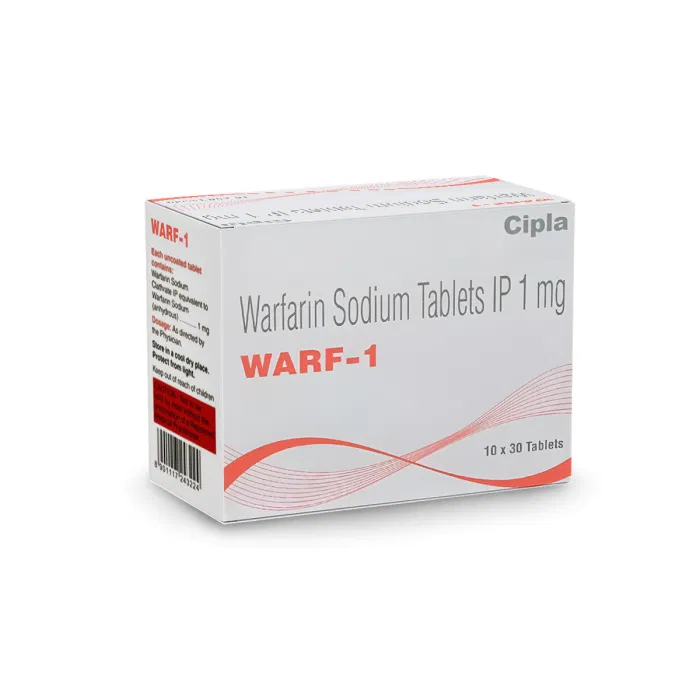
Warf 1 mg Tablet
Warf 1 mg Tablet is a prescription tablet that contains 1 mg of warfarin in each tablet. It belongs to the anti-coagulant (blood thinner) class and is used to help prevent and treat harmful blood clots.
Prescription required — you can upload it at checkout or later
Choose strength (3 available)
| Pack Size | Qty | Price | Add to cart | Unit Price |
|---|---|---|---|---|
| 60 tablet/s | $18.99 | $0.32 | ||
| 90 tablet/s | $27.99 | $0.31 | ||
| 120 tablet/s | $34.99 | $0.29 |
Save more with our biggest pack
- Manufacturer
- Cipla, India
- Ingredient
- Warfarin
- Strength
- 1 mg
- Form
- Tablet
- Tablets per strip
- 10
- Prescription
- Required
- Availability
- In stock
- SKU
- CMU2490
Free shipping on orders of $199 or more
What is Warf 1 mg Tablet?
Warf 1 mg Tablet is a prescription tablet that contains 1 mg of warfarin in each tablet. It belongs to the anti-coagulant (blood thinner) class and is used to help prevent and treat harmful blood clots. Warf 1 mg Tablet may be prescribed for conditions such as atrial fibrillation, deep vein thrombosis, pulmonary embolism, or after certain heart valve procedures. Because warfarin can affect bleeding risk, treatment with Warf 1 mg Tablet is closely monitored by a doctor.
How it works: Warf 1 mg Tablet works by lowering the body’s ability to form certain blood-clotting factors that depend on vitamin K. By reducing clotting activity, this tablet helps keep existing clots from getting bigger and helps prevent new clots from forming.
Why choose Warf 1 mg Tablet?
Warf 1 mg Tablet is a low-strength warfarin tablet, which gives prescribers more flexibility when making small dose changes. It is often suited for patients who need careful dose adjustment, because warfarin dosing is individualized and one tablet strength may not be enough on its own for every schedule. Compared with the 2 mg and 3 mg strengths, the 1 mg tablet can help a doctor fine-tune the daily dose more precisely.
Uses of Warf 1 mg Tablet
- Prevention of stroke in atrial fibrillation
- Treatment and prevention of deep vein thrombosis (DVT)
- Treatment and prevention of pulmonary embolism (PE)
- Prevention of clots after some heart valve procedures
- Other doctor-directed clot prevention needs
How to take Warf 1 mg Tablet
- Swallow Warf 1 mg Tablet whole with a glass of water.
- Take it exactly at the same time each day if your prescriber tells you to take it daily.
- Do not change your dose on your own, even if the tablet is a low 1 mg strength.
- Take it consistently with respect to food; large changes in vitamin K foods can change how it works.
- Keep all INR or blood test appointments so your dose can be adjusted safely.
- If you miss a dose, follow your prescriber’s instructions rather than doubling up.
Warf 1 mg Tablet dosage
Each Warf 1 mg Tablet provides 1 mg of warfarin per tablet. The dose is not fixed, and the doctor may prescribe it once daily or adjust the number of tablets and timing based on your INR and medical condition. There is no universal maximum daily dose for this tablet strength; the right total daily dose is decided by the prescriber for each patient.
Do not change your dose or stop the medicine without speaking to your doctor.
Warf 1 mg Tablet side effects
Common side effects of Warfarin may include:
- Easy bruising
- Nosebleeds
- Bleeding gums
- Mild stomach upset
- Diarrhea
- Hair thinning or hair loss
- Skin rash
Get medical help right away if you notice:
- Severe or uncontrolled bleeding
- Black or bloody stools
- Coughing up blood or vomiting blood
- Sudden severe headache, weakness, or trouble speaking
- Painful swelling or discoloration of an arm or leg
Precautions and warnings
- Warf 1 mg Tablet can cause serious bleeding, so use care with shaving, brushing teeth, and contact sports.
- Tell every healthcare professional that you take warfarin before procedures, dental work, or injections.
- Avoid major changes in vitamin K intake from foods such as leafy greens unless your doctor advises otherwise.
- Limit alcohol, because it can raise bleeding risk and make INR control less predictable.
- Do not start or stop other medicines, vitamins, or herbal products without checking first.
- Use extra caution if you have liver disease, a history of ulcers, high blood pressure, or a bleeding disorder.
- Driving is usually not limited by the tablet itself, but seek care if you feel dizzy or weak from bleeding.
Drug interactions
- Aspirin, ibuprofen, naproxen, and other NSAIDs can increase bleeding risk.
- Many antibiotics and antifungal medicines can change warfarin effect.
- Herbal products such as St. John’s wort, ginkgo, and ginseng may interfere with warfarin control.
- High-dose vitamin K supplements can reduce the effect of Warf 1 mg Tablet.
- Other blood thinners or antiplatelet medicines can greatly increase bleeding risk.
Storage
Store Warf 1 mg Tablet in its original strip/box at room temperature, away from moisture, heat, and direct light.
Frequently asked questions about Warf 1 mg Tablet
What is Warf 1 mg used for?
Warf 1 mg is used to help prevent and treat blood clots, and to lower the risk of clot-related complications such as stroke in certain patients. The exact reason for use depends on your diagnosis and your doctor’s treatment plan.
How is Warf 1 mg different from higher-strength warfarin tablets?
Warf 1 mg Tablet is a lower-strength option, which can make small dose adjustments easier. Doctors may combine different tablet strengths to match the exact dose needed for your INR target.
Can I take Warf 1 mg Tablet with food?
Yes, Warf 1 mg Tablet is taken by mouth with water, and it can usually be taken with or without food. What matters most is keeping your diet, especially vitamin K intake, as consistent as possible.
Do I need blood tests while taking Warf 1 mg?
Yes, regular INR blood tests are important with Warf 1 mg Tablet because warfarin’s effect can change over time. These tests help your doctor adjust the dose to reduce the risk of clots and bleeding.
Customer reviews of Warf 1 mg Tablet
No written reviews yet.