
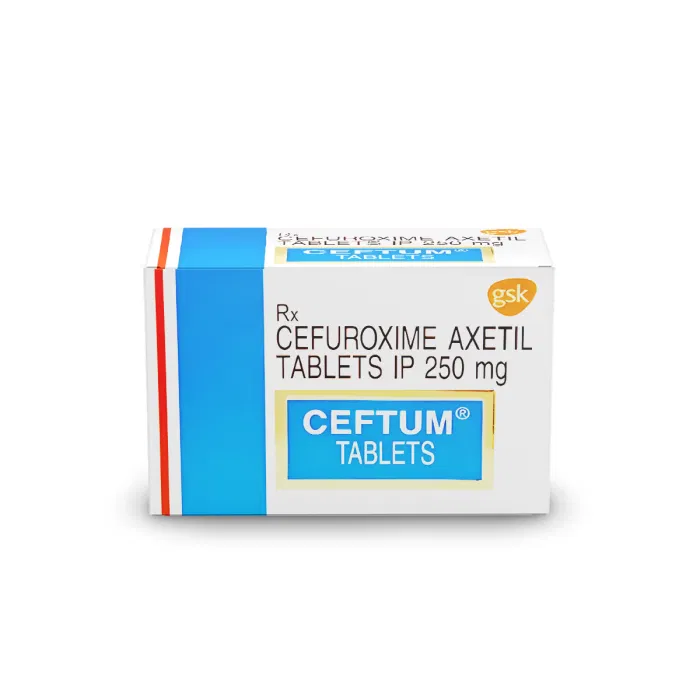
Ceftum 250 mg Tablet
Ceftum 250 mg Tablet is a prescription antibiotic tablet that contains 250 mg of cefuroxime in each tablet. Cefuroxime is a cephalosporin antibiotic used to treat certain bacterial infections, not viral illnesses like colds or flu.
Prescription required — you can upload it at checkout or later
Choose strength (2 available)
| Pack Size | Qty | Price | Add to cart | Unit Price |
|---|---|---|---|---|
| 12 tablet/s | $69.99 | $5.83 | ||
| 24 tablet/s | $138.99 | $5.79 | ||
| 36 tablet/s | $206.99 | $5.75 |
Save more with our biggest pack
- Manufacturer
- GSK, India
- Ingredient
- Cefuroxime
- Strength
- 250 mg
- Form
- Tablet
- Tablets per strip
- 4
- Prescription
- Required
- Availability
- In stock
- SKU
- CMU5877
Free shipping on orders of $199 or more
What is Ceftum 250 mg Tablet?
Ceftum 250 mg Tablet is a prescription antibiotic tablet that contains 250 mg of cefuroxime in each tablet. Cefuroxime is a cephalosporin antibiotic used to treat certain bacterial infections, not viral illnesses like colds or flu. Ceftum 250 mg Tablet may be prescribed for infections such as sinus, throat, ear, chest, skin, urinary tract, or some early Lyme disease infections when the bacteria are expected to respond to cefuroxime.
How it works: Cefuroxime in Ceftum 250 mg Tablet works by stopping bacteria from building the protective cell wall they need to survive. As that wall breaks down, the bacteria die and the infection can improve.
Why choose Ceftum 250 mg Tablet?
Ceftum 250 mg Tablet is a higher-strength option than Ceftum 125 mg Tablet, so it may be chosen when a doctor wants a larger cefuroxime dose per tablet or a less frequent dosing schedule. It is not meant for starting or self-adjusting treatment on your own; the 250 mg strength is selected based on the infection being treated, age, kidney function, and how severe the infection is.
Uses of Ceftum 250 mg Tablet
- Bacterial sinus infections
- Ear infections
- Throat and tonsil infections
- Chest or respiratory tract infections
- Skin and soft tissue infections
- Urinary tract infections
How to take Ceftum 250 mg Tablet
- Swallow Ceftum 250 mg Tablet whole with water; do not crush or chew unless your doctor or pharmacist says it is okay.
- Take it exactly as prescribed and try to take doses at evenly spaced times.
- Food can help the body absorb cefuroxime better, so this tablet is often taken after a meal.
- Finish the full course even if you feel better before the tablets are gone.
- Do not share Ceftum 250 mg Tablet with anyone else, even if their symptoms seem similar.
Ceftum 250 mg Tablet dosage
Each Ceftum 250 mg Tablet provides 250 mg of cefuroxime per tablet. The exact dose and how often it is taken depend on the infection, but cefuroxime tablets are commonly taken twice daily; the maximum daily amount depends on the condition being treated and your prescriber’s instructions. Your doctor decides whether Ceftum 250 mg Tablet is the right strength and how many tablets you should take.
Do not change your dose or stop the medicine without speaking to your doctor.
Ceftum 250 mg Tablet side effects
Common side effects of Cefuroxime may include:
- Diarrhea
- Nausea
- Vomiting
- Stomach discomfort
- Headache
- Mild rash
- Yeast overgrowth such as oral or vaginal thrush
Get medical help right away if you notice:
- Severe allergic reaction with hives, swelling, or trouble breathing
- Severe diarrhea that is watery or bloody
- Severe skin reaction with blistering or peeling
- Signs of liver problems such as yellow skin or dark urine
Precautions and warnings
- Do not use Ceftum 250 mg Tablet if you have a known severe allergy to cefuroxime or other cephalosporin antibiotics.
- Tell your doctor if you have had an allergy to penicillins or other beta-lactam antibiotics before taking this strength.
- People with kidney problems may need a different dosing plan because cefuroxime is cleared through the kidneys.
- Take extra care if you have a history of gastrointestinal disease, especially colitis or severe antibiotic-associated diarrhea.
- Let your doctor know if you are pregnant, breastfeeding, or planning to become pregnant.
- Tell your clinician about all medicines and supplements you use, especially blood thinners.
- Ceftum 250 mg Tablet can cause dizziness in some people, so be careful with driving or operating machinery until you know how it affects you.
Drug interactions
- Probenecid
- Anticoagulants such as warfarin
- Antacids and acid-reducing medicines that may affect absorption
- Other antibiotics, especially bacteriostatic antibiotics used together without medical advice
- Live bacterial vaccines, which may be less effective during an active infection or antibiotic treatment
Storage
Store Ceftum 250 mg Tablet in its original strip or box at room temperature, away from moisture and heat, and keep it out of reach of children.
Frequently asked questions about Ceftum 250 mg Tablet
What is Ceftum 250 mg used for?
Ceftum 250 mg Tablet is used to treat certain bacterial infections, including some sinus, ear, throat, skin, chest, and urinary tract infections. It will not treat viral infections like the common cold or flu.
How do I take Ceftum 250 mg Tablet?
Swallow Ceftum 250 mg Tablet with water exactly as prescribed by your doctor. It is often taken after food because cefuroxime is absorbed better with a meal.
Is Ceftum 250 mg 250 mg a strong dose?
Ceftum 250 mg Tablet is a higher-strength tablet than Ceftum 125 mg Tablet, so it may be chosen when a doctor wants more cefuroxime per dose. The right strength depends on the infection and your medical history, not on a standard over-the-counter starting dose.
What side effects can happen with Ceftum 250 mg?
Common side effects of Ceftum 250 mg Tablet include diarrhea, nausea, vomiting, headache, and stomach upset. Get urgent medical help if you have trouble breathing, swelling, severe rash, or severe diarrhea.
Customer reviews of Ceftum 250 mg Tablet
No written reviews yet.