
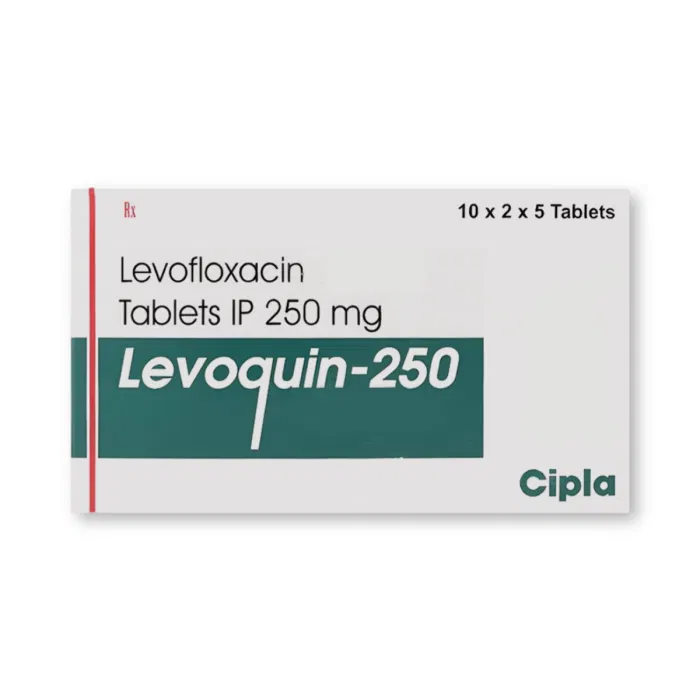
Levoquin 250 mg Tablet
Levoquin 250 mg Tablet is an antibiotic tablet that contains 250 mg of levofloxacin in each tablet. Levofloxacin belongs to the fluoroquinolone class of antibiotics, which are used to treat certain bacterial infections, not viral illnesses like colds or flu.
Prescription required — you can upload it at checkout or later
Choose strength (2 available)
| Pack Size | Qty | Price | Add to cart | Unit Price |
|---|---|---|---|---|
| 100 tablet/s | $34.99 | $0.35 | ||
| 200 tablet/s | $65.99 | $0.33 | ||
| 300 tablet/s | $92.99 | $0.31 |
Save more with our biggest pack
- Manufacturer
- Cipla, India
- Ingredient
- Levofloxacin
- Strength
- 250 mg
- Form
- Tablet
- Tablets per strip
- 10
- Prescription
- Required
- Availability
- In stock
- SKU
- CMU6030
Free shipping on orders of $199 or more
What is Levoquin 250 mg Tablet?
Levoquin 250 mg Tablet is an antibiotic tablet that contains 250 mg of levofloxacin in each tablet. Levofloxacin belongs to the fluoroquinolone class of antibiotics, which are used to treat certain bacterial infections, not viral illnesses like colds or flu. Levoquin 250 mg Tablet may be prescribed for infections such as urinary tract infections, some respiratory tract infections, and other susceptible bacterial infections when a doctor decides this strength is appropriate. It is manufactured by Cipla, India and supplied as a strip/box of 10 tablets.
How it works: Levofloxacin works by blocking bacterial enzymes that bacteria need to copy their DNA and multiply. In tablet form, Levoquin 250 mg Tablet is swallowed and absorbed into the body to help stop the infection from spreading so the immune system can clear it.
Why choose Levoquin 250 mg Tablet?
Levoquin 250 mg Tablet is a lower-strength levofloxacin tablet compared with Levoquin 500 mg Tablet, so it may be chosen when a doctor wants a smaller dose for a specific infection, patient size, kidney function, or treatment plan. The 250 mg strength is not a starting dose for every infection; it is selected only after a clinician assesses the infection and the patient’s needs. Because it is the tablet form, it is convenient for oral dosing without needing an injection.
Uses of Levoquin 250 mg Tablet
- Urinary tract infections
- Certain respiratory tract infections
- Skin and soft tissue infections
- Other bacterial infections caused by susceptible organisms
How to take Levoquin 250 mg Tablet
- Swallow Levoquin 250 mg Tablet whole with water; do not chew, crush, or split it unless your doctor or pharmacist tells you to.
- Take it at the same time each day if prescribed once daily.
- You may take it with or without food, but avoid taking it together with antacids, iron, zinc, magnesium, calcium supplements, or multivitamins.
- Drink enough fluids unless your doctor has told you to restrict fluids.
- Finish the full course even if you start feeling better.
- If you miss a dose, take it when you remember unless it is almost time for the next dose; do not double up.
Levoquin 250 mg Tablet dosage
Each Levoquin 250 mg Tablet provides 250 mg of levofloxacin per tablet. Depending on the infection, this strength may be taken once daily or in a divided schedule only if your doctor prescribes it that way, and the maximum daily amount depends on your diagnosis and kidney function. Your doctor decides the exact dose, duration, and whether Levoquin 250 mg Tablet is the right strength for you.
Do not change your dose or stop the medicine without speaking to your doctor.
Levoquin 250 mg Tablet side effects
Common side effects of Levofloxacin may include:
- Nausea
- Diarrhea
- Headache
- Dizziness
- Trouble sleeping
- Mild stomach discomfort
Get medical help right away if you notice:
- Tendon pain, swelling, or rupture
- Severe allergic reaction with rash, swelling, or trouble breathing
- Numbness, tingling, burning pain, or weakness
- Severe diarrhea that is watery or bloody
- Irregular heartbeat or fainting
Precautions and warnings
- Levoquin 250 mg Tablet can increase the risk of tendon problems, especially in older adults, people taking steroids, and people with kidney issues.
- Avoid driving or using machinery if the tablet causes dizziness or sleepiness.
- Use caution if you have a history of heart rhythm problems or low potassium or magnesium.
- Tell your doctor if you have diabetes, because fluoroquinolones can affect blood sugar.
- Do not take it at the same time as antacids, iron, zinc, magnesium, calcium, or sucralfate because they can reduce absorption.
- Tell your doctor if you have myasthenia gravis, seizures, or a history of nerve problems.
- Limit alcohol if it worsens dizziness or stomach upset.
Drug interactions
- Antacids containing aluminum or magnesium
- Iron or zinc supplements
- Calcium supplements, multivitamins, or sucralfate
- Warfarin and other blood thinners
- Steroids such as prednisone
Storage
Store Levoquin 250 mg Tablet in its original strip or box at room temperature, away from moisture, heat, and direct light.
Frequently asked questions about Levoquin 250 mg Tablet
What is Levoquin 250 mg used for?
Levoquin 250 mg is an antibiotic tablet used for certain bacterial infections when a doctor prescribes levofloxacin. It does not treat viral infections like the common cold or flu.
How do I take Levoquin 250 mg Tablet?
Swallow Levoquin 250 mg Tablet whole with water, with or without food, exactly as prescribed. Keep it separated from antacids, iron, zinc, calcium, and similar products because they can lower absorption.
Is Levoquin 250 mg stronger than Levoquin 500 mg?
Levoquin 250 mg Tablet is a lower strength than Levoquin 500 mg Tablet, so it delivers less levofloxacin per tablet. A doctor may choose the 250 mg strength for certain infections or when a smaller dose is more appropriate for the patient.
What are the most important side effects of Levoquin 250 mg?
Common side effects can include nausea, diarrhea, headache, and dizziness. Get urgent medical help if you have tendon pain, severe rash, trouble breathing, numbness or tingling, or a fast or irregular heartbeat.
Customer reviews of Levoquin 250 mg Tablet
No written reviews yet.