
Lung Cancer Explained: Symptoms, Causes, and Treatment Options
Published October 24, 2026
Medically reviewed by Chep Meds USA Pharmacy Team
Content checked by our licensed pharmacists for accuracy against standard prescribing information. Last reviewed October 2026. Our editorial policy
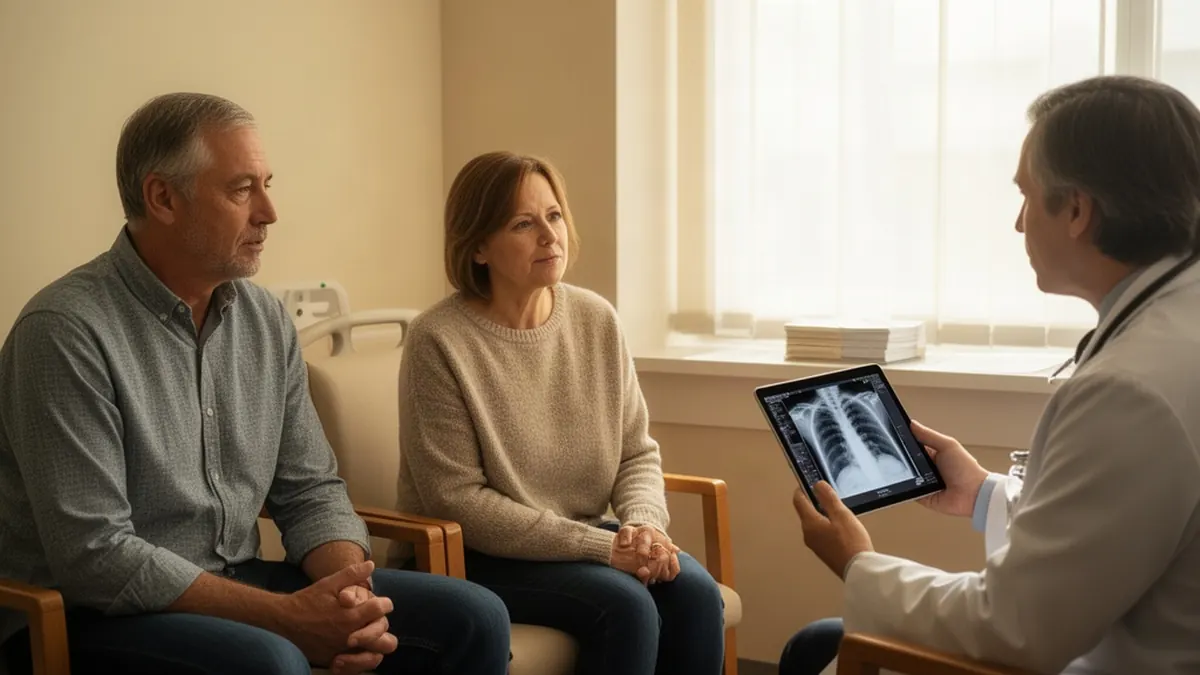
Imagine your neighbor mentions a cough that's been hanging around for three months. She figured it was allergies, maybe a lingering cold. Her husband finally dragged her to urgent care, and a chest X-ray kicked off a chain of appointments that ended with a lung cancer diagnosis. That story plays out thousands of times a year across the US, and what strikes me every time I hear a version of it is how long people wait. Not because they're careless — because the early signs are so easy to explain away. So let's talk about what's actually happening in the lungs, what the warning signals look like, why some people get this disease and others don't, and what modern treatment really involves.
What Lung Cancer Actually Is
Your lungs are made up of millions of cells that grow, divide, and die in an orderly way. Lung cancer starts when that orderly process breaks down — cells mutate and keep multiplying when they shouldn't, forming a tumor. Most lung cancers begin in the cells lining the airways, though they can start in other lung tissues too.
There are two broad categories doctors work with. Non-small cell lung cancer (NSCLC) accounts for roughly 80–85% of all cases. It grows more slowly and includes subtypes like adenocarcinoma, squamous cell carcinoma, and large cell carcinoma. Small cell lung cancer (SCLC) is less common but grows fast and spreads early — it's almost always tied to smoking. Knowing which type you have matters enormously, because the treatment paths are different.
Lung cancer is staged from 1 to 4. Stage 1 means the tumor is small and confined. Stage 4 means it has spread to other organs, like the liver, brain, or bones. Early-stage lung cancer is often curable. Late-stage is not — though it can be managed, sometimes for years, with the right treatment.
Symptoms That Shouldn't Get Dismissed
Here's the uncomfortable truth: early lung cancer usually causes no symptoms at all. That's part of why it's so deadly. By the time something feels wrong, the cancer has often been growing quietly for a while. Still, there are signals worth knowing.
A cough that just won't quit is the one most people associate with lung cancer, and rightly so. But watch for these specifics — a cough that gets worse over weeks rather than better, coughing up blood even in small amounts, chest pain that deepens when you breathe or laugh, and shortness of breath doing things that used to feel easy. Hoarseness that lasts more than two or three weeks is another one people miss. So is unexplained weight loss — not the gradual kind from eating better, but dropping 10 pounds without trying.
Some symptoms seem unrelated. Bone pain in the back or hips, headaches, dizziness, or even swelling in the face and neck can all be signs that lung cancer has spread. If you're experiencing more than one of these at the same time, don't wait it out. Get seen.
- Persistent cough lasting more than 3 weeks
- Coughing up blood or rust-colored mucus
- Chest pain that worsens with deep breathing
- Unexplained weight loss
- New hoarseness that doesn't resolve
- Shortness of breath during normal activity
- Recurring respiratory infections like pneumonia or bronchitis
Who Is Actually at Risk — and Why
Smoking is the big one. About 80–90% of lung cancer deaths in the US are linked to cigarettes. The risk goes up with how many cigarettes you smoke per day and how many years you've smoked — that's where the 'pack-year' calculation comes from. But quitting helps immediately and keeps helping the longer you stay off them. Ten years after quitting, your lung cancer risk drops to roughly half that of a current smoker.
Radon is the second leading cause, and most people have no idea it's sitting in their basement. It's a naturally occurring radioactive gas that seeps up through soil and concentrates indoors. You can't smell it or see it. The EPA estimates radon causes about 21,000 lung cancer deaths per year in the US. A $15 test kit from a hardware store can tell you whether your home has a problem. If it does, mitigation systems actually work.
Other risk factors include exposure to asbestos, diesel exhaust, and certain industrial chemicals. A family history of lung cancer raises your risk even if you've never smoked. And about 10–15% of lung cancers occur in people who have never smoked at all — often women, often adenocarcinoma, often linked to genetic mutations like EGFR. That matters because targeted therapy works particularly well for those cases.
Screening: Who Should Get Checked Before Symptoms Appear
Low-dose CT scanning (LDCT) can catch lung cancer before you feel a thing. The US Preventive Services Task Force recommends annual LDCT screening for adults aged 50 to 80 who have a 20 pack-year smoking history and currently smoke or quit within the past 15 years. That recommendation changed in 2021, expanding access compared to older guidelines. If you fall into that group, ask your doctor. Most insurance plans, including Medicare, cover it.
Screening isn't perfect — it can pick up nodules that turn out to be nothing, leading to follow-up scans and occasional anxiety. But the evidence from the National Lung Screening Trial showed a 20% reduction in lung cancer death among high-risk people who were screened. That's a real number. Worth a conversation with your provider.
If you don't meet the screening criteria but you're worried — maybe you worked in construction for 20 years around asbestos, or you've had a nagging cough — bring it up anyway. Guidelines are starting points, not ceilings. A good clinician will weigh your individual history.
How Lung Cancer Is Diagnosed
A chest X-ray might be the first thing ordered, but it misses a lot. CT scans are much more detailed. If something suspicious shows up, your doctor will want a biopsy — an actual tissue sample — to confirm whether it's cancer and what type. That sample can come from bronchoscopy, where a thin scope goes down your airway, or from a needle guided by CT imaging, or in some cases from surgery.
Molecular testing of the tumor tissue has become standard for NSCLC. Labs look for specific gene mutations — EGFR, ALK, ROS1, KRAS, PD-L1 expression, and others. These aren't just academic details. They directly determine which targeted therapies or immunotherapies are likely to work for your specific cancer. This is why getting your care at a comprehensive cancer center matters, because not every community hospital runs a full molecular panel.
PET scans and MRIs help determine staging — whether and where the cancer has spread. This whole diagnostic process can take two to four weeks, which feels agonizing when you're waiting. It's worth asking your care team for a written timeline so you know what's coming next.
Treatment Options Available Today
Surgery is the preferred treatment for early-stage NSCLC when the cancer is localized and the patient is healthy enough to tolerate it. A lobectomy removes one lobe of the lung. Minimally invasive approaches using video-assisted thoracoscopic surgery (VATS) have shorter recovery times than traditional open chest surgery — many patients go home in two or three days. Radiation therapy, including a precise form called stereotactic body radiotherapy (SBRT), is an option for people who can't have surgery.
Chemotherapy uses drugs to kill fast-dividing cells and is still used, especially for SCLC and in combination with other treatments. Targeted therapy is different — it's designed to block the specific mutation driving your cancer. If your tumor has an EGFR mutation, for instance, drugs like osimertinib can work remarkably well. Immunotherapy is another major advance. Drugs called checkpoint inhibitors help your immune system recognize and attack the cancer. Pembrolizumab is probably the best-known name in this category for lung cancer. Some patients have had years of disease control on immunotherapy alone.
For advanced or metastatic lung cancer, treatment is about controlling the disease and maintaining quality of life rather than cure. Palliative care — which is not the same as hospice — can run alongside active treatment to manage pain, breathlessness, and fatigue. Clinical trials are also worth asking about. The US has hundreds of active lung cancer trials right now, some testing combinations that aren't yet approved. Your oncologist can check ClinicalTrials.gov for ones you might qualify for.
- Surgery (lobectomy, segmentectomy, minimally invasive VATS)
- Radiation therapy including SBRT
- Chemotherapy, often combined with other treatments
- Targeted therapy based on specific gene mutations
- Immunotherapy (checkpoint inhibitors like pembrolizumab)
- Palliative care to manage symptoms alongside treatment
- Clinical trials for emerging drug combinations
Living With Lung Cancer: Practical Things That Help
A lung cancer diagnosis reshapes your daily life fast. Fatigue is real — not just tiredness but bone-deep exhaustion that can follow chemotherapy or radiation. Short walks, even 10 minutes around the block, genuinely help more than rest alone for most patients. Your oncology team can refer you to pulmonary rehabilitation, which is essentially supervised exercise and breathing training. It's underused and it works.
Nutrition matters more than people give it credit for. Cancer and its treatments can tank your appetite and cause weight loss that weakens you further. Ask for a referral to an oncology dietitian — not just a general nutritionist. High-protein, calorie-dense foods eaten in small frequent amounts often work better than three big meals.
The mental health side gets overlooked. Anxiety and depression are common after a lung cancer diagnosis, and the stigma around smoking can make people feel blamed for their illness — even people who never smoked. Support groups specific to lung cancer exist both in person and online (LUNGevity and GO2 Foundation are good starting points). You don't have to process this alone, and you shouldn't have to.
Common questions
Can you get lung cancer if you've never smoked?
Yes, absolutely. About 10–15% of lung cancers in the US occur in people who have never smoked. This type is more common in women and is often linked to genetic mutations like EGFR or exposure to radon, secondhand smoke, or air pollution. Never-smoker lung cancers frequently respond well to targeted therapies.
How long can you live after a lung cancer diagnosis?
It depends heavily on the stage and the type. Stage 1 NSCLC has a five-year survival rate around 60–80% with surgery. Stage 4 has historically been much lower, but newer targeted therapies and immunotherapies have extended survival significantly for many patients — some living five or more years. Talk to your oncologist about what the data looks like for your specific situation.
Does quitting smoking help if you've already been diagnosed?
Yes — and this surprises a lot of people. Quitting after a lung cancer diagnosis can improve treatment outcomes, reduce complications from surgery or radiation, and lower the risk of a second cancer. It also helps medications work more effectively in some cases. It's never too late to stop, and your care team can help with cessation support.
Should I get a second opinion after a lung cancer diagnosis?
Getting a second opinion is completely reasonable, and most oncologists expect it. Lung cancer treatment decisions — especially around molecular testing, surgery eligibility, and clinical trial options — are genuinely complex. A major cancer center with a dedicated thoracic oncology team can offer perspectives your local hospital may not. It doesn't have to delay your treatment significantly.