
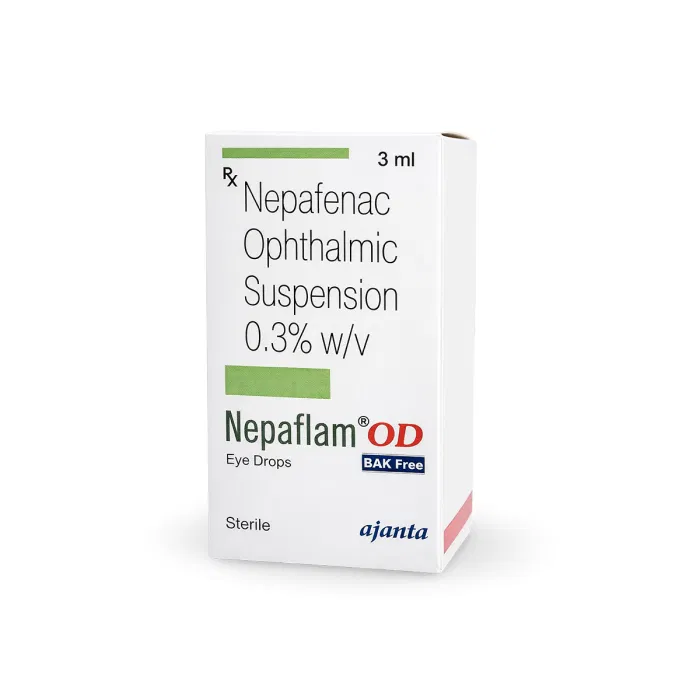
Nepafenac
Nepaflam OD 3 mL Eye Drop★★★★★0.0 (0)
Starting at
$49.99
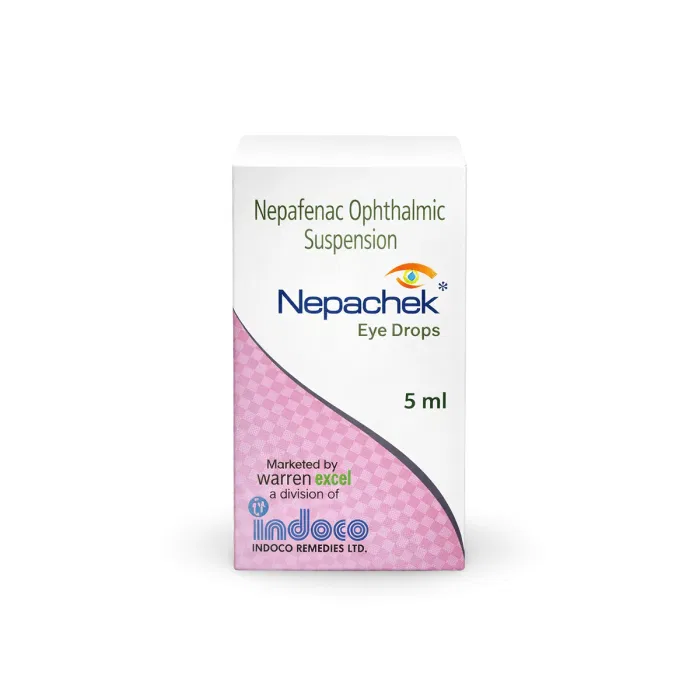
Nepachek 5 mL Eye Drop is a prescription eye drop that contains nepafenac, a nonsteroidal anti-inflammatory drug (NSAID) used in the eye. Each bottle is the 5 mL eye drop presentation of Nepachek, supplied by Indoco Remedies.
Prescription required — you can upload it at checkout or later
| Pack Size | Qty | Price | Add to cart | Unit Price |
|---|---|---|---|---|
| 1 bottle | $24.99 | $24.99 |
Free shipping on orders of $199 or more
Nepachek 5 mL Eye Drop is a prescription eye drop that contains nepafenac, a nonsteroidal anti-inflammatory drug (NSAID) used in the eye. Each bottle is the 5 mL eye drop presentation of Nepachek, supplied by Indoco Remedies. It is used to reduce eye pain and swelling, most often after cataract surgery or other eye procedures when an anti-inflammatory drop is needed. Nepachek 5 mL Eye Drop works locally in the eye, so it is designed for targeted relief rather than full-body pain control.
How it works: Nepafenac in Nepachek 5 mL Eye Drop blocks the eye’s production of prostaglandins, which are chemicals that cause pain and swelling. By lowering these chemicals directly in the eye, the drop helps calm inflammation after eye surgery or injury-related irritation.
Nepachek 5 mL Eye Drop is the standard bottle-size presentation rather than a higher or lower drug strength, so it fits normal prescribed eye-drop dosing. A doctor may choose this 5 mL bottle when a patient needs a convenient supply for the full treatment course without using a different form. Because it is an eye drop, it acts directly where the inflammation is, and the feel may be a brief stinging or blurred vision right after instillation.
The product is supplied as a 5 mL bottle of Nepachek 5 mL Eye Drop, and the exact number of drops per dose depends on the prescription your doctor gives. It is commonly used as 1 drop in the affected eye(s) on a schedule your surgeon or ophthalmologist chooses, often multiple times a day around the time of eye surgery. There is no universal maximum daily dose for every patient with this product size; the prescriber decides the frequency based on the condition being treated and your eye-surgery plan.
Do not change your dose or stop the medicine without speaking to your doctor.
Common side effects of Nepafenac may include:
Get medical help right away if you notice:
Store Nepachek 5 mL Eye Drop at room temperature, keep the bottle tightly closed, and protect it from contamination by not touching the dropper tip.
Nepachek 5 mL Eye Drop is used to reduce pain and inflammation in the eye, most commonly after cataract surgery. Your doctor may also use it for other short-term eye inflammation needs if they decide nepafenac is appropriate.
Use Nepachek 5 mL Eye Drop exactly on the schedule your eye surgeon gives you, usually as directed in the operated eye. Wash your hands first, avoid touching the dropper tip, and keep your eyes closed gently for a minute after each drop.
Yes, brief blurred vision can happen right after using Nepachek 5 mL Eye Drop. Wait until your vision clears before driving or doing tasks that need sharp eyesight.
No, Nepachek 5 mL Eye Drop is an eye NSAID, so it works locally in the eye rather than as a body-wide pain reliever. It is meant for inflammation and pain related to the eye, not for general aches or fever.
No written reviews yet.
Same as Nepafenac
Nepafenac
Nepaflam OD 3 mL Eye DropStarting at
$49.99
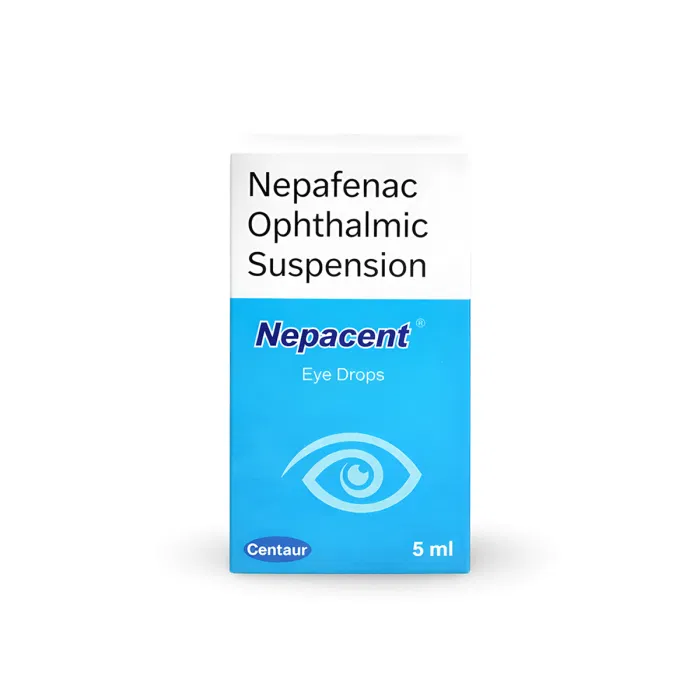
Nepafenac
Nepacent 0.10% 5 mL Eye DropStarting at
$31.99
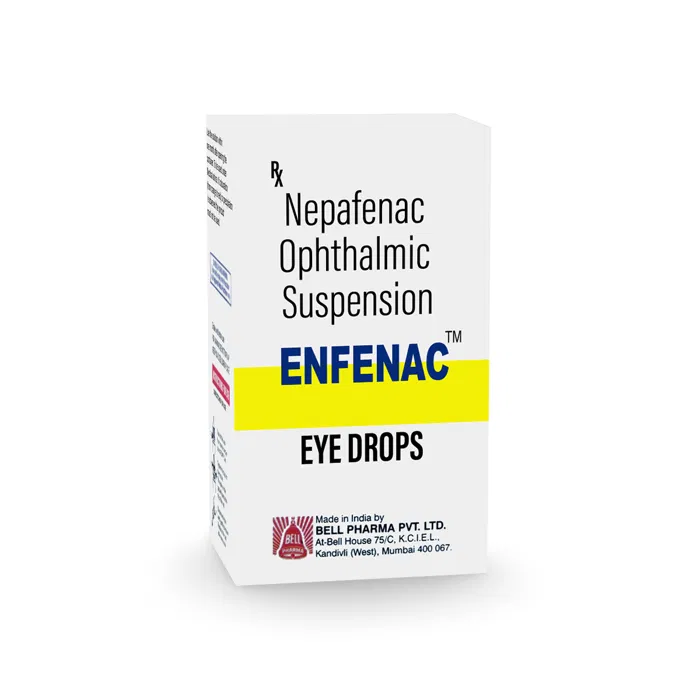
Nepafenac
Enfenac Eye DropStarting at
$28.99
Nepafenac
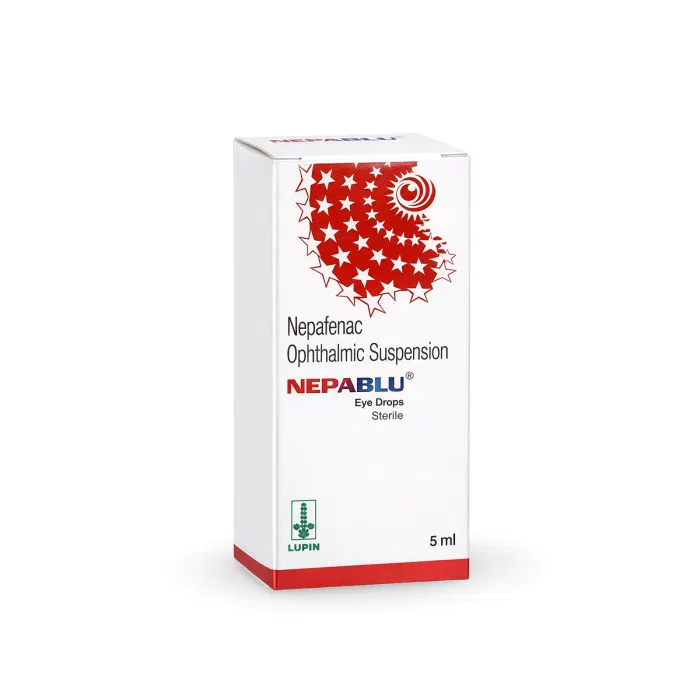
Nepablu 5 mL Eye DropStarting at
$26.99
Nepafenac
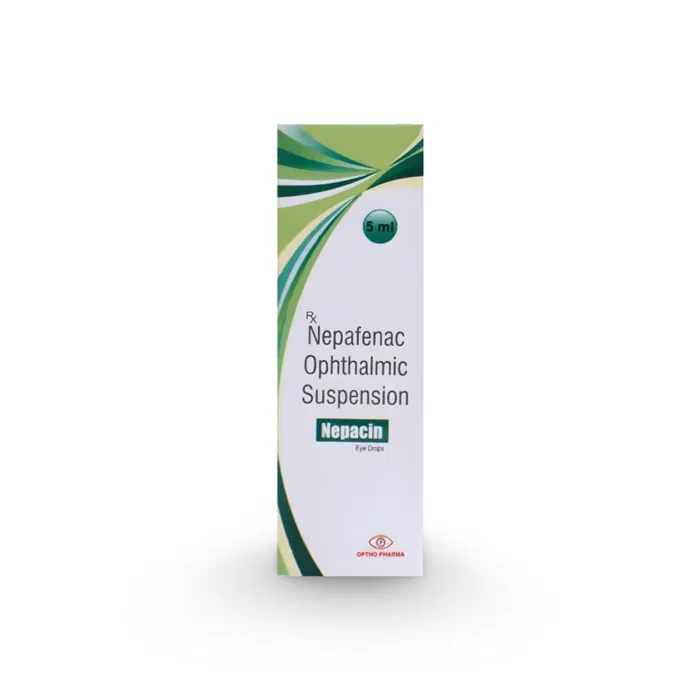
Nepacin Eye DropStarting at
$12.99
Nepafenac
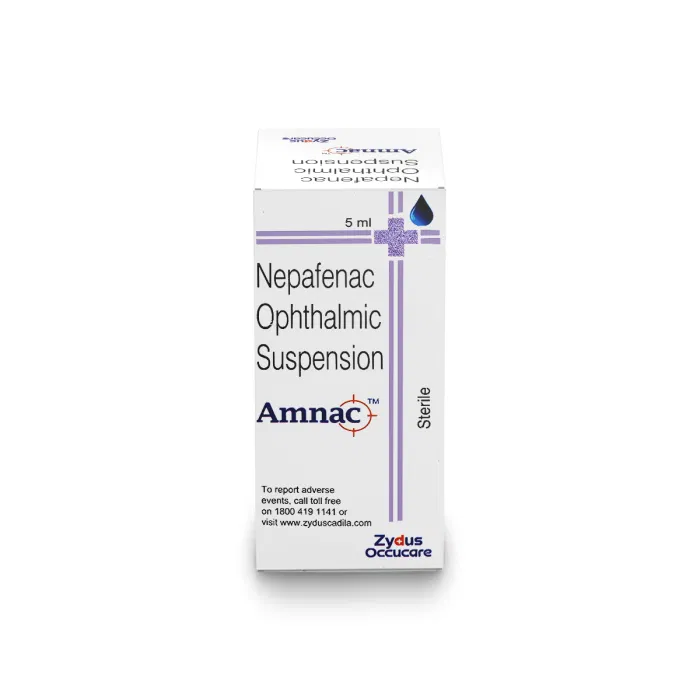
Amnac 5 mL Eye DropStarting at
$26.99
Nepafenac
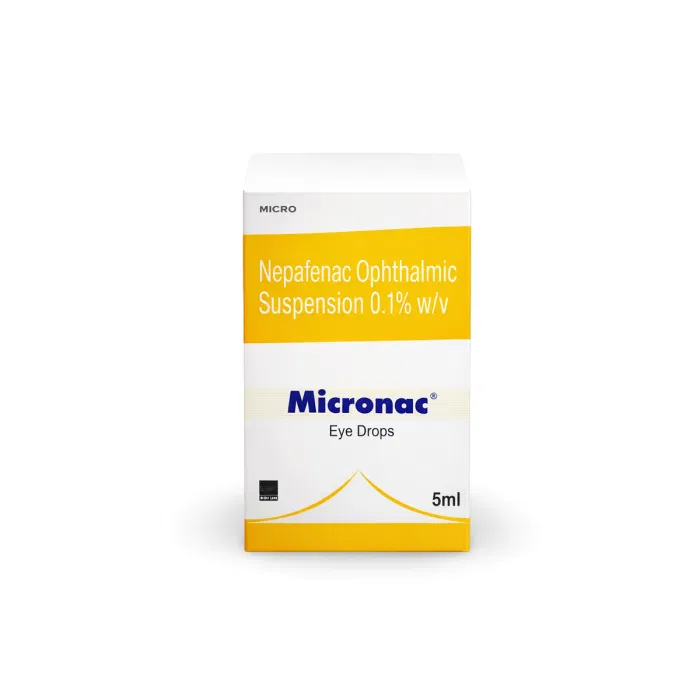
Micronac 5 mL Eye DropStarting at
$41.99
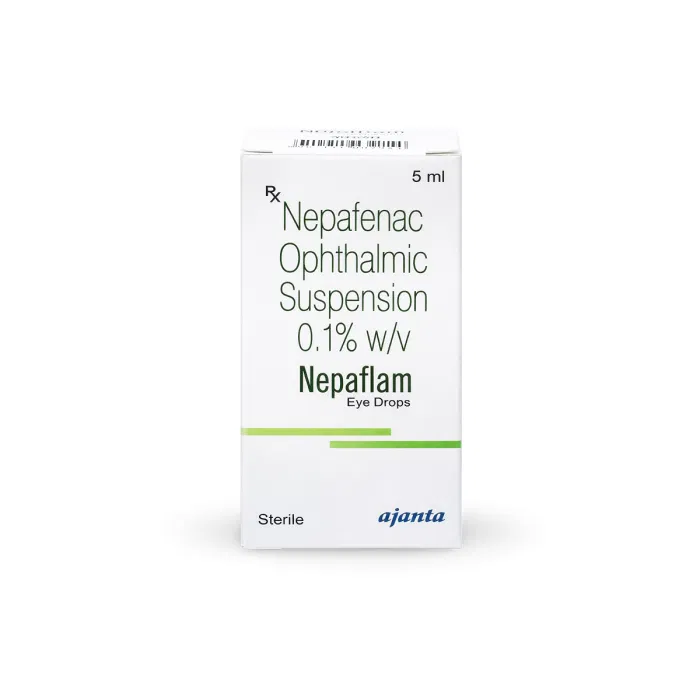
Nepafenac
Nepaflam 5 mL Eye DropStarting at
$52.99