
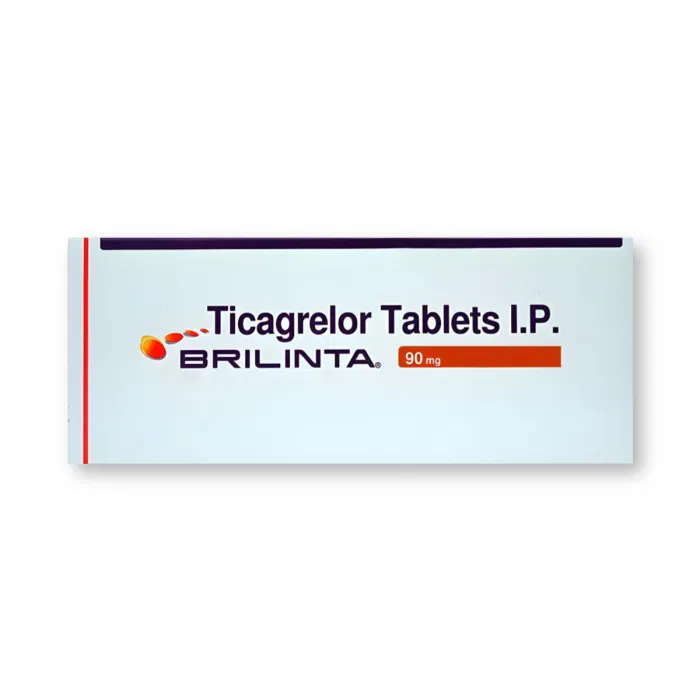
Brilinta 90 mg Tablet
Brilinta 90 mg Tablet contains 90 mg of ticagrelor in each tablet. It is an antiplatelet medicine, or blood thinner, used to help prevent blood clots that can cause heart attack, stroke, or worsening chest pain in people with certain heart conditions.
Prescription required — you can upload it at checkout or later
Choose strength (2 available)
| Pack Size | Qty | Price | Add to cart | Unit Price |
|---|---|---|---|---|
| 14 tablet/s | $40.99 | $2.93 | ||
| 28 tablet/s | $78.99 | $2.82 | ||
| 56 tablet/s | $148.99 | $2.66 |
Save more with our biggest pack
- Manufacturer
- AstraZeneca, India
- Ingredient
- Ticagrelor
- Strength
- 90 mg
- Form
- Tablet
- Tablets per strip
- 14
- Prescription
- Required
- Availability
- In stock
- SKU
- CMU5449
Free shipping on orders of $199 or more
What is Brilinta 90 mg Tablet?
Brilinta 90 mg Tablet contains 90 mg of ticagrelor in each tablet. It is an antiplatelet medicine, or blood thinner, used to help prevent blood clots that can cause heart attack, stroke, or worsening chest pain in people with certain heart conditions. Brilinta 90 mg Tablet is commonly used after an acute coronary syndrome event and may also be used after some heart procedures, as directed by a clinician. It works as part of long-term heart protection, not as a pain reliever or emergency treatment.
How it works: Ticagrelor helps keep platelets from sticking together, which lowers the chance of forming a harmful clot in the blood vessels of the heart and brain. As a tablet, Brilinta 90 mg Tablet is swallowed whole and starts working systemically after it is absorbed into the body.
Why choose Brilinta 90 mg Tablet?
Brilinta 90 mg Tablet is the higher-strength tablet compared with Brilinta 60 mg Tablet, so it is generally chosen when a doctor wants stronger platelet inhibition. This 90 mg strength is commonly used during the first phase of treatment after a recent heart event or procedure, while lower strengths are often used later for ongoing therapy. Because it is a stronger dose, it should only be taken exactly as prescribed for the person’s current treatment plan.
Uses of Brilinta 90 mg Tablet
- Prevention of blood clots after acute coronary syndrome
- Reducing the risk of heart attack
- Reducing the risk of stroke
- Lowering the chance of cardiovascular death in selected patients
- Support after certain heart procedures, if prescribed
How to take Brilinta 90 mg Tablet
- Swallow the Brilinta 90 mg Tablet whole with water; do not crush, break, or chew it.
- Take it at the same times each day to help you remember your doses.
- You can take it with or without food; food does not usually change how it works.
- If you are also taking low-dose aspirin, follow your doctor’s exact instructions because aspirin use affects ticagrelor treatment.
- If you miss a dose, take the next dose at the regular time unless your prescriber tells you otherwise; do not double up.
- Do not stop Brilinta 90 mg Tablet suddenly without medical advice, because stopping can raise clot risk.
Brilinta 90 mg Tablet dosage
Each Brilinta 90 mg Tablet provides 90 mg of ticagrelor. In adults, this strength may be taken twice daily when prescribed, but the exact schedule and duration depend on the reason it was prescribed and your other medicines. Your doctor decides the dose and whether you should later switch to a lower strength such as Brilinta 60 mg Tablet.
Do not change your dose or stop the medicine without speaking to your doctor.
Brilinta 90 mg Tablet side effects
Common side effects of Ticagrelor may include:
- Shortness of breath
- Bleeding or easier bruising
- Nosebleeds
- Headache
- Dizziness
- Nausea
- Less commonly, slow heart rate
Get medical help right away if you notice:
- Signs of serious bleeding such as black stools, vomiting blood, or bleeding that will not stop
- Trouble breathing that is severe or sudden
- Chest pain or fainting
- Signs of stroke such as facial droop, weakness, or trouble speaking
- Allergic reaction such as swelling, rash, or wheezing
Precautions and warnings
- This is a higher-strength tablet, so it should be used only when a doctor has assessed that this dose is appropriate.
- Ticagrelor can increase bleeding risk, so tell your clinician about any recent surgery, injury, ulcers, or bleeding disorders.
- Use caution with alcohol because it can increase the chance of stomach irritation or bleeding.
- Tell your doctor if you have a history of slow heart rate, fainting, asthma, COPD, or breathing problems, since shortness of breath can occur.
- Do not take this medicine if you have active bleeding unless your prescriber specifically directs it.
- Let every surgeon, dentist, and emergency clinician know you are taking ticagrelor before any procedure.
- Avoid driving or activities that require alertness if you feel dizzy or short of breath after taking it.
Drug interactions
- Aspirin and other antiplatelet medicines can increase bleeding risk.
- Blood thinners such as warfarin, apixaban, rivaroxaban, or heparin may raise bleeding risk.
- NSAIDs like ibuprofen or naproxen can increase the chance of bleeding.
- Strong CYP3A inhibitors or inducers can affect ticagrelor levels and should be reviewed by a clinician.
- Some cholesterol medicines and certain heart medicines may need review for interaction risk.
Storage
Store Brilinta 90 mg Tablet in its original strip or box at room temperature, away from moisture and heat, and keep it out of reach of children.
Frequently asked questions about Brilinta 90 mg Tablet
What is Brilinta 90 mg used for?
Brilinta 90 mg Tablet is used to help prevent dangerous blood clots in people with certain heart problems, especially after an acute coronary syndrome event. It lowers the risk of heart attack, stroke, and other clot-related heart complications when used as prescribed.
How should I take Brilinta 90 mg?
Swallow Brilinta 90 mg Tablet whole with water and take it exactly as your doctor tells you. It is often prescribed twice daily, but you should follow your own prescription label rather than changing the schedule yourself.
Is Brilinta 90 mg the same as Brilinta 60 mg?
No, Brilinta 90 mg Tablet is the higher-strength version, while Brilinta 60 mg Tablet is a lower-strength option used in different parts of treatment. Your doctor may choose 90 mg for earlier or more intensive therapy and 60 mg for longer-term use if appropriate.
What are the most common side effects of Brilinta 90 mg?
The most common side effects include shortness of breath, bleeding, bruising, nosebleeds, and headache. Because this is a higher-strength tablet, bleeding-related side effects deserve extra attention and should be reported if they are heavy or do not stop.
Customer reviews of Brilinta 90 mg Tablet
No written reviews yet.