
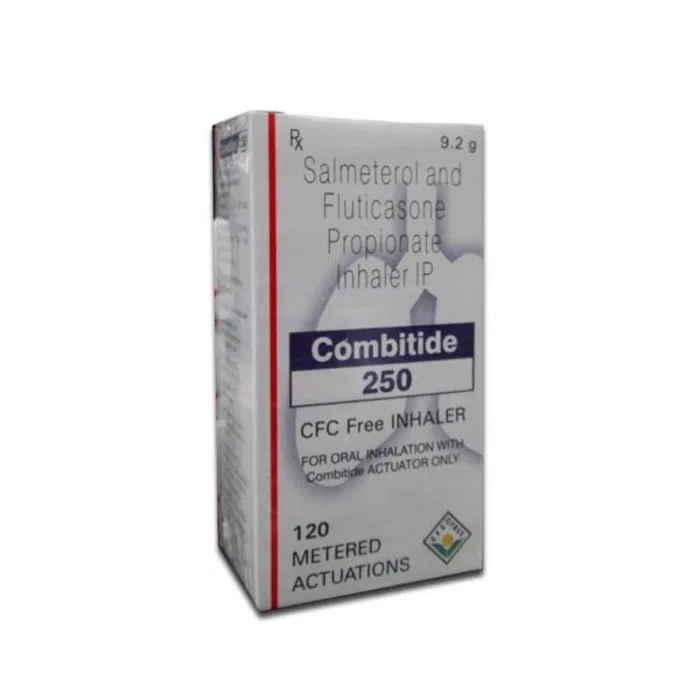
Combitide 50 mcg/250 mcg Inhaler
Combitide 50 mcg/250 mcg Inhaler is a combination asthma medicine that contains salmeterol 50 mcg and fluticasone propionate 250 mcg in each inhaler dose. It belongs to a long-acting beta2-agonist plus inhaled corticosteroid class, and it is used for maintenance treatment of asthma, not for sudden breathing attacks.
Prescription required — you can upload it at checkout or later
Choose strength (2 available)
| Pack Size | Qty | Price | Add to cart | Unit Price |
|---|---|---|---|---|
| 3 inhaler/s | $171.99 | $57.33 | ||
| 6 inhaler/s | $307.99 | $51.33 | ||
| 9 inhaler/s | $407.99 | $45.33 |
Save more with our biggest pack
- Manufacturer
- Sun Pharmaceutical Industries Ltd.
- Ingredient
- Salmeterol + Fluticasone Propionate
- Strength
- 50 mcg/250 mcg
- Form
- Inhaler
- Prescription
- Required
- Availability
- In stock
- SKU
- CMU3828
Free shipping on orders of $199 or more
What is Combitide 50 mcg/250 mcg Inhaler?
Combitide 50 mcg/250 mcg Inhaler is a combination asthma medicine that contains salmeterol 50 mcg and fluticasone propionate 250 mcg in each inhaler dose. It belongs to a long-acting beta2-agonist plus inhaled corticosteroid class, and it is used for maintenance treatment of asthma, not for sudden breathing attacks. The Combitide 50 mcg/250 mcg Inhaler helps control airway inflammation and keeps the airways open to reduce wheezing, cough, chest tightness, and shortness of breath. It is a higher-strength option in the Combitide line and is usually chosen when a lower-strength inhaler is not enough for symptom control.
How it works: Salmeterol relaxes the muscles around the airways so breathing passages stay open for longer. Fluticasone propionate lowers swelling and irritation inside the airways, and the inhaler format delivers both medicines directly to the lungs.
Why choose Combitide 50 mcg/250 mcg Inhaler?
Compared with Combitide 25 mcg/125 mcg Inhaler, the Combitide 50 mcg/250 mcg Inhaler delivers twice the amount of both salmeterol and fluticasone propionate per inhaled dose. Because this is a higher-strength inhaler, it is generally suited for people whose asthma has already been assessed by a doctor and who need stronger controller therapy, not for newly started treatment. A clinician may choose this strength when symptoms remain poorly controlled on a lower dose and a step-up in controller treatment is needed.
Uses of Combitide 50 mcg/250 mcg Inhaler
- Maintenance treatment of asthma
- Long-term control of wheezing
- Prevention of asthma symptoms
- Reduction of asthma flare-ups when used regularly
- Controller therapy for persistent asthma
How to take Combitide 50 mcg/250 mcg Inhaler
- Use the Combitide 50 mcg/250 mcg Inhaler exactly as prescribed, usually on a regular schedule rather than only when symptoms appear.
- This inhaler is not a rescue medicine; do not use it for sudden asthma attacks or rapidly worsening breathing.
- If you also need a quick-relief inhaler, keep it available and follow your doctor’s asthma action plan.
- Rinse your mouth with water and spit it out after each use to help lower the risk of oral thrush.
- Do not exceed the number of inhalations or doses your doctor has told you to use in a day.
- If you miss a dose, take it when you remember unless it is almost time for the next dose; do not double up.
Combitide 50 mcg/250 mcg Inhaler dosage
Each inhaler dose of Combitide 50 mcg/250 mcg provides salmeterol 50 mcg plus fluticasone propionate 250 mcg, which is a relatively strong controller dose. It is commonly taken as directed by the prescriber, often twice daily, but the exact schedule and any maximum daily amount must be set by the doctor based on asthma severity and prior treatment response. Do not increase the dose or use it more often on your own, because this strength is intended for patients who have already been evaluated for a higher-dose regimen.
Do not change your dose or stop the medicine without speaking to your doctor.
Combitide 50 mcg/250 mcg Inhaler side effects
Common side effects of Salmeterol + Fluticasone Propionate may include:
- Throat irritation
- Hoarseness
- Cough
- Headache
- Oral thrush (fungal infection in the mouth)
- Tremor or shakiness
- Fast heartbeat or palpitations
Get medical help right away if you notice:
- Worsening wheezing right after inhalation
- Chest pain or irregular heartbeat
- Severe allergic reaction such as swelling, rash, or trouble breathing
- Adrenal suppression or extreme fatigue with long-term high-dose use
- Pneumonia or severe lower respiratory infection symptoms
Precautions and warnings
- Use caution if you have heart disease, high blood pressure, an abnormal heart rhythm, or a history of seizures.
- This higher-strength inhaler can raise the chance of steroid-related side effects if used too often or at higher than prescribed doses.
- Do not use for sudden asthma symptoms; a quick-relief inhaler is needed for rescue treatment.
- Tell your clinician if you have diabetes, thyroid disease, glaucoma, cataracts, osteoporosis, or liver problems.
- Rinse and spit after use to reduce mouth irritation and thrush.
- If your asthma suddenly gets worse, seek medical advice promptly instead of taking extra doses.
- Avoid smoking exposure, which can reduce asthma control and may make treatment less effective.
Drug interactions
- Other LABA medicines, which can increase the risk of side effects
- Strong CYP3A4 inhibitors such as ketoconazole, itraconazole, ritonavir, or cobicistat
- Beta-blockers such as propranolol, which can oppose the bronchodilator effect
- Diuretics that may lower potassium and increase heart-related side effects
- MAO inhibitors or tricyclic antidepressants, which can increase cardiovascular effects
Storage
Store the Combitide 50 mcg/250 mcg Inhaler at room temperature in a dry place, away from heat, moisture, and direct sunlight, and keep it capped when not in use.
Frequently asked questions about Combitide 50 mcg/250 mcg Inhaler
What is Combitide 50 mcg/250 mcg used for?
Combitide 50 mcg/250 mcg is used as a maintenance inhaler for asthma control. It helps prevent symptoms such as wheezing, chest tightness, and shortness of breath when used regularly as prescribed.
How is Combitide 50 mcg/250 mcg different from Combitide 25 mcg/125 mcg?
Combitide 50 mcg/250 mcg is the stronger option, with double the salmeterol and fluticasone propionate found in the 25 mcg/125 mcg inhaler. A doctor may choose it when lower-strength treatment has not controlled asthma well enough.
Can I use Combitide 50 mcg/250 mcg for a sudden asthma attack?
No, Combitide 50 mcg/250 mcg is not a rescue inhaler and will not work fast enough for an acute attack. Use your prescribed quick-relief inhaler and get urgent help if breathing does not improve.
What side effects should I watch for with Combitide 50 mcg/250 mcg?
Common side effects include hoarseness, throat irritation, cough, headache, and oral thrush. Get urgent help for chest pain, severe palpitations, worsening wheeze right after using the inhaler, or signs of an allergic reaction.
Customer reviews of Combitide 50 mcg/250 mcg Inhaler
No written reviews yet.