
Does Testosterone Cause Acne? What Men Need to Know
Published October 24, 2026
Medically reviewed by Chep Meds USA Pharmacy Team
Content checked by our licensed pharmacists for accuracy against standard prescribing information. Last reviewed October 2026. Our editorial policy
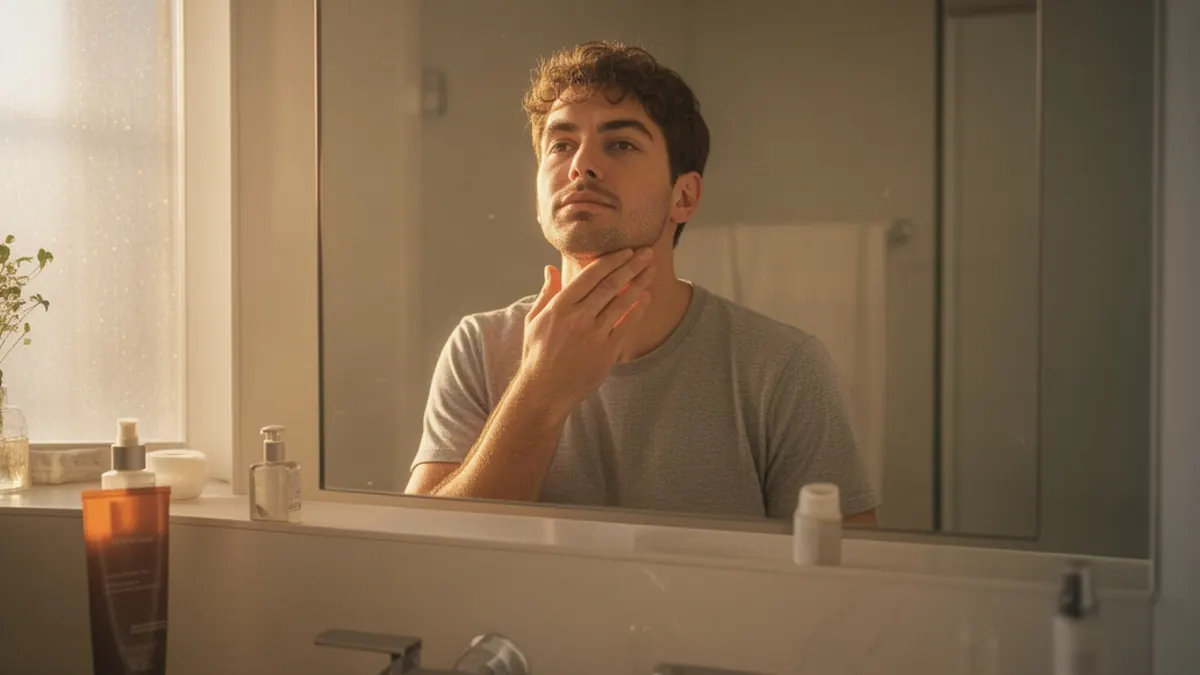
You're 16, and your face looks like a battlefield. Or maybe you're 34, you've just started testosterone replacement therapy, and suddenly you've got jawline breakouts you haven't seen since high school. Either way, you're staring at the mirror wondering what's going on. The short answer is that testosterone and acne are tightly connected—not in a punishment-for-having-hormones way, but through a very specific chain of biology that scientists actually understand pretty well. Let's walk through it.
The Basic Biology: How Testosterone Feeds a Pimple
Your skin is covered in tiny oil glands called sebaceous glands. They sit right next to hair follicles and their whole job is to produce sebum—an oily substance that normally keeps your skin moisturized. Fine. The problem starts when androgens, a class of hormones that includes testosterone, tell those glands to work overtime. More sebum production means more oil sitting in the follicle.
Here's where it gets worse. That extra oil mixes with dead skin cells. The follicle gets plugged. Bacteria called Cutibacterium acnes—previously known as Propionibacterium acnes—thrive in that oxygen-poor, oil-rich environment. Your immune system notices, sends in the cavalry, and you get inflammation. That's your pimple. Testosterone didn't cause the pimple directly. It set off a chain of events that did.
One important nuance: it's not just testosterone itself. Your body converts testosterone into a more potent androgen called dihydrotestosterone, or DHT. DHT binds to receptors in sebaceous glands much more aggressively than testosterone does. So your total testosterone level matters less than how much DHT your body is producing—and how sensitive your skin's androgen receptors happen to be.
Why Puberty Hits Skin So Hard
Before puberty, androgen levels in boys are low. Sebaceous glands are quiet. Skin is relatively clear. Then the hypothalamic-pituitary axis kicks into gear, testosterone rises fast, and those formerly sleepy oil glands suddenly get flooded with hormonal signals. The glands actually enlarge during this period. You can feel the difference—skin gets oilier, sometimes almost immediately.
Most teenage boys get at least some acne. Roughly 85% of adolescents experience it, and it peaks somewhere between 14 and 17 for males. The severity varies a lot from person to person, and that's largely genetic. Two guys with identical testosterone levels can have completely different skin outcomes. One coasts through high school with a few spots; the other deals with severe cystic acne on his face, chest, and back. The difference usually comes down to how reactive their sebaceous glands are to DHT.
For most men, things calm down significantly in their mid-20s as hormonal fluctuations settle. But 'mostly goes away' isn't the same as 'completely gone.' Adult acne in men is more common than people realize—and it often shows up on the lower face and neck rather than the forehead.
Testosterone Replacement Therapy and Acne: The Real Risk
This one catches a lot of guys off guard. You start TRT—testosterone replacement therapy—because your doctor diagnosed low T. You're feeling better in some ways. Then, a few weeks in, your back or shoulders break out. This is a recognized and common side effect of exogenous testosterone. When you inject or apply testosterone from outside the body, you're raising androgen levels significantly, often beyond what your natural production ever reached.
Acne from TRT tends to show up on the back, chest, and shoulders more than the face—what dermatologists call truncal acne. Injectable forms of testosterone seem to cause more acne than gels or patches, probably because injections create sharper peaks in blood testosterone levels. Those spikes drive higher DHT conversion and bigger surges in sebum production.
If you're on TRT and your skin is suffering, don't just push through it. Talk to the prescribing physician. Sometimes a dose adjustment or a switch in delivery method helps considerably. A dermatologist can also add targeted treatments—topical retinoids, topical antibiotics, or sometimes oral options—without necessarily requiring you to stop therapy. Don't self-adjust your TRT dose based on skin concerns alone.
- Truncal acne (back, chest, shoulders) is most common with TRT
- Injectables tend to cause more breakouts than gels due to sharper hormone peaks
- Higher doses increase the risk; minimum effective dose is the goal
- Acne can appear within weeks of starting treatment
Anabolic Steroids: A Different Conversation
Anabolic-androgenic steroids (AAS)—the kind used illicitly for bodybuilding—cause some of the worst acne you'll ever see. Severe, cystic, covering the entire back, sometimes the face. It's not subtle. These compounds are far more androgenic than therapeutic testosterone, and they're often used at doses many times higher than anything a physician would prescribe.
If you're using AAS and dealing with severe acne, the most effective thing you can do is stop. I know that's not always what people want to hear, but the honest answer is that no topical cream is going to fully compete with that hormonal load. Isotretinoin (Accutane) is sometimes used in severe cases but carries its own significant risks and requires medical supervision—and it doesn't fix the underlying hormonal issue if the AAS use continues.
This isn't a judgment call on anyone's choices. It's just a practical reality. If you go to a dermatologist and they see that pattern of acne, they'll ask about steroid use. Be honest with them. They're not going to call the authorities. They need the full picture to help you.
What Actually Helps: Treatments Worth Knowing About
Mild to moderate acne usually responds well to consistent skincare. A gentle, non-comedogenic cleanser used twice a day. Benzoyl peroxide—you can buy it over the counter—kills C. acnes bacteria and works well at 2.5% or 5% concentrations. Adapalene 0.1% gel is now available without a prescription too, and it's a retinoid that speeds up skin cell turnover, preventing follicle plugging. Give either of these at least eight to twelve weeks before deciding they're not working.
For moderate to severe acne, a dermatologist visit is the right move. Prescription topical retinoids like tretinoin are stronger than adapalene. Oral antibiotics like doxycycline reduce bacterial load and inflammation, though they're typically used short-term to reduce antibiotic resistance concerns. Isotretinoin is the nuclear option—reserved for severe, scarring acne that hasn't responded to other treatments. It requires a strict monitoring program (iPLEDGE) and regular blood tests. It works, but it's a commitment.
One thing that doesn't work as well as Instagram would have you believe: expensive 'hormone-balancing' supplements with little clinical evidence behind them. Some guys also try cutting dairy or high-glycemic foods, and there's decent research suggesting that can modestly reduce acne for some people. Worth trying if you're motivated. But a plain, consistent skincare routine will outperform any supplement on the market.
- Benzoyl peroxide 2.5–5%: OTC, kills acne bacteria effectively
- Adapalene 0.1% gel: OTC retinoid, prevents follicle plugging
- Tretinoin (prescription): stronger retinoid for persistent cases
- Doxycycline (prescription): oral antibiotic for moderate-severe acne
- Isotretinoin (prescription): for severe or scarring acne, with close monitoring
- Low-glycemic diet and reduced dairy: modest evidence, worth trying
Skincare Habits That Actually Make a Difference for Men
Men's skincare is often an afterthought, and that shows up in how people approach acne. Washing your face once with whatever body wash is in the shower isn't a skincare routine. It takes about 90 seconds twice a day to do this properly. Cleanser, let it dry, apply your benzoyl peroxide or retinoid, done. If you're shaving, use a fragrance-free, non-comedogenic moisturizer afterward—shaving can irritate already-inflamed skin.
For truncal acne, body washes with benzoyl peroxide or salicylic acid are legitimately useful. Apply them, let them sit for a minute before rinsing. Your gym habits matter too—showering within 30 minutes of working out, not sitting in sweaty clothes, using a clean towel. These aren't magic fixes but they remove one of the factors that makes back acne worse.
Change your pillowcase more often than you think you need to. Every few days if you're prone to facial breakouts. Hair products migrate onto your face while you sleep, and some of them—especially heavy pomades and waxes—are genuinely comedogenic. If you're breaking out along your hairline, your styling products might be partly to blame.
When to See a Doctor
If your acne is leaving scars, see a dermatologist. Don't wait it out. Scarring is permanent, and the treatments that prevent it are a lot more effective than the ones that try to fix it after the fact. Same goes for acne that's deeply painful, cystic, or covering large areas of your body.
If your breakouts started suddenly as an adult and you haven't changed anything—no new medications, no new supplements—it's worth getting your hormone levels checked. While testosterone is the most common hormonal cause of acne in men, occasionally other hormonal issues are in play. A primary care doctor can order basic labs and refer you to an endocrinologist if something looks off.
And if you started a new medication—not just TRT, but also certain psychiatric medications, corticosteroids, or lithium—and your skin changed around the same time, mention it to whoever prescribed it. Medication-induced acne is real and the solution might be as simple as switching to an alternative.
Common questions
Does having higher testosterone always mean worse acne?
Not necessarily. Your skin's sensitivity to DHT—the active form of testosterone—matters just as much as your total testosterone level. Two men with the same testosterone can have very different skin. Genetics play a big role in how reactive your sebaceous glands are.
Will my acne go away if I lower my testosterone?
Lowering androgen activity often improves acne, which is why some medications that block androgens are used to treat it. But just reducing testosterone doesn't automatically clear your skin, and you shouldn't adjust hormone levels without medical guidance. There are targeted treatments that work without affecting your hormone levels overall.
Can men use the same acne treatments as women?
Most of them, yes. Benzoyl peroxide, retinoids, topical antibiotics, and oral antibiotics all work in men and women. Some hormonal treatments used in women—like certain birth control pills or spironolactone—are occasionally used off-label in men for acne, though less commonly. A dermatologist can guide that conversation.
How long does it take for acne treatments to work?
Longer than most people expect. Topical treatments like adapalene or benzoyl peroxide typically need 8 to 12 weeks of consistent use before you see meaningful results. Oral antibiotics can show improvement in 4 to 6 weeks. If you stop after two weeks because it 'isn't working,' you're quitting too early.