
Testosterone Gel vs Injection: Which Is More Effective?
Published October 24, 2026
Medically reviewed by Chep Meds USA Pharmacy Team
Content checked by our licensed pharmacists for accuracy against standard prescribing information. Last reviewed October 2026. Our editorial policy
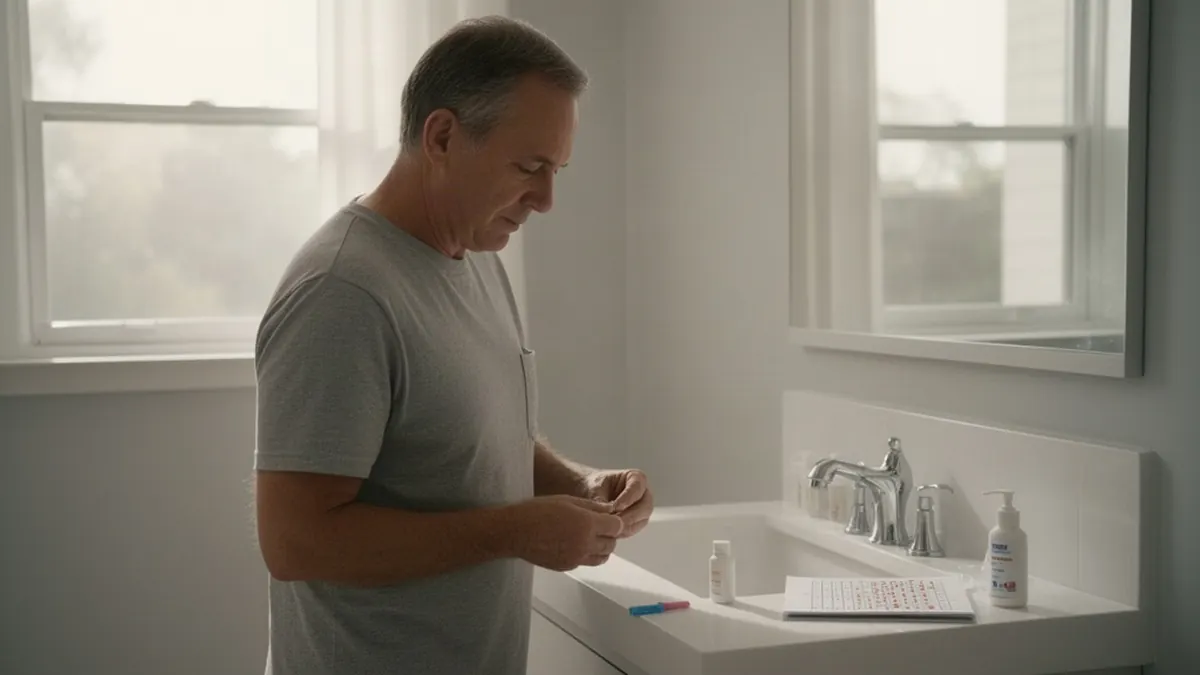
Picture this: your doctor just told you your testosterone is low, handed you a prescription, and suddenly you're staring at a pharmacy website trying to figure out whether you want to rub a gel on your shoulder every morning or schedule shots every week or two. Neither option sounds obviously better. Your buddy swears by injections. A coworker uses gel and loves it. Meanwhile you're just trying to feel like yourself again — better energy, better mood, maybe better muscle tone. The honest answer is that both forms work. The real question is which one works better for your life, your habits, and your body.
How Each Form Actually Delivers Testosterone
Testosterone gel is applied to the skin — usually your upper arms, shoulders, or abdomen depending on the brand — and the hormone absorbs slowly into your bloodstream over 24 hours. You apply it once a day, same time each morning, and your levels stay relatively steady. Think of it like a slow drip.
Injections work completely differently. A dose of testosterone cypionate or enanthate (the two most common forms in the US) goes straight into muscle tissue — typically the thigh or glute — and releases gradually from there. 'Gradually' is relative, though. Levels spike within a day or two, then drop off over the following 7 to 14 days. That rise and fall is something a lot of men feel physically.
Testosterone undecanoate injection is another option your doctor might mention. It's given less frequently — roughly every 10 weeks after an initial loading phase — and produces much steadier levels than the weekly or biweekly shots. It's available in the US but less commonly used than cypionate.
What the Research Actually Shows About Effectiveness
Here's the straightforward part: both gel and injection raise serum testosterone into the normal range effectively. Studies consistently show that men using either form see improvements in energy, libido, mood, and lean body mass when dosed correctly. There's no head-to-head trial that decisively crowns one form the winner on clinical outcomes alone.
Where injections have a practical edge is cost and raw hormone delivery. A standard vial of testosterone cypionate can cost as little as $30–$60 for a multi-week supply without insurance, and it gets testosterone into your blood fast. For men who need to see levels move quickly — say, someone dealing with severe symptomatic hypogonadism — injections often produce a more dramatic early response.
Gel tends to produce steadier, more physiologic levels day to day, which some men and their doctors prefer. Mood swings and energy crashes are more often reported with injections, particularly in the days just before the next dose is due. If you've ever heard someone say they can feel when their shot is 'wearing off,' that trough effect is real and it's a legitimate quality-of-life issue worth discussing with your prescriber.
The Convenience Factor Is Bigger Than You Think
Daily gel application takes about 30 seconds once you get used to it. You wash your hands, apply, let it dry. Done. But you have to do it every single day, and if you miss a dose or skip a weekend morning, your levels dip. For people who travel a lot or have unpredictable schedules, that daily commitment can be harder than it sounds.
Injections, on the other hand, are every 7 to 14 days for the common forms. Many men learn to self-inject at home, which your doctor or pharmacist can teach you. That's less frequent than daily gel, but injecting yourself takes a bit of nerve the first time — and every time, honestly, for some people. Needles aren't everyone's thing.
One thing almost nobody talks about upfront: gel requires keeping kids and female partners away from the application site until it's fully dry. Testosterone transfers on skin contact and can cause real hormonal problems in women and children — early puberty in kids, acne and hair growth in women. If you have young kids who climb all over you in the morning, this is not a small logistical issue. Injections completely sidestep that transfer risk.
- Gel: daily commitment, no needles, transfer risk to partners and children
- Injection (cypionate/enanthate): every 1–2 weeks, requires needle comfort, no transfer risk
- Injection (undecanoate): every ~10 weeks after loading, given in clinic, very stable levels
- Self-injection can be learned — most men get comfortable within a few doses
Side Effects That Differ Between the Two
Both forms share the common testosterone side effects: acne, increased red blood cell count (which your doctor monitors with a hematocrit test), possible testicular shrinkage, and fertility suppression. That last one matters a lot if you're planning to have kids — talk to a urologist before starting any testosterone therapy.
Injections carry a higher risk of polycythemia — that excess red blood cell production — partly because the peak levels after a shot are higher than what gel produces. High hematocrit thickens the blood and raises clot risk. Your doctor should check this every few months regardless of which form you use, but it's worth knowing injections push peaks higher.
Skin reactions and irritation at the gel application site happen for maybe 5–10% of users. Usually mild — some redness, dryness. Injection site soreness is common too, especially with cypionate, and oil-based formulations can occasionally cause a local reaction called post-injection inflammation — it feels like a lump and some warmth at the injection site, usually resolves on its own within a few days.
Cost Differences in the Real World
Generic testosterone cypionate injection is one of the cheapest medications in this therapeutic category. With a GoodRx-type coupon or a discount pharmacy, a 10 mL multi-dose vial can run $30–$70. That vial might last you two to three months. It's genuinely affordable even without great insurance.
Gel is more expensive. Brand-name testosterone gel can cost $300–$600 per month without insurance. Generic versions have brought that down considerably — sometimes to $50–$150 per month — but even then it's almost always pricier than injections. If cost is a primary concern for you, injections are the practical answer.
Testosterone undecanoate injection is the most expensive form, often $500–$800 per injection at list price, though insurance typically covers it if you meet criteria. The far less frequent dosing makes clinic scheduling easier, but the cost without coverage puts it out of reach for most uninsured patients.
- Testosterone cypionate injection: ~$30–$70 for a multi-dose vial (often 2–3 months' supply)
- Generic testosterone gel: ~$50–$150/month
- Brand-name gel: potentially $300–$600/month without insurance
- Testosterone undecanoate injection: $500–$800+ per injection — usually needs insurance authorization
Who Tends to Do Better With Which Form
In my experience, men who are needle-averse, live with young children, or have a very consistent morning routine tend to do well with gel. The daily habit becomes automatic. The steady hormone levels suit people who are sensitive to mood and energy fluctuations. If you've already noticed you're a 'level' kind of person — you don't do great with peaks and valleys in general — gel might suit your physiology better.
Men who want lower cost, less daily management, or who don't have transfer concerns tend to prefer injections. Athletes and bodybuilders historically favor injections for the higher peak levels, though it's worth noting that using testosterone outside of a medical diagnosis is a different conversation entirely. From a purely therapeutic standpoint, the men I've seen do best with injections are those who self-inject confidently and keep their appointment schedule consistent.
There's no shame in starting with one and switching. It happens. Some men try gel for three months and decide the daily routine isn't for them. Others try injections, hate the roller-coaster feeling, and move to gel. Your prescriber can adjust your plan — just communicate honestly about what's bothering you rather than quietly stopping therapy.
Before You Decide: Have This Conversation With Your Doctor
Neither form should be started without confirmed lab results showing low testosterone — ideally two morning measurements since levels fluctuate. Symptoms alone aren't enough to diagnose hypogonadism, and treating normal testosterone with supplementation can suppress your natural production permanently. See your doctor, get the labs, understand your numbers.
Ask specifically about monitoring. Whichever form you use, you'll need periodic blood tests — hematocrit, PSA if you're over 40, and testosterone levels to confirm you're in range. These aren't optional. They're how your doctor catches problems before they become serious.
And if cost is genuinely a barrier, say so directly. Most prescribers can work with you. Generic cypionate injections are affordable for most people, and some manufacturers have patient assistance programs for branded gel. You shouldn't be managing low testosterone symptoms because you're afraid to ask about price.
Common questions
Can I switch from gel to injections (or vice versa) mid-treatment?
Yes, and it's more common than you might think. Your doctor will typically recheck your levels a few weeks after switching to make sure the new dose is hitting the right range. Don't switch on your own without guidance — timing and dosage adjustments matter.
Does testosterone gel absorb differently depending on where you apply it?
Yes, somewhat. Absorption rates vary by body site — the scrotal skin absorbs testosterone much faster than shoulder or abdominal skin, which is why some specialized products are designed specifically for that area. Always follow the labeled instructions for your specific product, and ask your pharmacist if you're unsure.
Will injections give me higher testosterone levels than gel?
Peak levels after injection are typically higher than what gel produces, but that peak drops off before your next dose. Gel tends to produce lower but more consistent daily levels. Whether higher peaks translate to better clinical outcomes for you specifically is something your doctor can help evaluate based on your symptoms and bloodwork.
Is testosterone therapy reversible if I want to stop?
Stopping therapy will allow your natural testosterone production to resume, but how long that takes varies — it can be weeks to months, and in some cases of long-term use, recovery is incomplete. If preserving fertility is a concern for you, discuss alternatives like clomiphene with a urologist before starting testosterone.