
Effective Home Remedies for Erectile Dysfunction: What Actually Works
Published October 24, 2026
Medically reviewed by Chep Meds USA Pharmacy Team
Content checked by our licensed pharmacists for accuracy against standard prescribing information. Last reviewed October 2026. Our editorial policy
You're 47, you've been stressed at work for six months straight, you haven't slept well in weeks, and suddenly something that used to be effortless just... isn't. That's a story I hear constantly as a pharmacist—from men in their 30s, their 50s, their 60s. Erectile dysfunction isn't a character flaw or an inevitable slide into old age. It's a signal. Your body is telling you something is off, and a lot of the time, you have more control over the situation than you think. Prescription medications exist and absolutely help many men—but before you assume that's your only path, there are legitimate, evidence-backed home remedies worth trying. Some of them are free. Most of them make the rest of your health better too.
Why Lifestyle Is the Underrated First Step
Erections are basically a blood flow event. Anything that damages your blood vessels or messes with your hormones can interfere with that process. So it shouldn't surprise you that the same habits driving heart disease, type 2 diabetes, and high blood pressure are also quietly undermining sexual function. They're connected—deeply.
A 2014 study out of Harvard found that men who walked briskly for just 30 minutes a day had a 41% lower risk of ED compared to sedentary men. That's not a supplement company's claim. That's peer-reviewed data. The point is that lifestyle changes aren't a consolation prize when 'real' treatment isn't available. For a lot of men, they're the treatment.
None of this means you should skip a doctor visit if ED is persistent or sudden. It can be an early warning sign of cardiovascular disease—your arteries in the pelvis are smaller than the ones around your heart, so they show damage first. Worth knowing.
Exercise: The Most Powerful Thing You Can Do Today
Seriously. If you do one thing on this list, make it this. Regular aerobic exercise improves endothelial function—the lining of your blood vessels gets better at relaxing and opening up. That's exactly what needs to happen for an erection. We're talking 20–40 minutes of moderate cardio, four or five days a week. Think brisk walking, cycling, swimming, even a lively game of pickleball.
Pelvic floor exercises are the other piece people rarely hear about. Your bulbocavernosus muscle plays a direct role in erections. A UK study showed that men who did pelvic floor exercises—yes, Kegels—for three months saw significant improvement in ED, comparable in some cases to medication. To find the muscle, imagine you're stopping urine midstream. Contract it, hold for three seconds, release. Do three sets of ten daily. It feels awkward at first. Do it anyway.
Strength training matters too, partly because it naturally supports healthy testosterone levels. You don't need to become a gym regular overnight. Start with two sessions a week—bodyweight squats, push-ups, whatever gets your muscles working.
- Aim for 150 minutes of moderate cardio per week
- Add pelvic floor exercises daily—3 sets of 10 contractions
- Two resistance training sessions per week is enough to start
What You Eat Actually Moves the Needle
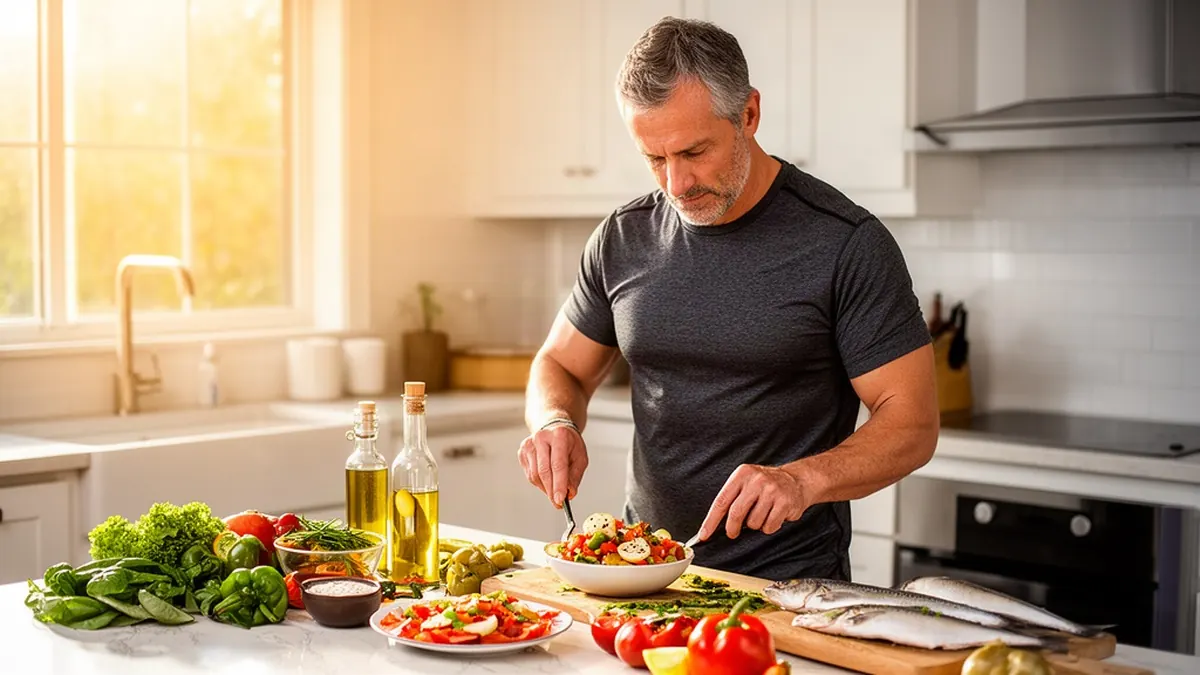
The Mediterranean diet consistently shows up in ED research for good reason. It emphasizes vegetables, fruits, whole grains, legumes, nuts, olive oil, and fish—all things that support healthy blood vessels and reduce inflammation. A 2021 study in Nutrients found that men who closely followed a Mediterranean-style eating pattern had significantly lower rates of ED. You don't need to go full overhaul overnight. Swap the afternoon chips for a handful of walnuts. Replace one red meat dinner per week with salmon.
Specific foods worth mentioning: beets are rich in dietary nitrates, which your body converts to nitric oxide—the same chemical pathway prescription ED medications enhance. A small glass of beet juice before a date night isn't crazy. Pomegranate juice has antioxidant properties that support endothelial function. Dark chocolate, in reasonable amounts, contains flavonoids with similar benefits. Watermelon has citrulline, an amino acid that relaxes blood vessels. None of these are magic bullets. But they're all real food with real mechanisms.
Cut back on processed foods, fried stuff, and excessive alcohol. Alcohol is a CNS depressant—it slows everything down, including sexual response. One or two drinks is fine for most people. More than that? It starts working against you.
- Mediterranean-style eating: vegetables, fish, olive oil, legumes
- Beets, pomegranate, dark chocolate, watermelon—all have supportive compounds
- Limit alcohol to 1–2 drinks; anything more blunts sexual function
Sleep and Stress: The Two Things Men Most Often Ignore
Testosterone is produced primarily during deep sleep. If you're consistently getting five or six hours, your testosterone production takes a hit. One study from the University of Chicago found that men who slept only five hours a night for a week had testosterone levels 10–15% lower than when they slept eight hours. That's a significant drop—comparable to aging ten years. Seven to nine hours isn't a luxury. It's maintenance.
Chronic stress raises cortisol. Cortisol suppresses testosterone and constricts blood vessels. So if you're grinding through a brutal work stretch or dealing with ongoing anxiety, your body is literally running a chemical that works against erections. This isn't about telling you to 'just relax'—that's useless advice. But concrete stress management helps. Regular exercise already covers some of this. Meditation, even ten minutes daily, has measurable effects on cortisol. Therapy, particularly CBT, is well-studied for performance anxiety related to ED.
If you snore heavily or your partner says you stop breathing at night, get evaluated for sleep apnea. It's strongly linked to ED and is very treatable. This is a 'see your doctor' item, not a home remedy—but knowing about it matters.
Weight, Smoking, and the Habits That Hit Hardest
Obesity is independently associated with ED. Visceral fat—the deep belly fat, not just the subcutaneous kind—disrupts hormone balance and increases inflammation. Losing even 5–10% of body weight can measurably improve erectile function. That's not a huge amount. If you're 220 pounds, we're talking 11–22 pounds. Doable.
Smoking may be the single most damaging habit for vascular health and therefore for ED. Nicotine constricts blood vessels. Chronic smoking damages the endothelium—the vessel lining that has to relax for erections to happen. The good news is that quitting helps. Research shows improved erectile function within months of stopping. If you smoke and have ED, quitting is probably the highest-leverage thing you can do. Talk to your pharmacist or doctor about cessation options—there are solid medications that help.
Recreational drug use, including heavy marijuana use, is also linked to ED in some studies, though the research is more mixed. Worth being aware of if that's part of the picture.
- Losing 5–10% of body weight can improve ED noticeably
- Quitting smoking improves vascular function—and sexual function
- Even modest weight loss beats waiting for a perfect plan
Supplements: What Has Some Evidence, What Doesn't
L-arginine is an amino acid that the body uses to produce nitric oxide. Some clinical studies show modest improvement in ED at doses of 2.5–5 grams per day, particularly in men with lower nitric oxide levels. It's not as effective as prescription medications, but it's not nothing either. If you take nitrate medications for heart disease, avoid L-arginine—the combination can drop blood pressure dangerously.
Red ginseng (Panax ginseng) has a handful of small randomized controlled trials supporting its use for ED, with effects thought to involve nitric oxide and direct vascular mechanisms. The typical studied dose is 900 mg three times a day. The quality of evidence isn't high, but it's better than most herbal claims. Zinc is worth mentioning if you're deficient—low zinc does affect testosterone—but supplementing when you're not deficient doesn't help.
Be very skeptical of products marketed aggressively as 'natural' ED cures. The FDA has found hundreds of these supplements to contain undisclosed prescription drug ingredients, sometimes at dangerous doses. If a supplement seems to work incredibly fast, that's probably why—and that's a problem, not a feature. Stick to single-ingredient products from reputable, third-party-tested brands.
- L-arginine: 2.5–5g daily, modest evidence—avoid with nitrate drugs
- Red ginseng: some RCT support, 900mg three times daily studied
- Avoid blended 'male enhancement' formulas—many contain hidden drugs
When Home Remedies Aren't Enough
Home remedies are a legitimate starting point, not a replacement for medical care. If ED came on suddenly, is getting worse despite lifestyle changes, or is accompanied by low libido or other symptoms, see a doctor. A simple blood panel can check testosterone, blood glucose, and cholesterol—conditions that, when treated, often resolve ED on their own.
Prescription medications for ED are safe, effective, and widely available. There's no award for toughing it out without them if they'd genuinely help you. Think of the home remedies in this article as things you should probably be doing anyway for your overall health—and they happen to help with ED too. That's a pretty good deal.
Common questions
Can exercise alone reverse erectile dysfunction?
For some men, especially those whose ED is linked to cardiovascular risk factors like high blood pressure or excess weight, consistent aerobic exercise can produce real, significant improvement. It won't work for everyone—particularly when there's a hormonal or structural cause—but it's one of the most evidence-backed interventions available. Think of it as a necessary foundation, not necessarily a complete solution.
How long does it take to see results from lifestyle changes?
It varies, but most research looking at exercise, diet, and weight loss shows measurable improvements in erectile function over three to six months of consistent effort. Some things—like reducing alcohol or improving sleep—can shift things faster. Be realistic: you're working on vascular and hormonal health, which takes time.
Are there foods I should completely avoid if I have ED?
No single food is going to tank your sexual health on its own. The bigger picture matters more than any one item. That said, a diet heavy in processed foods, refined carbs, and saturated fats consistently worsens vascular function over time—which is the core issue with ED. Moderation and overall pattern are the things to focus on.
Is ED at a young age a sign of something serious?
It can be, yes. ED in men under 40 is worth taking seriously because it may indicate early cardiovascular disease, diabetes, or hormonal issues that you'd want to catch sooner rather than later. Stress and anxiety are also common drivers in younger men. Either way, it's worth a conversation with your doctor rather than just hoping it resolves.