
Natural Foods That Mimic Viagra: Do Home Remedies for ED Work?
Published October 24, 2026
Medically reviewed by Chep Meds USA Pharmacy Team
Content checked by our licensed pharmacists for accuracy against standard prescribing information. Last reviewed October 2026. Our editorial policy
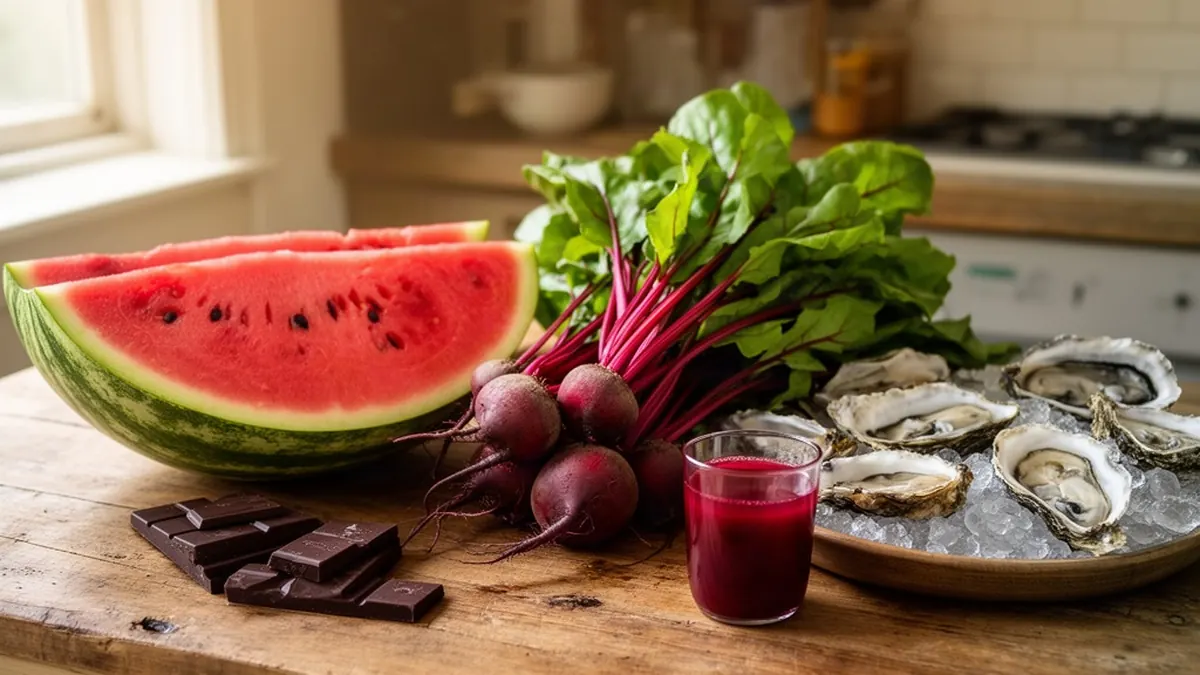
You're at the grocery store, and somewhere between the produce aisle and the checkout, you start wondering whether that bag of watermelon or a handful of dark chocolate could quietly fix something you haven't told your doctor about yet. Erectile dysfunction affects roughly 30 million men in the US, and the first thing most people do is search for a food-based fix—something that feels less clinical, less embarrassing, less like admitting there's a real problem. That instinct isn't crazy. Some foods genuinely support vascular health in ways that matter for erections. But 'support' and 'replace prescription medication' are two very different things, and the gap between them is worth understanding before you load up your cart.
Why Food and Erections Are Actually Connected
An erection is basically a blood flow event. Your brain sends a signal, nitric oxide gets released into the smooth muscle of penile tissue, blood vessels relax and dilate, blood rushes in. That's the short version. So anything that supports healthy blood vessels and nitric oxide production does, in theory, play a supporting role in erectile function.
That's why cardiovascular disease and ED so often travel together. If your arteries are stiff or narrowed—from years of processed food, smoking, high blood pressure—getting a firm erection becomes harder. Literally. Eating in a way that protects your cardiovascular system genuinely matters here. It's not pseudoscience. It's physiology.
The catch is that 'matters' doesn't mean 'fixes.' If you have moderate to severe ED, no amount of leafy greens will produce the same effect as a phosphodiesterase-5 inhibitor like sildenafil. Think of food as maintenance on your car—important, but it won't replace a transmission that's already failed.
The Foods People Talk About Most—And What the Evidence Says
Watermelon gets mentioned constantly because it contains citrulline, an amino acid your body converts to arginine, which then boosts nitric oxide. Sounds promising. A small 2011 study from the University of Texas found citrulline supplementation improved mild ED symptoms in some men. But here's the thing—you'd need to eat several cups of watermelon flesh to approach supplement-level doses, and the effects were modest even then. Still, as summer fruit goes, there are worse habits.
Beets and beet juice are legitimately interesting. They're high in dietary nitrates, which your saliva converts to nitrite and then to nitric oxide. Some small trials show beet juice lowers blood pressure measurably. Better blood pressure, better arterial function, better baseline for erections. Again, this is foundation work, not a quick fix. A 16-oz glass of beet juice before a date is not sildenafil.
Dark chocolate (70% cacao or higher) contains flavonoids that improve endothelial function—the lining of your blood vessels. Red wine gets cited for the same reason. Oysters come up because they're high in zinc, and zinc deficiency is genuinely linked to lower testosterone. These connections are real. They're just small in magnitude.
- Watermelon: citrulline → nitric oxide; modest evidence for mild ED
- Beet juice: dietary nitrates → blood pressure support
- Dark chocolate: flavonoids → endothelial health
- Oysters: zinc → testosterone support (if you're actually deficient)
- Leafy greens (spinach, arugula): high nitrate content, similar to beets
- Pistachios: one small study showed improved erectile scores after 3 weeks
- Fatty fish (salmon, mackerel): omega-3s support arterial flexibility
The Honest Problem With 'Natural Viagra' Claims
Every few months some headline declares that pomegranate juice or saffron is 'nature's Viagra.' These stories spread fast because people want them to be true. But when you look at the underlying studies, you usually find tiny sample sizes—sometimes 20 or 30 men—short durations, no placebo control, or results that didn't reach statistical significance. That doesn't mean the food is useless. It means the evidence is nowhere near strong enough to guide clinical decisions.
There's also a timing problem. Sildenafil (generic Viagra) works in 30 to 60 minutes. Tadalafil (generic Cialis) can be taken daily for background coverage. These are fast, targeted, pharmacologically precise. Food works slowly, through cumulative effects over weeks and months. You can't eat a bowl of spinach 45 minutes before and expect the same result.
And supplements marketed as 'herbal Viagra'? Be careful. The FDA has found that many of these products contain hidden, undisclosed sildenafil or tadalafil—which sounds helpful until you realize you're taking an unknown dose with no guidance, mixed with whatever else is in the capsule. That's genuinely risky, especially if you take nitrates for heart conditions.
What Lifestyle Changes Actually Move the Needle
Diet is one piece. But if you zoom out, the research on lifestyle and ED is pretty consistent. Moderate aerobic exercise—think 30 minutes of brisk walking five days a week—shows meaningful improvement in erectile function across multiple studies. One 2004 trial in the American Journal of Cardiology found that men who added regular walking cut their ED risk by about 30 percent. That's not nothing.
Weight matters too. Obesity is strongly associated with ED, and losing even 10 percent of body weight can make a measurable difference. Same with alcohol—chronic heavy drinking suppresses testosterone and damages nerves. Smoking directly constricts blood vessels. Quitting smoking is probably the single most impactful thing a heavy smoker with ED can do, food or no food.
Sleep and stress get underestimated. Cortisol—your stress hormone—suppresses testosterone and increases vascular resistance. Poor sleep tanks your testosterone levels fast. If you're eating beets and dark chocolate every day but sleeping five hours and running on anxiety, the food isn't going to save you.
- 30 min aerobic exercise, 5x/week: well-supported in research
- Losing 10% of body weight: can reverse mild to moderate ED
- Quitting smoking: direct improvement in vascular function
- Cutting heavy alcohol: supports testosterone and nerve function
- Managing sleep and chronic stress: often overlooked but highly relevant
When Food Isn't Enough—And That's Okay
Here's the part nobody wants to hear, but it needs saying. If you have consistent, reliable ED—meaning it's happening most of the time and affecting your relationship or your confidence—food changes alone probably won't get you where you want to be. That's not a failure on your part. ED often has a real physiological root: low testosterone, diabetes, cardiovascular disease, medication side effects. It deserves a real clinical evaluation.
Prescription options like sildenafil citrate (generic sildenafil) and tadalafil are well-studied, safe for most men, and significantly more effective than any dietary change for established ED. Sildenafil is typically taken as needed—25 mg to 100 mg about an hour before sexual activity. Tadalafil can be taken as a low daily dose (2.5 mg or 5 mg) or as needed (10 mg or 20 mg). Your prescriber will help you figure out which fits your situation better.
These medications do require a prescription in the US, and there are contraindications—particularly with nitrate medications used for chest pain. So yes, talk to your doctor or use a licensed telehealth service. Getting a prescription isn't dramatic. It's just taking your health seriously.
A Sensible Way to Think About This
You don't have to choose between eating well and using medication. They're not in competition. In fact, a Mediterranean-style diet—lots of vegetables, fish, olive oil, legumes, moderate red wine—has the strongest dietary evidence for cardiovascular and erectile health combined. Eating this way long-term genuinely builds a better vascular baseline. Medication, when you need it, works better in a body that's reasonably well looked after.
Think of it like this: if your erectile function is mildly reduced, situationally (stress, fatigue, too much to drink), and you're generally healthy, dietary changes and exercise may give you enough of a boost to feel like yourself again. If it's consistent and significant, you need a different level of intervention. Both paths are valid. Neither is shameful.
The worst outcome is spending months eating watermelon and hoping, while avoiding a conversation that could actually help. ED is one of the most treatable conditions in men's health. Use all the tools available to you—including, yes, the spinach salad.
Medicines mentioned in this article
- Cenforce 200 mg Tabletfrom $44.99
- Cenforce 150 mg Tabletfrom $40.99
- Cenforce 100 mg Tabletfrom $34.99
- Vidalista 60 mg Tabletfrom $49.99
- Vidalista 40 mg Tabletfrom $38.99
- Vidalista 20 mg Tabletfrom $34.99
Common questions
Can watermelon really work like Viagra?
Watermelon contains citrulline, which your body converts to nitric oxide—the same pathway Viagra targets, just much less directly and powerfully. Small studies show citrulline may help with mild ED, but you'd need very large amounts to approach a therapeutic dose. It's a healthy fruit, not a medication.
Are herbal supplements sold as 'natural Viagra' safe?
Many of them aren't. The FDA has repeatedly found that unregulated herbal ED supplements contain undisclosed pharmaceutical ingredients, including sildenafil or tadalafil, at unpredictable doses. If you're going to use sildenafil or tadalafil, get a real prescription from a licensed provider so the dose and safety screening are appropriate for you.
How long does it take for dietary changes to improve ED?
You're generally looking at weeks to months of consistent change before you'd notice an effect—and the improvement is usually modest unless ED was primarily driven by poor vascular health to begin with. Exercise tends to show results a bit faster than diet alone, sometimes within a few weeks.
Can I take tadalafil or sildenafil along with eating a heart-healthy diet?
Absolutely—these approaches complement each other well. Eating a diet that supports cardiovascular health can improve how your blood vessels respond overall, while medications like sildenafil or tadalafil handle the acute, targeted mechanism. Just make sure a doctor knows your full medication list, especially if you take anything for blood pressure or heart disease.