
Natural Viagra Foods: What Really Works (and What's Just Hype)?
Published October 24, 2026
Medically reviewed by Chep Meds USA Pharmacy Team
Content checked by our licensed pharmacists for accuracy against standard prescribing information. Last reviewed October 2026. Our editorial policy
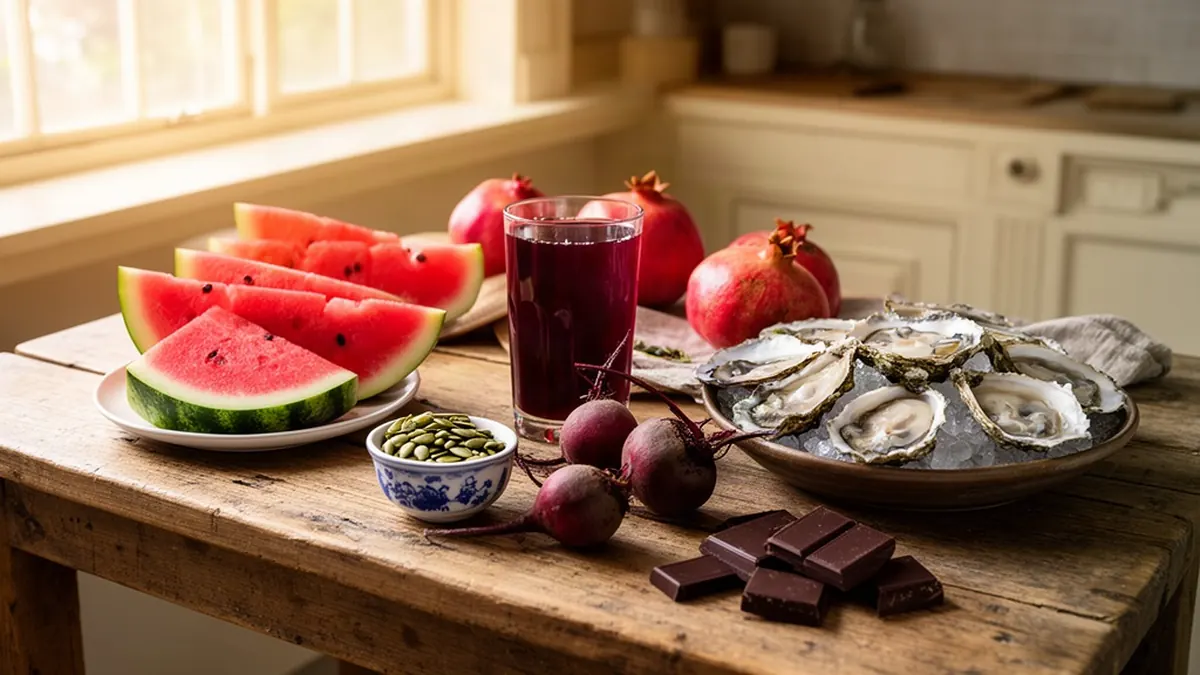
You're scrolling through your phone at 11pm, maybe a little self-conscious, typing things like 'foods that work like Viagra' into a search engine. It happens. Millions of men do it. And honestly? The curiosity makes sense. Prescription ED meds work well, but they cost money, require a doctor visit, and not everyone wants to go that route—at least not right away. So the idea that a handful of watermelon or a cup of pomegranate juice could do something similar is pretty appealing. Here's where I land after years of reviewing this stuff clinically: some foods genuinely support the biological machinery behind erections. None of them replicate sildenafil. But a few are worth taking seriously, and I'll tell you exactly why.
How Erections Actually Work (The Short Version)
Blood flow is everything. An erection happens when nitric oxide signals the smooth muscle in penile tissue to relax, allowing blood to rush in. Nitric oxide is the key player here. Anything that increases its production or keeps it from breaking down too fast will, in theory, support better erectile function.
This is why phosphodiesterase-5 inhibitors like Viagra work—they prevent an enzyme from degrading the nitric oxide signaling cascade. Some foods interact with this same pathway. Not as powerfully, not as reliably, but not as fiction either.
Cardiovascular health and erectile health are deeply linked. If your arteries are stiff or narrowed, blood flow suffers everywhere—including there. So foods that support heart health often show up on this list for a real biological reason, not marketing fluff.
Watermelon: The Most Talked-About One
Watermelon contains citrulline, an amino acid your body converts into arginine, which then helps produce nitric oxide. A small 2011 study out of Texas A&M found that supplemental citrulline improved mild ED scores in men. Interesting. But here's the thing—you'd need to eat a huge amount of watermelon to match even modest supplement doses used in studies.
The rind actually has more citrulline than the pink flesh. So if you're blending rind into a smoothie, you're getting more benefit. Realistically, eating watermelon regularly as part of a healthy diet probably contributes something small. Eating a single slice before sex and expecting a dramatic result? That's not how biology works.
Still, it's one of the more credible entries on this list. Citrulline supplements themselves have decent evidence for mild erectile support. Watermelon is just a lower-dose food source of the same compound.
- Citrulline → arginine → nitric oxide is the pathway
- Rind has higher citrulline than flesh
- Supplements deliver more than food sources
- Best for mild dysfunction, not a replacement for medication
Pomegranate Juice: Antioxidant Powerhouse With Some Backup
A 2007 pilot study published in the International Journal of Impotence Research found that men who drank pomegranate juice daily for four weeks reported improved erectile function compared to placebo. The sample was small—only 53 men—and the results were modest. But the mechanism is plausible: pomegranate is loaded with antioxidants that protect nitric oxide from oxidative destruction.
Think of it this way. Nitric oxide breaks down faster when there's oxidative stress in your blood vessels. Antioxidants from pomegranate may slow that breakdown. That's not magic—it's chemistry. Eight ounces a day is what the study used. Just watch the sugar content if you're managing blood glucose.
I wouldn't say pomegranate juice is a treatment. But it's one of the more scientifically reasonable additions to a diet aimed at cardiovascular and erectile health.
Dark Chocolate, Beets, and Other Nitric Oxide Supporters
Beets are genuinely worth your attention. They're high in dietary nitrates, which your body converts to nitric oxide through a completely different pathway than citrulline—so the two actually complement each other. Beet juice is used by endurance athletes to improve blood flow and performance. A glass of beet juice before a workout measurably increases nitric oxide levels in most people. Same mechanism could theoretically help below the belt.
Dark chocolate—at least 70% cacao—contains flavonoids that promote nitric oxide release from the endothelium (the lining of your blood vessels). A square or two a day fits. A whole bar? Now you're adding enough calories and sugar to offset any benefit. Moderation is the word.
Leafy greens like arugula, spinach, and kale are also nitrate-rich. Garlic has shown some ability to boost nitric oxide synthesis in animal studies, with a little human data to back it up. None of these are dramatic. Together, as part of a real eating pattern, they add up.
- Beet juice: high dietary nitrates, converts directly to nitric oxide
- Dark chocolate (70%+ cacao): flavonoids support vascular function
- Arugula and spinach: some of the highest nitrate content of any vegetable
- Garlic: modest evidence for nitric oxide boost
- Consistency over time matters more than single meals
Oysters, Zinc, and the Testosterone Connection
Oysters have a reputation as an aphrodisiac going back centuries. The actual mechanism people point to now is zinc. Oysters have more zinc per serving than any other food—six raw oysters can deliver over 30mg, which is well above the daily requirement of 11mg for adult men. Zinc is essential for testosterone production. Deficiency is genuinely linked to lower testosterone and impaired sexual function.
If you're zinc-deficient, eating oysters or other zinc-rich foods (pumpkin seeds, beef, chickpeas) can normalize levels and plausibly help with libido and erectile function. If your zinc is already normal, adding more won't push testosterone higher. That's an important distinction most articles skip.
So oysters aren't magic. They're a great source of a nutrient that many American men are mildly short on—and correcting that deficiency can make a real difference.
What These Foods Can't Do
Let's be straight. No food will produce an erection on demand the way sildenafil can within 30 to 60 minutes. The foods we're talking about work slowly, systemically, and cumulatively. We're talking weeks or months of consistent dietary patterns, not a pre-date meal strategy.
If you have significant ED—especially if it started suddenly, comes with other symptoms, or hasn't responded to lifestyle changes—please see a doctor. ED is sometimes the earliest sign of cardiovascular disease, diabetes, or low testosterone. A bowl of arugula won't address any of those underlying causes.
These foods are genuinely useful as part of an overall approach: regular exercise, sleep, reduced alcohol, not smoking, managing stress. The science on lifestyle and erectile function is actually pretty strong. Food is one piece of that puzzle, not the whole picture.
- No food works as fast or as reliably as ED medication
- Sudden or severe ED needs medical evaluation
- Lifestyle changes together have more impact than diet alone
- Alcohol, smoking, and poor sleep can override any dietary benefit
Building a Diet That Actually Supports Sexual Health
The Mediterranean diet consistently shows up in research as protective for erectile function. It's not one food—it's a pattern. Olive oil, vegetables, legumes, fish, whole grains, some red wine. Men following this pattern long-term have meaningfully lower rates of ED in several large observational studies. That's the goal: a dietary identity, not a list of superfoods.
Practical starting point? Add beet juice or a beet salad twice a week. Swap one red meat meal for salmon. Throw arugula into your usual salad. Have a couple squares of dark chocolate instead of a candy bar. Eat more pumpkin seeds as a snack. None of this is dramatic or expensive. It just compounds.
And if you're having real, persistent ED, don't let the appeal of 'natural' solutions delay getting proper care. Prescription options are safe, well-studied, and often very affordable. A conversation with your doctor or pharmacist is worth having.
Common questions
Can foods really improve erectile dysfunction?
Some can support the underlying biology—particularly by boosting nitric oxide or correcting nutrient deficiencies like zinc. Don't expect dramatic results from a single food, but consistent dietary patterns like the Mediterranean diet do show real associations with lower ED rates in research.
How much watermelon would I need to eat to see an effect?
Studies on citrulline used supplement doses of 1.5 to 3 grams daily. A standard slice of watermelon flesh has roughly 150 to 200mg of citrulline. So you'd need a lot of watermelon—or the rind—to approach meaningful doses. A citrulline supplement may be more practical if that's your goal.
Are there foods that hurt erectile function?
Yes. Excessive alcohol reliably impairs erections even short-term, and chronic heavy drinking can cause longer-lasting issues. High-sodium, high-saturated-fat diets damage blood vessel function over time. Ultra-processed food patterns are associated with worse cardiovascular and erectile health in multiple studies.
Should I try dietary changes before seeing a doctor about ED?
Diet and lifestyle changes are a reasonable first step for mild, occasional issues—especially if you're young and otherwise healthy. But if ED is persistent, worsening, or came on suddenly, see a doctor. It can signal something that needs real medical attention, and effective treatments exist.