
How Sleep Quality Directly Affects Your Testosterone Levels
Published October 24, 2026
Medically reviewed by Chep Meds USA Pharmacy Team
Content checked by our licensed pharmacists for accuracy against standard prescribing information. Last reviewed October 2026. Our editorial policy
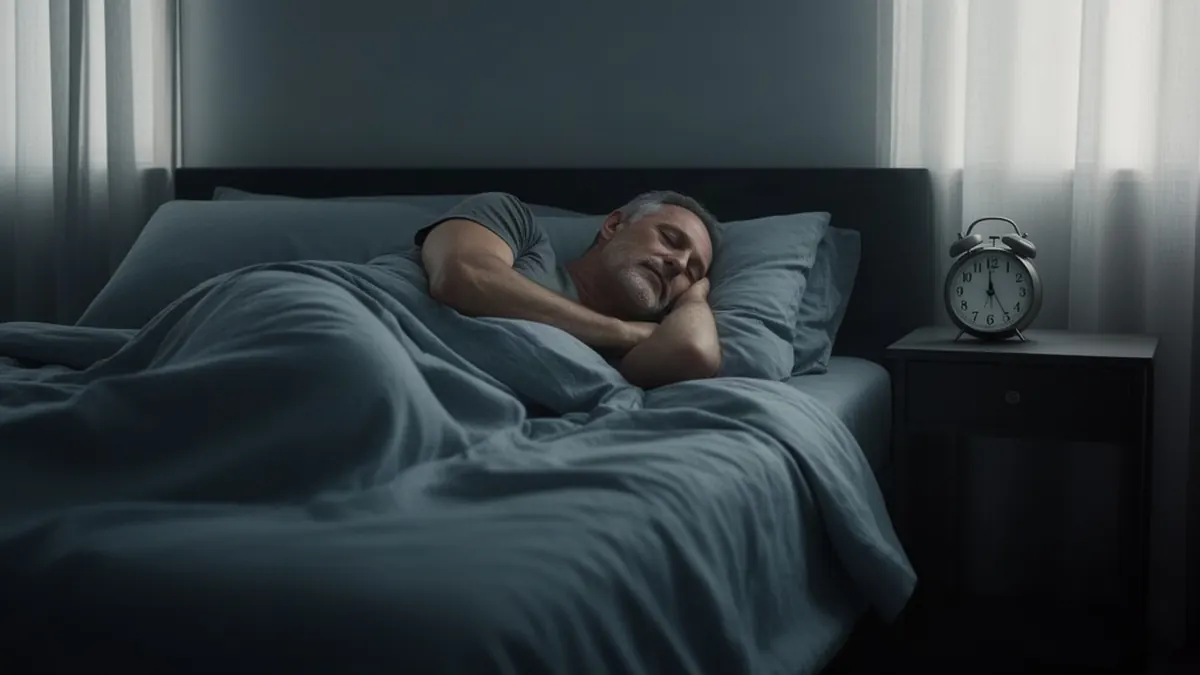
You wake up after what felt like a full night in bed, and still feel like you've been wrung out. Your motivation is flat, your gym sessions feel pointless, and you're a little shorter with people than you'd like to be. A lot of men assume that's just stress or getting older. Sometimes it is. But there's a specific, measurable chain of events happening in your body while you sleep — or fail to sleep well — that directly controls how much testosterone you're producing. And the numbers aren't small. Studies have shown that cutting sleep to five hours a night for just one week can drop testosterone levels by 10 to 15 percent in healthy young men. That's the same drop you'd expect from aging ten to fifteen years. So yeah, this matters.
When Your Body Actually Makes Testosterone
Testosterone isn't produced at a steady trickle throughout the day. It spikes. Most of that spike happens during sleep — specifically during the early cycles of slow-wave (deep) sleep and into REM. Your pituitary gland fires off a pulse of luteinizing hormone, which tells your testes to get to work. By the time you wake up, testosterone should be at its daily peak. That's why morning levels are used as the clinical benchmark when doctors are checking you.
Here's the problem. If your sleep is fragmented — you're waking up repeatedly, dealing with sleep apnea, or just lying there staring at the ceiling after 3 a.m. — you're cutting that production window short. The signal still fires, but the response is blunted. Think of it like trying to fill a bucket with a hole in it. The source is there, but you're losing product the whole time.
Age makes this worse, by the way. Older men naturally spend less time in deep sleep, which is one reason testosterone tends to decline with age even in otherwise healthy guys. Poor sleep habits accelerate that decline on top of the normal aging process.
The Sleep Apnea Connection Is Bigger Than Most People Realize
Obstructive sleep apnea — where your airway partially collapses during sleep and you stop breathing for seconds at a time — is one of the most underdiagnosed conditions in the US. Estimates suggest around 30 million Americans have it, and a huge chunk of them don't know it. If your partner says you snore loudly, gasp, or seem to stop breathing at night, please bring that up with your doctor. Seriously.
Men with untreated sleep apnea consistently show lower testosterone levels compared to men without it. The repeated drops in blood oxygen during apnea events trigger a stress response, raise cortisol, and suppress the hormonal cascade that leads to testosterone production. It's a direct hit. The good news is that treating apnea — usually with a CPAP machine — can meaningfully improve testosterone in some men without any other intervention.
This is worth pointing out because a lot of men go straight to wondering about hormone replacement therapy when their testosterone comes back low. Sometimes the answer isn't a prescription. Sometimes it's finding out you have apnea, getting fitted for a CPAP, and giving your body a few months to correct itself.
What Low Testosterone From Poor Sleep Actually Feels Like
The symptoms can be subtle at first, and they overlap with a ton of other things. That's what makes this tricky. You might notice your energy is just... lower than it used to be. Not dramatically — you're not collapsing — but you used to bounce back from a hard workout in a day, and now it takes three. You're less interested in sex. You're gaining a little fat around the belly even though nothing obvious changed in your diet.
Mood is a big one that often gets missed. Testosterone plays a real role in emotional regulation. Men with low levels often describe a kind of emotional flatness or irritability — not clinical depression necessarily, but a grey feeling. Less drive. Less enthusiasm. If you're chalking that up to burnout or 'just getting older,' it might be worth asking whether your sleep is actually doing its job.
None of these symptoms confirm low testosterone on their own. You need a blood test to know for sure, and that's a conversation to have with your doctor. But if you're experiencing several of these things and your sleep has been rough for months, the connection is real enough to take seriously.
- Persistent fatigue even after 7–8 hours in bed
- Reduced libido or changes in sexual function
- Slower recovery after exercise
- Belly fat accumulation without obvious diet changes
- Low motivation or emotional flatness
- Difficulty concentrating or holding focus
The Cortisol Factor — Your Stress Hormone Works Against You
Testosterone and cortisol have an inverse relationship. When one goes up, the other tends to go down. Poor sleep is one of the most reliable ways to drive cortisol up. Your body treats sleep deprivation as a low-grade emergency — evolutionary wiring — so it pumps out cortisol to keep you alert and functional. Great short-term. Awful over weeks and months.
Chronic high cortisol actively suppresses the hormonal signals that trigger testosterone production. It's not a side effect — it's the design. Your body is essentially saying, 'this is not the time to build muscle and reproduce; we are in survival mode.' That was useful when the threat was an actual predator. It's not useful when the threat is a bad mattress and a phone you can't put down.
This is also why stress management and sleep work together. If work stress is keeping you up at night, you're getting hit twice — the stress itself raises cortisol during the day, and then the disrupted sleep prevents your body from recovering and producing testosterone overnight. Breaking one part of that cycle helps the other.
Practical Changes That Actually Move the Needle
The basics sound boring because they've been repeated so often, but they're repeated because they work. Consistent sleep and wake times matter more than most people think. Your body's testosterone production is partly regulated by circadian rhythm — the internal clock that syncs to light and time of day. If your schedule is all over the place — up at 6 a.m. on weekdays, sleeping until 10 on weekends — you're constantly resetting that clock and disrupting the hormonal signals that depend on it.
Temperature and light are underrated. Your body temperature needs to drop slightly to initiate deep sleep, so a cool bedroom (around 65–68°F for most people) genuinely helps. Bright light — especially from screens — suppresses melatonin and delays sleep onset. That's not a myth. Cutting screens an hour before bed, or at minimum using a warm-toned night mode, makes a measurable difference in how quickly you fall asleep and how deep that sleep gets.
Alcohol is a common sleep sabotager that people underestimate. A drink or two might help you fall asleep faster, but alcohol fragments sleep architecture — you spend less time in the deep and REM stages where testosterone production is highest. If you're having a couple of drinks most nights, that alone could be suppressing your hormone levels more than you'd expect. Worth an honest look.
- Set a consistent wake time and stick to it — even weekends
- Keep your bedroom cool, dark, and quiet
- Avoid alcohol within 3 hours of bedtime
- Limit caffeine after noon if you're sensitive to it
- Get morning sunlight within an hour of waking to anchor your circadian clock
- Don't exercise hard within 2 hours of your bedtime
When to Actually Talk to a Doctor
If you've genuinely cleaned up your sleep habits for two or three months and you still feel like something is off — fatigue, low libido, mood changes — it's worth getting your testosterone checked. A simple morning blood test (drawn before 10 a.m. for accuracy) gives you a baseline. Total testosterone below 300 ng/dL is generally considered low by most clinical guidelines, though some men feel symptoms at levels higher than that.
Bring up your sleep quality when you talk to your doctor, and specifically mention snoring or any gasping during the night if that's been noted. An overnight sleep study — which can now often be done at home with a simple monitoring device — rules out apnea before anything else is tried. Don't let a provider jump straight to hormone replacement without ruling out sleep as a contributing cause first.
Testosterone replacement therapy is a real option for men with confirmed low levels, and it can genuinely improve quality of life when it's appropriate. But it's not a first step — it comes with its own considerations and side effects, and it doesn't address the root cause if poor sleep is driving the problem. Get the full picture first.
Common questions
How many hours of sleep do I need to protect my testosterone levels?
Most research points to seven to nine hours as the sweet spot for hormonal health in adult men. The one-week study showing a 15 percent drop in testosterone used a restriction of five hours per night — so even a couple hours short of ideal, sustained over time, adds up. Quality matters as much as quantity, though, so fragmented sleep of seven hours may do less for you than solid, uninterrupted sleep of the same duration.
Can I recover my testosterone levels just by improving my sleep?
It depends on what's causing the low levels. If poor sleep is a major factor, yes — many men see meaningful improvements in testosterone within weeks of genuinely fixing their sleep. If there are other contributing causes (obesity, chronic illness, certain medications, age-related decline), sleep improvement alone may not fully correct things. Blood work with your doctor is the only way to track what's actually happening.
Does napping help make up for lost nighttime sleep?
Naps can reduce some of the cognitive and physical effects of sleep deprivation, but they don't replicate the hormonal benefits of nighttime sleep. Testosterone production is tied to circadian timing — it peaks in response to overnight sleep cycles, not midday naps. Napping is a short-term patch, not a fix for a chronic sleep deficit.
Are there supplements that can help both sleep and testosterone?
Magnesium glycinate is worth mentioning — low magnesium is common in American men and has been linked to both poorer sleep quality and lower testosterone. Zinc deficiency can also affect testosterone production. These are not magic fixes, and supplements won't overcome severe sleep apnea or truly disordered sleep, but correcting a deficiency through diet or supplementation can help. Talk to your doctor before adding anything, especially if you're on other medications.