
Porn-Induced Erectile Dysfunction: Signs, Causes, and How Men Actually Recover
Published October 24, 2026
Medically reviewed by Chep Meds USA Pharmacy Team
Content checked by our licensed pharmacists for accuracy against standard prescribing information. Last reviewed October 2026. Our editorial policy
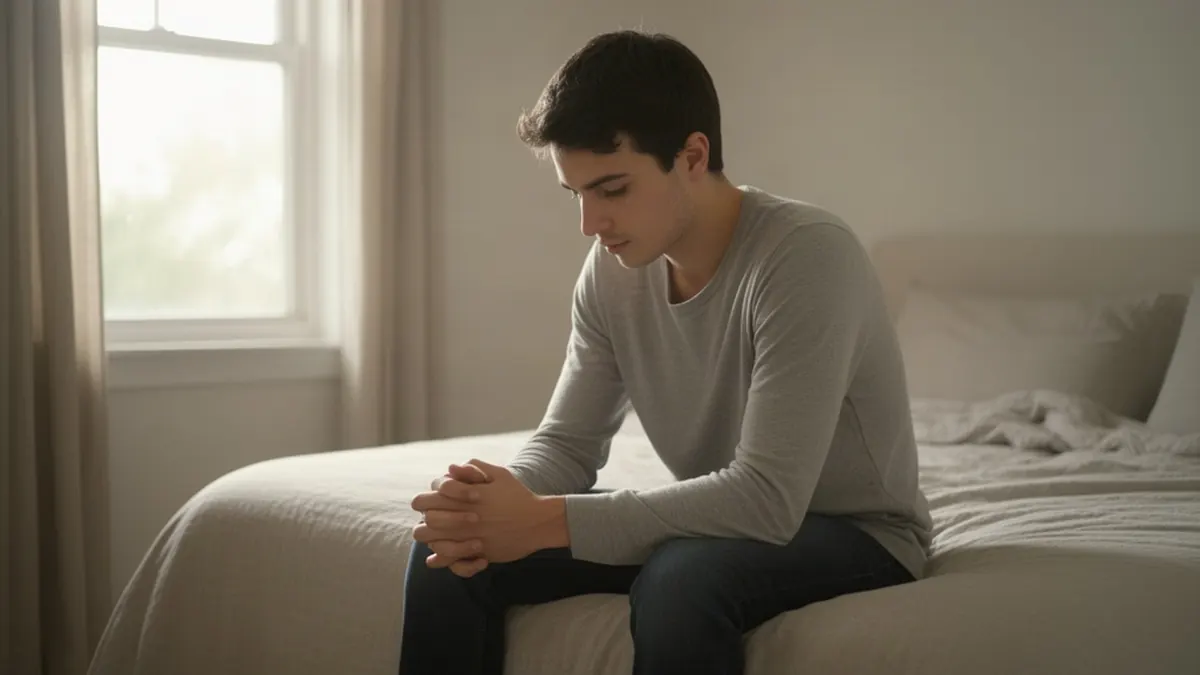
You're with someone you're genuinely attracted to. The moment feels right. And then... nothing. No erection, or one that fades fast. Later that night, alone, you have zero problem. If that pattern sounds familiar, you're not broken, and you're definitely not alone. A growing number of men — especially under 40 — are experiencing exactly this, and the common thread is heavy pornography use. This isn't about shame or moral judgment. It's straightforward brain chemistry, and once you understand what's actually happening, the path forward gets a lot clearer.
What Porn-Induced ED Actually Is (and Isn't)
Porn-induced erectile dysfunction, often shortened to PIED, describes a pattern where a man has normal erectile function during solo sessions with pornography but struggles — sometimes completely — during partnered sex. It's not the same as general ED caused by diabetes, low testosterone, or cardiovascular disease. Those conditions typically affect erections across the board. PIED is situational. That distinction matters a lot, both for understanding the problem and for choosing the right solution.
It's also not purely psychological in the old-fashioned sense — meaning it's not just 'anxiety' or 'being in your head.' There's real neurological change involved. The brain rewires around high-intensity, endlessly novel stimulation. A real partner, by comparison, can start to feel like dial-up internet to a brain accustomed to broadband. That sounds blunt, but it's a useful analogy for understanding why the issue exists.
Worth saying clearly: PIED is not an official DSM diagnosis, and the research base is still building. But clinicians are seeing it regularly, and the pattern is consistent enough that it deserves a serious conversation.
The Brain Science Behind It — Kept Simple
Your brain's reward system runs largely on dopamine. Every time something pleasurable happens, dopamine spikes. Over time, your brain calibrates to your 'normal' level of stimulation. Modern internet pornography delivers a dopamine spike unlike almost anything else — infinite novelty, zero effort, immediate gratification. Watch it regularly enough and your brain starts recalibrating its baseline upward.
The clinical term for this is desensitization. Your dopamine receptors start to down-regulate, meaning you need more stimulation to get the same response. A real partner — who is human, requires connection, and doesn't switch scenes every four minutes — simply can't compete with that artificially inflated threshold. So arousal either doesn't happen, or it fades quickly.
There's also a conditioning element. If you've spent years associating sexual arousal and orgasm specifically with a screen, your brain has learned that arousal belongs in that context. A bedroom with another person is a genuinely different context. The wiring hasn't connected those dots.
Signs That Porn Might Be a Factor for You
Not every erection problem is PIED, and not everyone who watches porn develops it. But there are some patterns worth being honest with yourself about. The clearest sign is the mismatch: you function fine alone with pornography, but struggle during partnered sex. That alone is the biggest signal.
Other signs tend to cluster around the porn habits themselves. You may notice you need more extreme or specific content to feel aroused when you used to respond to much milder material. You might find you're watching more often — or for longer stretches — than you used to, or than you'd be comfortable telling your partner. Attempts to cut back feel harder than you expected.
- Erections work during solo porn use but not with a partner
- Difficulty staying aroused during partnered sex even when attracted
- Needing increasingly intense or specific content to feel interested
- Masturbating in a very specific way (grip, position, speed) that's hard to replicate
- Low sexual interest in real-life partners overall
- Feeling more aroused by pornography than by the person next to you
Who's Most Likely to Experience This
Young men, particularly those who started watching internet pornography in early adolescence, are disproportionately represented. That makes sense developmentally — their sexual templates were being formed during high-volume porn exposure. But men in their 30s and 40s are reporting it too, especially after years of daily or near-daily use.
Heavy use matters more than age. A man in his 40s who watches occasionally is at far lower risk than a college student watching for an hour or two every day. Frequency, duration, and how much arousal you've outsourced to screens all play a role. Relationship stress, performance anxiety, and general mental health can layer on top of PIED and make things feel worse — so teasing apart the causes sometimes takes time and, honestly, a good therapist.
If you have any reason to think there's a physical component — you're over 45, you have high blood pressure, diabetes, or you smoke — see a doctor before assuming it's PIED. A simple workup can rule out vascular or hormonal causes. That's not a step to skip.
The Recovery Process: What It Actually Looks Like
The most widely discussed approach is a period of abstinence from pornography — sometimes called a 'reboot.' The idea is to let your brain's reward system recalibrate downward, reducing that inflated stimulation threshold. Some men abstain from masturbation entirely during this period; others just cut out pornography specifically. There's no rigorous clinical trial with a defined protocol, so the exact approach varies.
Timelines are all over the map. Some men notice improvement in four to six weeks. Others — particularly those with very long-term, heavy use — describe the process taking several months. Expect a few weeks of low libido early on. That's normal. It's not permanent. Think of it like your taste buds adjusting after cutting out sugar — things that didn't seem interesting start to register again.
Recovery isn't just about abstinence. Reconnecting with a real partner gradually, working on intimacy without performance pressure, and sometimes working with a sex therapist or psychologist makes a meaningful difference. A therapist who specializes in sexual health can help untangle anxiety that's layered on top of PIED, because by the time most men seek help, there's usually some performance anxiety in the mix too.
Practical Steps You Can Start This Week
Start by being honest about your usage. Keep a rough log for one week — not to shame yourself, just to have accurate information. A lot of men genuinely don't know how much time they're spending or how frequent the habit is until they actually count it up. That number is useful data.
If you decide to try a pornography-free period, remove easy access. Delete apps, use a website blocker like Cold Turkey or Freedom, and tell someone you trust if you think accountability would help. Don't rely on willpower alone — your environment matters. Fill the time with something physical: exercise genuinely helps by improving blood flow and boosting baseline dopamine through natural means.
Talk to your partner if you have one. You don't have to lead with every detail, but carrying this silently adds stress, and stress makes ED worse. Most partners respond better to honesty than to the confusion of unexplained avoidance. And please — talk to a doctor or a licensed sex therapist. This is a recognized clinical pattern, not an embarrassing secret. Professionals have heard it many times.
- Track your actual usage for one week without judging it
- Use a website blocker to remove easy access to porn
- Exercise regularly — even 30 minutes of walking helps
- Reduce or avoid masturbation during initial recovery period
- Practice non-pressured intimacy with a partner (no performance goal)
- Consider working with a sex therapist or psychologist
- Rule out physical causes with a doctor if you're over 45 or have health conditions
When to See a Doctor — and What to Expect
If you've cut out pornography for 8 to 12 weeks and things haven't improved at all, that's a reason to see your primary care provider or a urologist. There could be a physical component that needs addressing. Testosterone levels, blood pressure, and blood sugar are all worth checking. ED can be an early warning sign of cardiovascular issues in some men — so don't dismiss it as purely a habit problem without getting that looked at.
A doctor visit for ED is routine. You won't be the first patient that day asking about it. They'll typically ask about your habits, run some labs, and may refer you to a specialist or therapist depending on what they find. There's no single medication or procedure that fixes PIED specifically — recovery is behavioral — but a doctor can help rule out or treat anything physical running alongside it.
The bottom line is that PIED is real, it's reversible for most men, and you don't have to figure it out alone. Give your brain time to recalibrate, be honest with yourself about the habit, and get support — medical or therapeutic — if you need it. A lot of men have come out the other side of this. You can too.
Common questions
How long does it take to recover from porn-induced ED?
Recovery timelines vary widely. Some men see improvement in four to six weeks of avoiding pornography, while others with longer, heavier use report the process taking three to six months. It's not linear — you may have good weeks and frustrating ones. Be patient with the process.
Can I still masturbate during recovery, or do I have to stop completely?
Many men find it helpful to abstain from masturbation entirely during an initial reboot period, at least for the first few weeks, especially if they've developed a very specific physical pattern or 'death grip' habit. Others focus just on cutting out pornography. There's no single answer that fits everyone — experiment honestly and see what your body responds to.
Does porn-induced ED mean there's something physically wrong with me?
Not necessarily. PIED is primarily a neurological adaptation, not a structural physical problem. That said, if you're over 40 or have conditions like high blood pressure or diabetes, it's worth seeing a doctor to rule out a physical component running alongside it. Don't assume either way without checking.
Should I tell my partner what's going on?
Generally, yes — at least in broad strokes. Unexplained avoidance or difficulty in the bedroom tends to cause more relationship damage than honest conversation does. You don't have to share every detail, but letting your partner know you're working through something and that it's not about them protects the relationship. A couples therapist can help facilitate that conversation if it feels too hard to start alone.