
Masturbation and Erectile Dysfunction: Separating Fact from Fiction
Published October 24, 2026
Medically reviewed by Chep Meds USA Pharmacy Team
Content checked by our licensed pharmacists for accuracy against standard prescribing information. Last reviewed October 2026. Our editorial policy
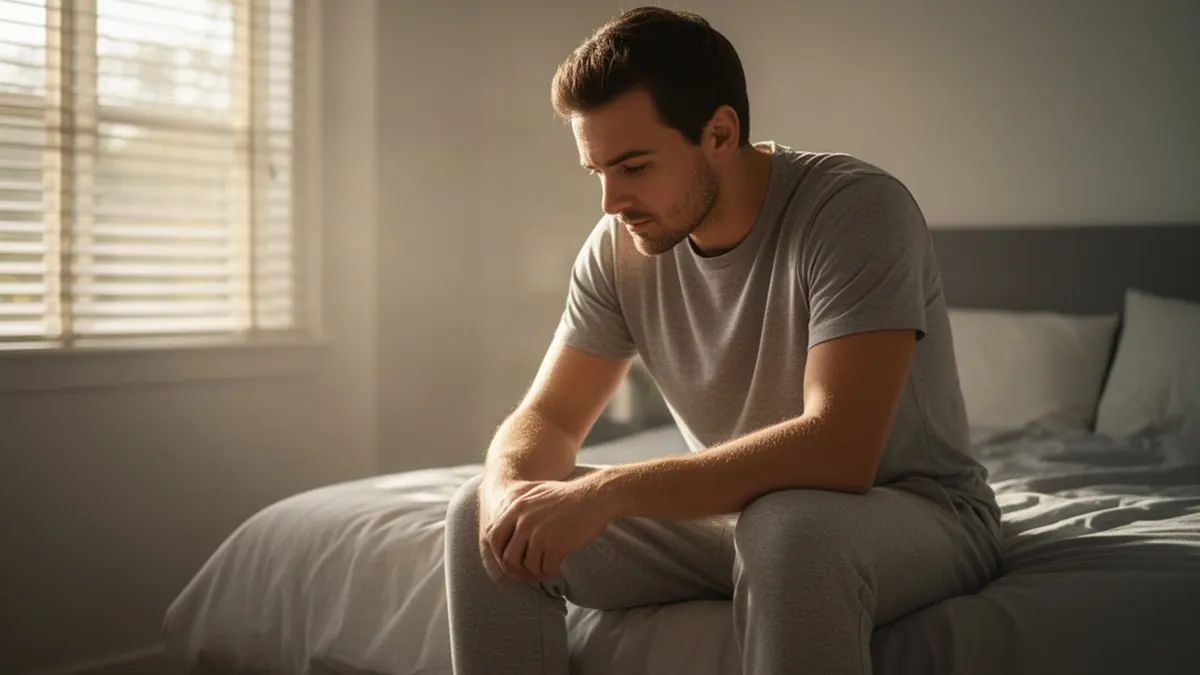
Picture this: you're 34, you've had a couple of disappointing moments in bed recently, and your brain immediately starts running through a list of suspects. Diet? Stress? And then, somewhere near the bottom of that list, a slightly embarrassing question surfaces — could it be because I masturbate? You're not alone in asking it. I hear versions of this concern regularly, and it shows up constantly in men's health forums across the country. The idea that masturbating causes erectile dysfunction has been floating around for generations, passed down like some kind of locker-room gospel. So let's actually look at what the evidence says, what's genuinely worth paying attention to, and where the myths come from in the first place.
Where Did This Myth Even Come From?
The belief that masturbation weakens a man sexually is old. We're talking 18th and 19th century old. Physicians back then — working without modern physiology or any real understanding of hormones — blamed 'self-abuse' for everything from blindness to insanity to general physical decline. Those ideas stuck around culturally far longer than they deserved to.
Religious and moral frameworks in the US reinforced the anxiety. If something felt taboo, it was easy to layer physical consequences onto it. By the time medical science could actually test these claims, the cultural damage was already done. People grew up believing it, told their kids, and the myth kept rolling.
Today we have real data on erectile function, testosterone levels, ejaculation frequency, and sexual behavior. And that data does not support the idea that masturbation causes ED. Full stop.
What Masturbation Actually Does to Your Body
When you masturbate, your body runs through a pretty standard sexual response cycle. Blood flow increases to the genitals, you get an erection, you ejaculate, and then your body enters a refractory period — a recovery window before you can get hard again. That window might be 15 minutes when you're 22. It might be a few hours when you're 55. That's normal biology, not damage.
Testosterone does dip slightly right after ejaculation, but it bounces back quickly and stays well within a normal range. There's actually some research suggesting that abstaining from ejaculation for around seven days can cause a modest, temporary spike in testosterone — but that spike doesn't translate into better erections or improved sexual function in any clinically meaningful way. A seven-day abstinence experiment isn't going to fix a real ED problem.
Your erectile tissue isn't a muscle that gets worn out from use. Erections are a vascular and neurological event. The penis fills with blood when signals from your brain and nervous system trigger the right response. Masturbating frequently doesn't deplete that system.
- Ejaculation frequency does not lower testosterone long-term
- The refractory period is normal, not a sign of damage
- Erection quality is driven by blood flow and nerve signals, not 'reserves'
The One Real Risk: Porn-Related Changes in Arousal
Here's where things get genuinely interesting — and where some guys do run into real trouble. The issue isn't masturbation itself. It's what often comes with it: high-speed internet pornography. Some men who masturbate heavily while watching porn find that over time, they need increasingly intense or novel content to feel aroused. And then when they're with a real partner, the stimulation feels comparatively understimulating. Their erections may be weaker, or they may struggle to maintain arousal.
Researchers have described this as 'porn-induced erectile dysfunction' (PIED), though it's worth saying the science is still developing here and there's ongoing debate about the exact mechanisms. What does seem clear is that the dopamine reward pathways can be conditioned. If your brain learns to associate arousal exclusively with a very specific type of high-stimulation content, partnered sex can feel underwhelming by comparison. This is a behavioral pattern, not a physical injury.
The fix, if this sounds like you, is a period of abstinence from pornography — not necessarily from all sexual activity — combined sometimes with therapy, particularly cognitive behavioral therapy or sex therapy. A doctor or a licensed therapist is the right person to talk to. This isn't something a supplement is going to solve.
What Actually Causes Erectile Dysfunction
Real ED — the kind that shows up persistently and isn't explained by a behavioral pattern — is almost always a medical story. Cardiovascular disease is the biggest one. Your erection depends on healthy blood vessels delivering good flow to penile tissue. If those vessels are narrowed or stiff from high blood pressure, high cholesterol, diabetes, or smoking, you're going to feel it in your erections before you feel it anywhere else. ED is sometimes the first warning sign of heart disease. That's not a scare tactic — it's a documented clinical pattern.
Low testosterone, certain medications (antidepressants and blood pressure drugs are common culprits), obesity, sleep apnea, and psychological factors like depression and anxiety all play significant roles too. Notice that 'masturbating three times a week' is not on that list. If you're experiencing consistent ED, the conversation needs to happen with your doctor — ideally including bloodwork, blood pressure measurement, and a medication review.
Age matters too. Erectile function changes as men get older. That's not ED in the clinical sense for most men; it's normal aging. You may need more direct stimulation. Erections may be less firm. That's different from pathological dysfunction, and treating it like a disorder can actually make anxiety-driven ED worse.
- Cardiovascular disease — the number one physical cause
- Type 2 diabetes — damages both blood vessels and nerves
- Certain antidepressants (SSRIs) — known to affect sexual function
- Chronic high blood pressure — reduces arterial elasticity
- Untreated sleep apnea — lowers testosterone and disrupts circulation
- Psychological factors — performance anxiety is extremely common
Performance Anxiety: The Sneaky Psychological Loop
Let's say you have one bad night. Maybe you were tired, stressed about work, or you'd had a couple of drinks. Your erection fades or doesn't show up at all. Your brain files that away. Next time you're with your partner, you're thinking about whether it'll happen again — and that anxiety itself constricts blood vessels and disrupts the very response you're hoping for. One off night becomes two, becomes a pattern, becomes a real problem.
This is probably the most common reason younger men see me concerned about ED. They're healthy. Their bloodwork is fine. But they've gotten stuck in their own heads. The solution is usually not a medication — it's recognizing the loop, often with the help of a therapist who specializes in sexual health. Sometimes a short course of a PDE5 inhibitor (like sildenafil) prescribed by a doctor can break the cycle by giving someone a few successful experiences to rebuild confidence. But that's a clinical conversation, not something to self-prescribe.
And yes — if you're anxious about masturbation causing ED, that anxiety itself could be contributing to the very problem you're worried about. The irony is real.
When to Actually See a Doctor
If erection problems are happening more than occasionally and you're under 50, get checked out. Seriously. Don't sit on it for two years. ED in younger men is more likely to have an identifiable and treatable cause. A simple blood panel can check testosterone, blood sugar, and lipids. Your blood pressure takes 90 seconds to measure. These are easy first steps.
If you're over 50 and noticing gradual changes, still worth a conversation — but temper your expectations around what 'normal' looks like at different ages. What you want to rule out is anything cardiovascular. If you've also got chest pain, shortness of breath, or you're a long-term smoker with high blood pressure, those symptoms together need prompt attention.
Cutting back on masturbation as an experiment is harmless. If you want to try it and see if you notice any difference, go ahead. But if nothing improves after a few weeks, please don't keep going down that rabbit hole alone. Talk to a doctor.
Common questions
Can masturbating too often lower my testosterone?
No, not in any lasting way. Testosterone dips briefly after ejaculation but returns to baseline quickly, regardless of how often you masturbate. Long-term testosterone levels are influenced by age, body composition, sleep quality, and health conditions — not ejaculation frequency.
If I stop masturbating, will my erections get stronger?
For most men, probably not in any dramatic way. If you suspect porn-related changes in arousal are affecting your partnered sex life, taking a break from pornography specifically may help. But abstaining from all masturbation isn't a proven treatment for erectile dysfunction caused by physical or psychological factors.
I'm 28 and have ED. Should I be worried?
ED at a younger age is worth taking seriously, partly because it can occasionally signal an underlying cardiovascular or hormonal issue that's better caught early. See your doctor, get some basic bloodwork done, and be honest about your lifestyle, stress levels, and mental health. It's often treatable.
Does masturbation affect sexual performance with a partner?
Directly, no. If you masturbated an hour before sex and you're still in your refractory period, you might have trouble getting hard again — that's just timing. If you've conditioned your arousal heavily around pornography, that can affect partnered experience. Otherwise, your solo habits aren't training your body to fail with a partner.