
Psychological Erectile Dysfunction: How the Mind Affects Erections
Published October 24, 2026
Medically reviewed by Chep Meds USA Pharmacy Team
Content checked by our licensed pharmacists for accuracy against standard prescribing information. Last reviewed October 2026. Our editorial policy
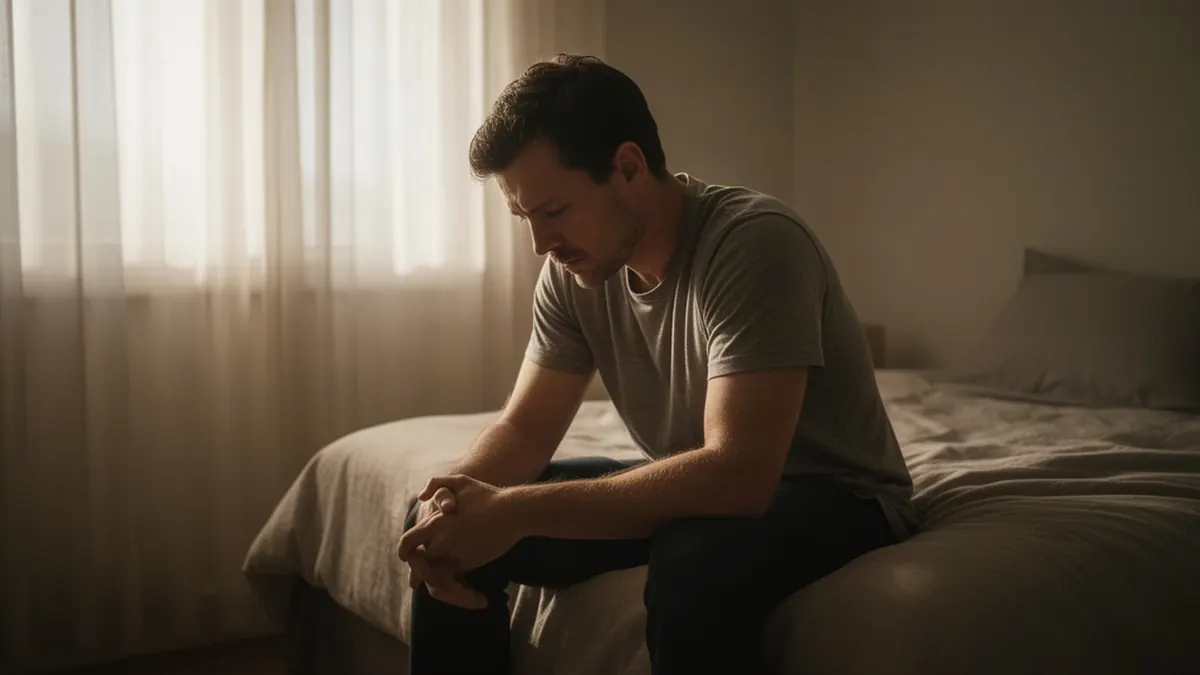
You're with someone you're genuinely attracted to. The moment feels right. And then... nothing. Or it starts and then fades. And the more you focus on it, the worse it gets. Sound familiar? You're not broken, and you're not alone. A huge share of erectile dysfunction cases — especially in men under 40 — have nothing to do with blood vessels, testosterone, or any physical problem a blood test would catch. The issue starts between your ears, not below your belt. That's not a dismissal. It's actually useful information, because it points you toward solutions that can work fast and work well.
What Actually Happens Inside Your Body During Psychological ED
An erection depends on a very specific chain of events. Your brain signals arousal. Nerves release nitric oxide. Blood vessels in the penis relax and fill. The whole thing runs on a parasympathetic nervous system response — the 'rest and digest' side of your autonomic nervous system. That system gets suppressed the instant your brain perceives a threat.
Anxiety, shame, or performance pressure fires up the sympathetic nervous system — fight or flight. Adrenaline and cortisol flood your body. Blood gets redirected to your large muscles, your heart rate climbs, and those penile blood vessels actually constrict rather than relax. Your body is literally preparing to run from a predator. Erections are not on the priority list when a lion is chasing you.
The cruel part? Once you've had one episode of ED from anxiety, the fear of it happening again can cause it to happen again. It's a self-sustaining loop. Psychologists call it 'spectatoring' — you mentally step outside the moment and start monitoring your own performance, which pulls you completely out of arousal and makes failure more likely.
Common Psychological Triggers (Some Will Surprise You)
Performance anxiety is the obvious one. First time with a new partner, a long gap between sexual encounters, or pressure to 'perform' after a great first experience — any of these can trip the wire. But anxiety isn't the only trigger, not by a long shot.
Depression suppresses libido and blunts the brain's arousal response directly. Relationship conflict — even simmering resentment you haven't fully acknowledged — can quietly disconnect you from desire. Guilt about pornography use, body image concerns, and unresolved experiences from the past all show up in the bedroom. So does plain old exhaustion. Three nights of four-hour sleep will do things to your erections that no amount of attraction can fix.
Work stress deserves its own mention. A guy who's been dreading a quarterly review for three weeks may find that stress has completely moved into his sex life too. Stress doesn't clock out at 5 PM.
- Performance anxiety with a new or unfamiliar partner
- Depression and low mood affecting arousal signals
- Unresolved relationship tension or emotional distance
- Poor sleep and chronic fatigue
- Excessive pornography use changing arousal expectations
- Guilt, shame, or past sexual trauma
- Major life stressors — job loss, grief, financial pressure
How Do You Know It's Psychological and Not Physical?
This is where a doctor is genuinely helpful, and worth seeing. A few clues lean strongly toward a psychological cause though. Do you wake up with morning erections? Can you get and keep an erection during masturbation? Did the ED appear suddenly rather than gradually over months or years? All three point toward the mind rather than the body. Physical ED from vascular disease or low testosterone tends to develop slowly and affects all erections, including spontaneous ones.
Age matters too. If you're 28 and otherwise healthy, the odds strongly favor a psychological component. If you're 62 with type 2 diabetes and hypertension, a physical workup is the right first step. Most real cases aren't purely one or the other — a physical issue can create anxiety, and that anxiety amplifies the problem. But knowing which came first helps doctors point you in the right direction.
A straightforward physical exam, a blood pressure check, and a few basic labs (testosterone, blood sugar, lipids) can rule out the most common physical culprits. Don't skip this step. Assuming it's 'just anxiety' when there's an undiagnosed cardiovascular issue would be a mistake.
Treatments That Actually Work for Psychological ED
Cognitive behavioral therapy — CBT — has the strongest evidence base here. A therapist trained in sexual health can help you identify the specific thought patterns that trigger the anxiety spiral and replace them with more realistic ones. It's not about positive thinking. It's about interrupting 'I'm going to fail again' before it fires up your sympathetic nervous system and makes the prediction come true. Many men see real change in 8 to 12 sessions.
Sex therapy, sometimes done with a partner, uses structured exercises — sensate focus is the classic approach — to rebuild physical intimacy without the pressure of 'achieving' an erection. You literally take intercourse off the table for a few weeks and focus only on touch and closeness. Counterintuitive, but it works by removing the performance demand entirely.
Some men benefit from PDE5 inhibitors (the medication class that includes sildenafil) used short-term not as a permanent solution but as a confidence bridge. A few successful experiences can break the anxiety cycle. Talk to your doctor about whether that approach makes sense for you. Mindfulness practices — specifically non-judgmental attention during intimacy — also have solid research behind them, particularly combined with CBT.
- CBT with a sex-informed therapist
- Sensate focus exercises (often with a partner)
- Mindfulness-based stress reduction applied to intimacy
- Couples counseling when relationship dynamics are a factor
- Short-term use of PDE5 inhibitors as a confidence bridge (discuss with your doctor)
- Addressing underlying depression or anxiety with appropriate treatment
The Role of Your Partner (Or the Absence of One)
If you're in a relationship, your partner's reaction in that first moment matters enormously. A dismissive or frustrated response can cement the fear. A calm, no-big-deal reaction — 'let's just keep going, it's fine' — can prevent one bad night from becoming a pattern. That's not placing the burden on your partner. It's just acknowledging that this happens between two people, and two people can address it.
Partners sometimes personalize ED. They assume they're not attractive enough, or that their partner has lost interest. That misread can create distance and emotional withdrawal, which makes the psychological environment even less conducive to arousal. An honest conversation, uncomfortable as it is, usually helps more than silence.
If you're single, the anxiety can attach specifically to new partner situations. That's common. Knowing that helps you anticipate it and plan for it — slowing things down, being honest with a new partner early, or working through it with a therapist before it becomes entrenched.
Lifestyle Factors You Can Change Starting This Week
Sleep is not optional. Seven to nine hours per night is where testosterone production, cortisol regulation, and general nervous system health happen. Cutting to five hours for a few weeks demonstrably drops testosterone and mood. Fix your sleep before you try to fix anything else.
Regular cardiovascular exercise — three or four sessions a week, thirty to forty minutes, nothing extreme — reduces baseline anxiety, improves mood via endorphins, and maintains the vascular health that underpins physical arousal. A twenty-minute run isn't just good for your heart. It's good for your erections and your mental state around sex.
Limit alcohol. A drink or two might reduce social anxiety, but alcohol is a central nervous system depressant. More than two drinks will mechanically impair erectile function regardless of how relaxed you feel. The morning-after effect on mood and anxiety isn't helpful either. Reducing or eliminating alcohol for a few weeks is one of the cheapest experiments you can run.
When to See a Professional — and Which One
Start with your primary care doctor or a urologist. Get the physical stuff ruled out first. From there, if the picture looks psychological, ask for a referral to a therapist with experience in sexual health or men's mental health. Not every therapist has this training. It's worth asking directly: 'Do you have experience treating sexual anxiety or performance anxiety in men?'
If depression or generalized anxiety disorder is part of the picture, a psychiatrist or your primary care provider can discuss medication options. Some antidepressants actually worsen sexual function as a side effect, so that's a nuanced conversation worth having carefully. There are options with lower rates of sexual side effects.
Don't wait years. Men tend to sit with this quietly for way too long. Six months is already a long time to let the anxiety pattern get more entrenched. The sooner you address it, the easier it typically is to untangle.
Common questions
Can psychological ED go away on its own?
Sometimes, yes — particularly if it was triggered by a one-time stressor that's resolved. But if the anxiety pattern has become a habit, it tends to persist and even deepen over time without some form of intervention. Addressing it early with therapy or lifestyle changes gives you much better odds than hoping it resolves itself.
Is it possible to have both psychological and physical ED at the same time?
Absolutely, and it's actually very common. A mild physical issue — say, early blood pressure changes — causes one episode of ED, which then triggers performance anxiety, which makes things worse. Your doctor needs to evaluate both angles rather than assuming it's entirely one or the other.
Does pornography cause psychological ED?
This is debated in research, but there's a reasonable clinical argument that excessive pornography use can shift what triggers arousal for some men, making real-world intimacy feel less stimulating by comparison. A trial period of significantly reducing or stopping pornography use is a sensible, low-cost experiment if you suspect this might be a factor.
Can medication alone fix psychological ED?
Medication like sildenafil can help mechanically and can break the anxiety cycle in some men when used strategically. But it doesn't address the underlying thought patterns, and some men find the anxiety returns when they stop. Combining medication with therapy tends to produce more durable results than medication alone.